Hi everyone,
Apparently I’ve found myself another problem to enjoy solving. All I wanted was to charge the car cheaply without checking price charts every day. Somehow that turned into an electricity price forecast, a website and a Home Assistant integration. As these things do.
I have a Kia EV6 and a V2C charger. The idea is simple: get home, plug in and let the house work out when to charge. If the car is home but unplugged, I get a Telegram reminder — roughly: “The car is home. The cable isn’t plugged in. Go sort that out.” Still have to do that bit myself.
The charging algorithm is pretty simple: use typical consumption to estimate when the battery will start running low, then find the cheapest time to charge before that. Keep a little in reserve. Nothing particularly fancy. But of course, tomorrow’s prices eventually weren’t enough for me. If electricity is going to be cheaper in a couple of days, why buy extra now? And if prices are heading up, perhaps I should top up earlier?
So I built a week-ahead forecast. A couple of friends wanted something similar, so I made it public straight away. That became Wattcast, with a website, API and Home Assistant integration. It currently provides prices and a forecast extending roughly seven days ahead for Estonia, Finland, Latvia and Lithuania.
The charging algorithm now also considers expected price increases, so it can top up in advance. The forecast helps decide whether that is worth doing; the actual charging hours are selected from published prices.
It goes beyond the car. Hot water and heating also follow prices in my setup. Water heating considers our usage patterns and the tank temperature. Heating considers room temperatures, the weather and how well the house holds heat. So I wanted a view of the coming days for the whole house.
Under the hood, it’s good old ML — LightGBM. The inputs include historical prices, forecasts for wind, temperature and solar radiation, hours, weekdays and holidays. Plus maintenance and outage notices for power plants and connections between countries — cables such as EstLink and NordBalt. They have schedules of their own, and those affect prices too.
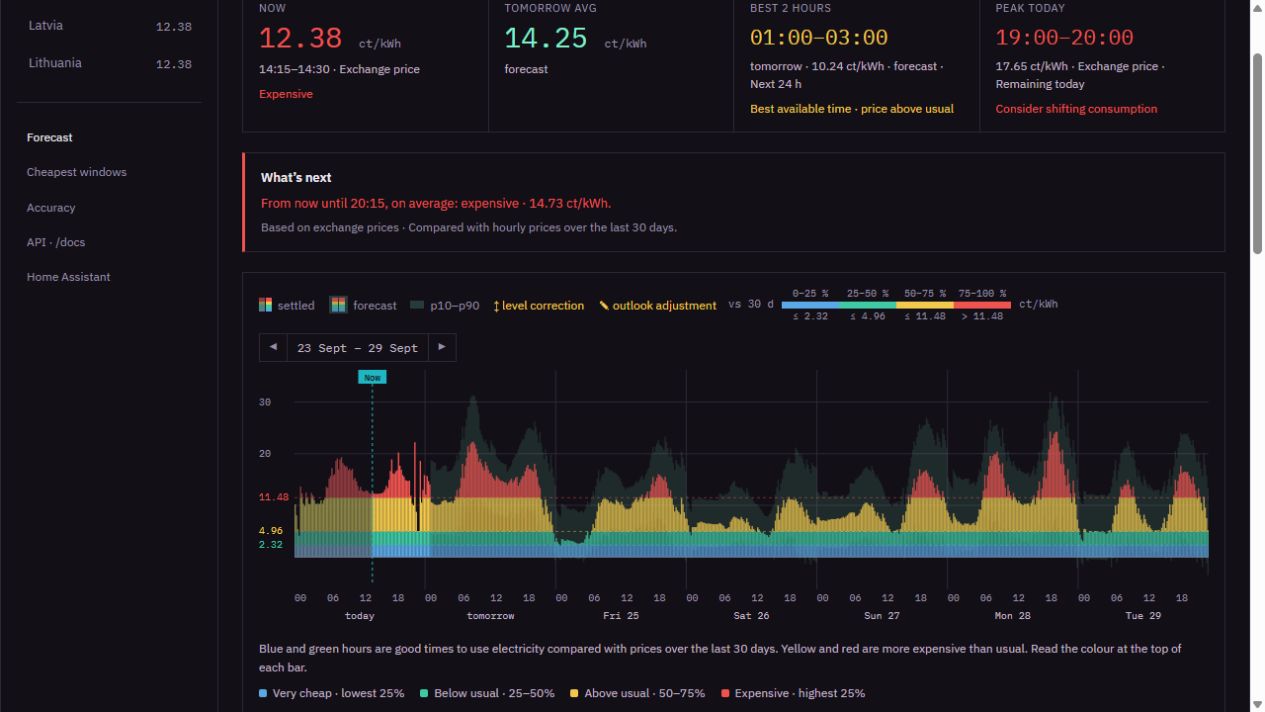
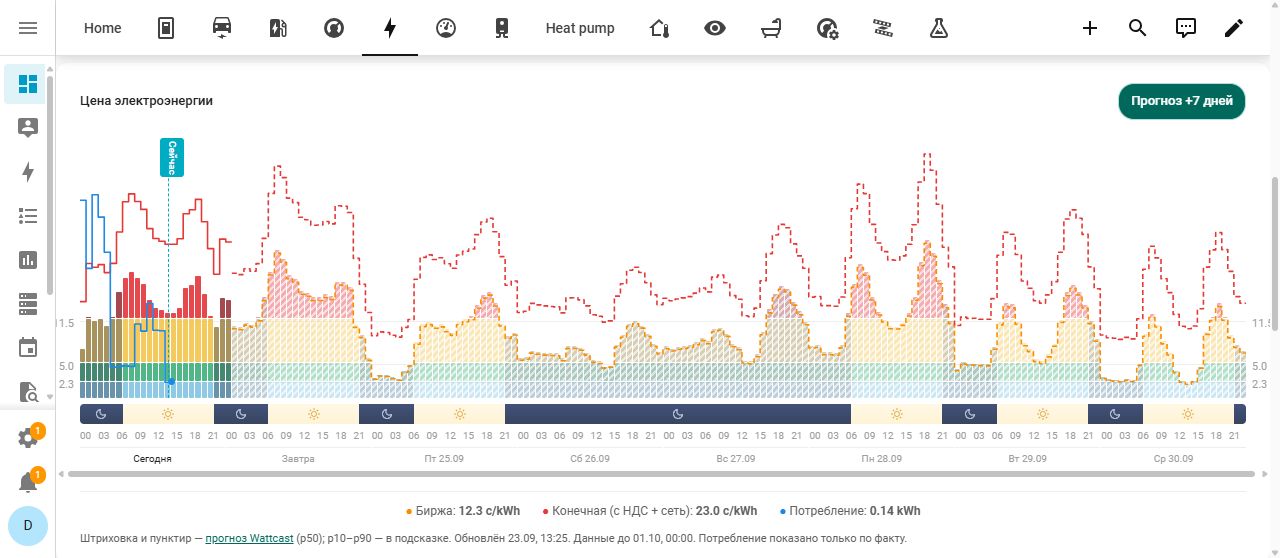
Out comes a week of forecast prices with an expected range. Forecasts update hourly, and the models retrain weekly. On my Home Assistant dashboard, published prices continue into the forecast, so I can see roughly where the week is heading. That’s what I wanted: a view of the overall trend that my automations can use for planning.
The integration installs through a HACS custom repository, with no API key needed for normal use. It provides current prices, daily averages, forecasts, cheaper-window sensors and a written outlook. My home controllers and Telegram reminders are my own automations built on top; you can use the data for your own setup.
- Installation guide and a basic dashboard card
- Home Assistant integration on GitHub
- Explore the forecast
Integration prices are market prices, excluding VAT, network fees and supplier margins. I add my own tariff in the home planner.
Basically, I want to pay less without babysitting a chart. Let the house watch the prices and message me when I need to go plug the car in.
My Home Assistant dashboard with the seven-day forecast:
And the seven-day view on the Wattcast website: