All support will be dropped. Documentation and reported issues.
These people should not be running supervised. They should be running HAOS. Supervised is the hardest installation to manage, the documentation has recommended against this with beginners for 5 years now.
So I think that means you agree that the best path forward for @samrocketman is to get the SBC supported in HAOS? Which IMO just moves the support effort from HA Supervised into HAOS and doesn’t really give a significant reduction in effort?
I’m not agreeing with anything. I’m explaining the intentions of supervised installation and it’s future.
you’re right, I shouldn’t have put those words in your mouth. It’s only the implication of your comment “these people should not be running supervised” is that either Sam has to find a way to get the SBCs to be supported, or Sam has to find a (different) supported hardware platform.
Why not use one of the supported SBC’s or the Home Assistant Green/Yellow? I’m very happy with the Yellow, which might be harder to get, depending on where you are. But the Green can be found “everywhere” and is affordable enough.
Those all can run HA OS without issues and are supported actively.
Also, no one is stopping you from continuing what you were already doing. As you might have been running an unsupported way of running Supervised. As stated before by others in this topic, if you run anything else directly on the host machine you might already be in unsupported state.
Just thinking about something else. There is a lot of talk on tech forums about Microsoft creating a lot of e-waste in October 2025. Now I know Home Assistant does not have the vast amount of resources Microsoft has, but how does it fit with the Open Home Foundation’s principles of ! privacy, choice, and sustainability ? I know I can use my old Pi’s for other tasks, but can everybody ?
Sorry, but ARM64 and X86-64 have been around for more than a decade. Most Linux distro’s have stopped supporting 32bit OS a while ago and many Linux packages are not available for 32bit anymore.
Also the amount of Home Assistant users is peanuts compared to something as big as Windows.
I know, but it looks like saying one thing, and doing the opposite.
Dropping 32bit is a no brainer, I will relent on the dropping of support for core, it looks like a foregone conclusion anyway. I have looked at how I would potential move my installs from core to docker, the next time I want to do a rebuilt of my HA environments. I can see how I can get it to work without breaking to much. Lets hope docker doesn’t end up the same way as core and supervisor and we are all forced to HAOS. I may be getting a bit of topic but I did manage to put some thoughts together re how Home Assistant is evolving. See Home Automation Architecture my way.pdf - Google Drive
My understanding of the dropping of the installation types is that it doesn’t affect existing installations, does it? One would still get HA updates on those, they just wouldn’t be able to get support or find the installation instructions they followed years ago?
If so, I suggest to word the official announcement as “dropping support for new installations”. Later in the text, it can strongly suggest people using those installation types migrate.
This would massively reduce the number of people who will panic, and with that the amount of support you have to give them in regards to that. Especially with “core” being part of the regular version display of HA…
Also, in my opinion, a 6 month depreciation period for the 32-bit architectures is awfully short. Most people don’t have “tinkering with HA” as a hobby they spend a couple of hours each week with. Their systems have been configured to do what they are supposed to do and only need very little attention (especially older ones, which are more likely to run on older hardware). As such, many people won’t look at updates or update-related notices for weeks and months.
It is therefore safe to assume that a good percentage of affected users won’t see the notification for 3 or 4 months. And as this change requires acquiring new hardware, which involves investigation into what hardware to get, then planning an installation, and finally negotiating with the better half of the household for a weekend to do it, time will become an issue.
However, removing those architectures from the documentation and downloads for new installs should be done ASAP. At least a notice that those architectures are on their way out should be added now. It’d be a shame if someone went through the trouble of setting a new system up on such an architecture tomorrow…
That would imply that existing installations are supported, which they will not be.
It would also stop everyone who sees
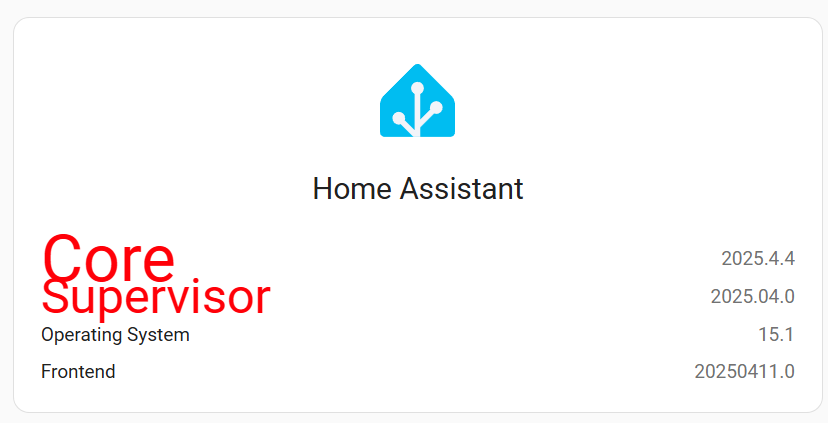
from flooding into the forum and creating more support effort than those few people actually running those installation types could in 5 years.
BTW: Support also is a bad word. It used to have a very specific meaning, “providing support”, i.e. having a human help, but it has been used too often to mean “will stop working”. People will understand it that way.
(Sorry, I hit the wrong reply button. Quote added manually.)
HA is pretty easy to move between platforms, so I guess a backup and restore will solve that and the work for the user will mainly be buying a supported platform, like a HA green or a RPi4 or similar and make the initial installation of HA.
The forum/discord/reddit is the only place they can get support if running an unsupported system.
I agree with HenryLoenwind the term support is probably being misused and could be clarifies. I didn’t even know we had support. You have a problem you search and find a solution in one of the community forums. You want to install something you do the same. Am I right in assuming official support is when there is a bug. someone raises an issue in git and the developer/owner of that particular module then has to fix it. Now in the case of core and supervisor install, the developer/owner will just say you are running an unsupported install. So you go to the community and try and find a work around. In the longer term community solutions will be harder and harder to find for these environments.
That is what ‘supported’ means : you can raise an issue on github and someone will look at it. When unsupported, your issue is closed immediately.
The forum already have a hard time helping because many users have just followed guides to get their HA set up and configured and they have forgotten which guides and have no understanding of their system.
Supervised installations run by inexperienced users often end up in a mess due to them following general Linux guides, but Supervisor already controls part of the system and a network setup that is attempted changed by editing the configuration files at the same time as NetworkManager is managing it is just a recipe for a disaster.
Many users “cripple” themself with these installation types and those are the ones this proposal will try to help.
The ones that have the knowledge and experience to really run a Linux headless server will probably also have no issue with running a developer setup.
Unless users are on a ‘zwave’ or ‘zigbee’ or other usb stick solution, then you’ll have some more things to arrange, which would be less 1-2-3.
Based on my experience operating it:
- Supervised is “hard to install” not “hard to manage”. It’s no harder to manage than HAOS and has one-click updates. It works flawlessly and managing the underlying OS is easily scriptable especially with a stable distrobution like Bookworm.
- Could you clarify your original post that you’re intentionally dropping support for all 3rd party SBCs? You basically only support two now: Raspi and the hardware HA offers (which is not great if you need more resources than those options so your only option would be a beefy x86 machine). x86 increases both up front cost and operating cost (more power draw for the end-user).
I think you’re making Supervised out to be harder than it really is. I’ve and others I’ve set up have operated it for years without issue and updating it is easy.
Again my concern is dropping support for SBCs because the HAOS image doesn’t work on the hardware I buy; I’ve tried.
The primary reason why I buy 3rd party SBCs is:
- Lower cost (overall)
- Higher performance per unit of cost (more bang for the buck).
I highly doubt HA team would accept patches with binary blob drivers for 3rd party SBCs. I’ll either have to hack the HAOS image or simply go with more expensive options. Both of these are not ideal. Long-term it means I need to re-buy all of the hardware I’ve gifted if the people using HA I helped setup want to continue to receive updates. I’m around to field their questions so HA community doesn’t have to.
I’m not here to complain. The original post states: “we’d like to hear your feedback” and so this is mine. It’s going to be a pain point for me. Obviously I can’t control the outcome so I am here to just give the feedback and the why from my perspective.