You can use the template to supply an amount, it would be silly to use a loop to add 200 one step at a time. I did have trouble though with step size 0.01 and a 0.22 increment (claiming it was not a multiple). Instead of figuring out why I wanted a quick fix. so I used set_value instead with a template doing the calculation.
But there is the input_number.increment service right? And there is a step parameter. So if you know the amount, things should be easy. Unless you use fractions like I did, because that seemed to malfunction. I thought that the increment call was there, but now I see it was using set_value.
As mentioned by myself previously - this only increments it by a set amount… thanks BTW @Troon for informing me this is actually the step NOT 1 as I had initially thought.
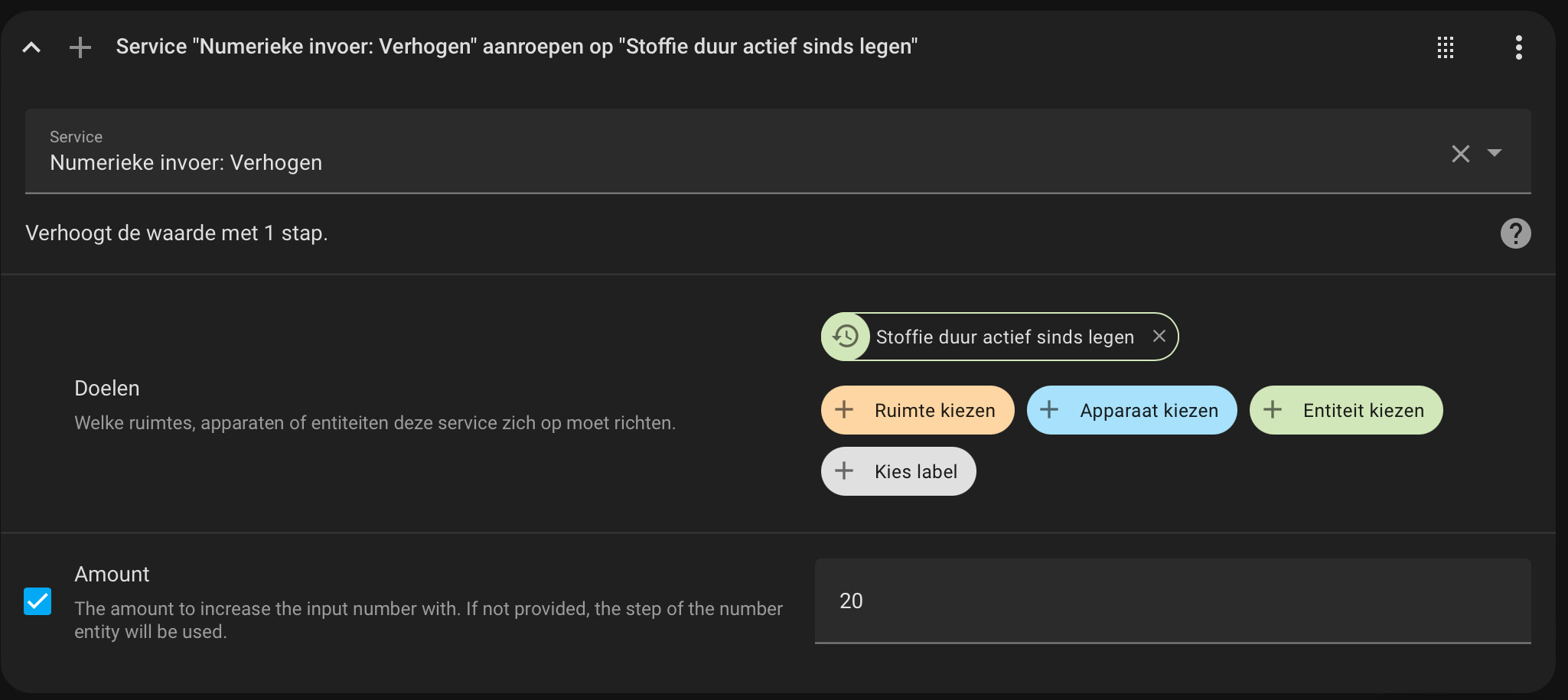
Yeah sorry, I was being very unclear and misread a few things. There is an increment service with an amount parameter you can set. As long as that is a multiple of the step size of the input_number helper you should be fine.
Seeing the error I got with a 0.01 step size, I do start to wonder now wether the amount is the value added, or the number of steps. I think I may need to visit the docs again
Edit: hmmm. The amount parameter is provided by the automation helper, but is isn’t mentioned in the docs?
Can you share a screenshot of where is it provided? I can’t see it on my system. The increment service always just adds on one step: the source code does not allow for any amount to be entered:
Great - it appears that Spook only supports HACS (I placed it in the custom_components folder and it did nothing, then read the docs)…
Unfortunately this is not an option for me for a few reasons:
it defeats the purpose of running docker stuff in a container as HACS requires modifying stuff in the container directly (and Spook too which is why it requires HACS)
also because of this it will not support the high availability failover clustering setup that I have for my docker containers