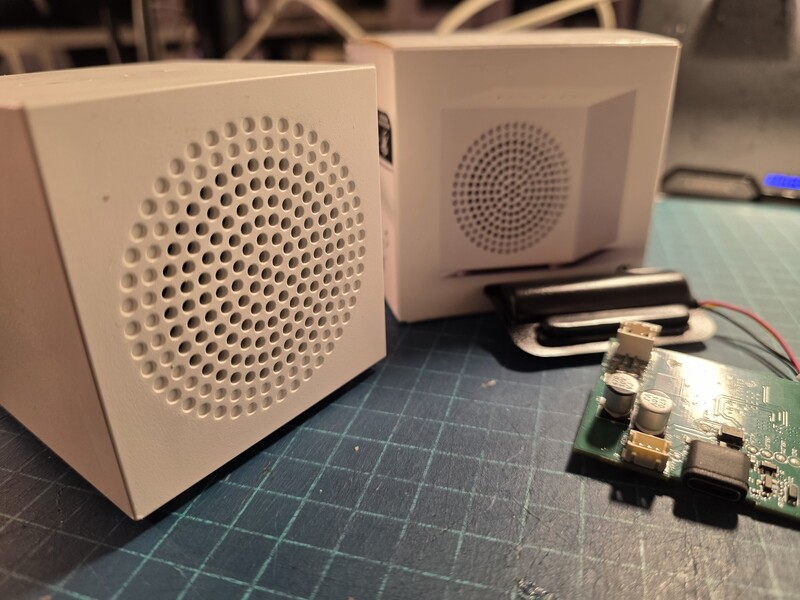
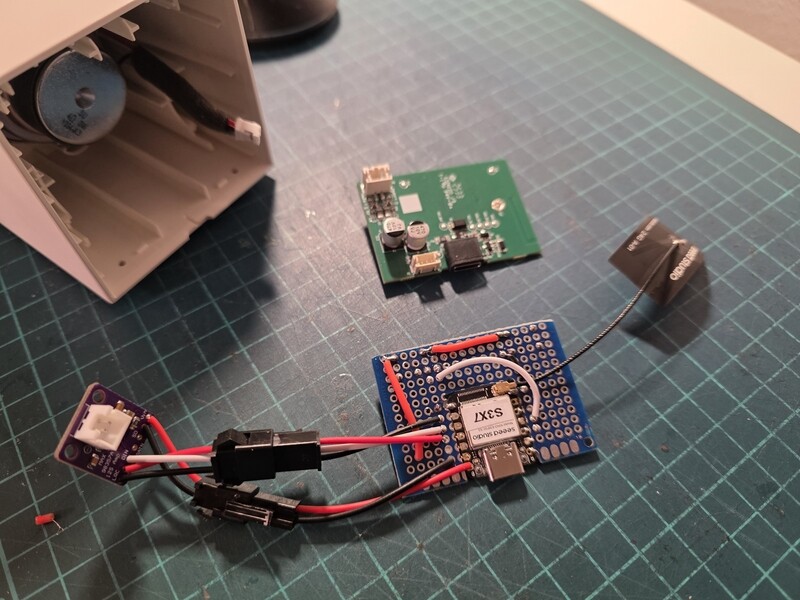
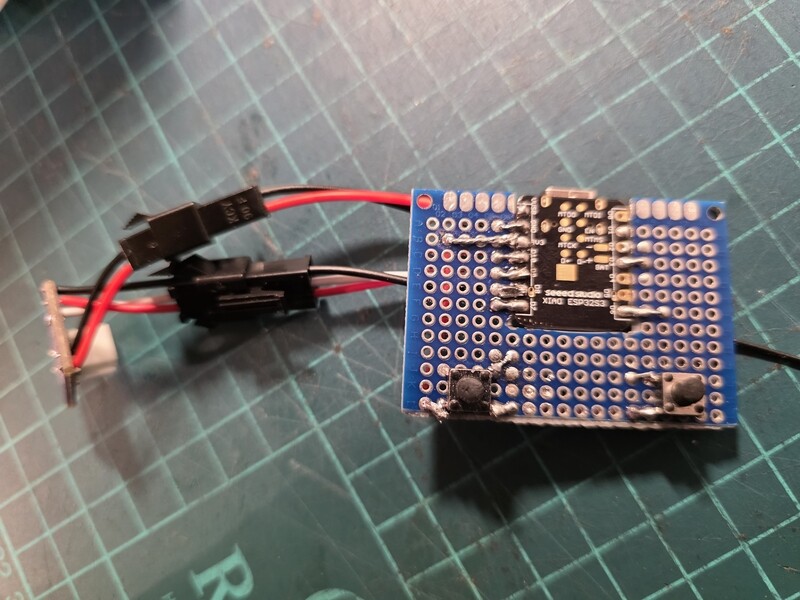
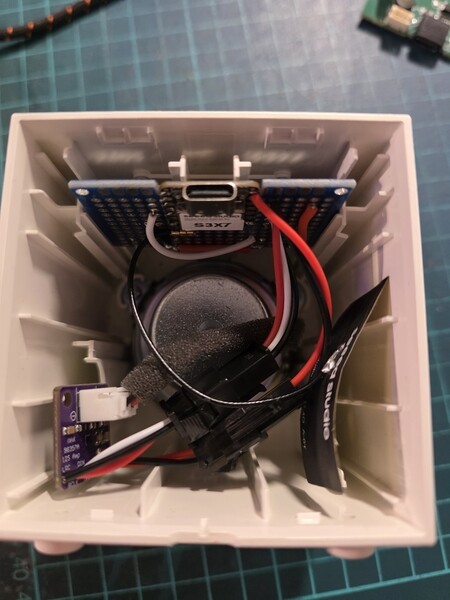
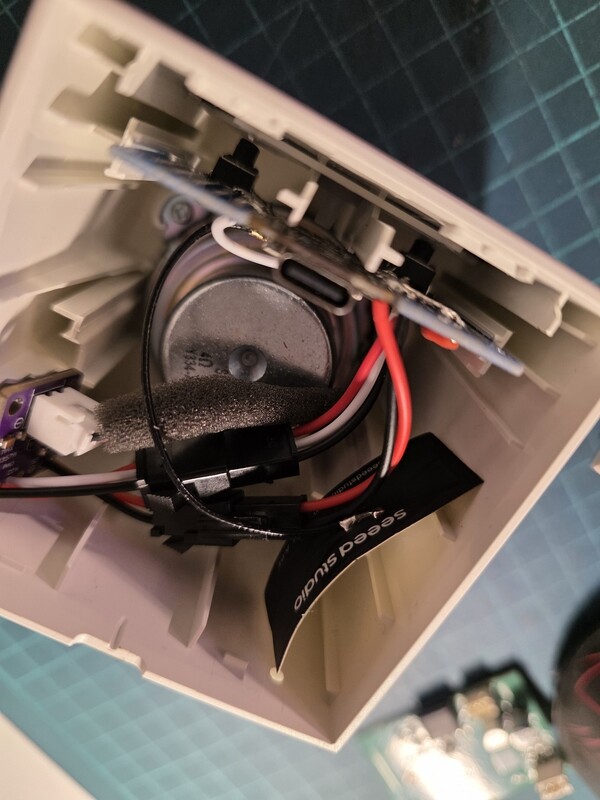
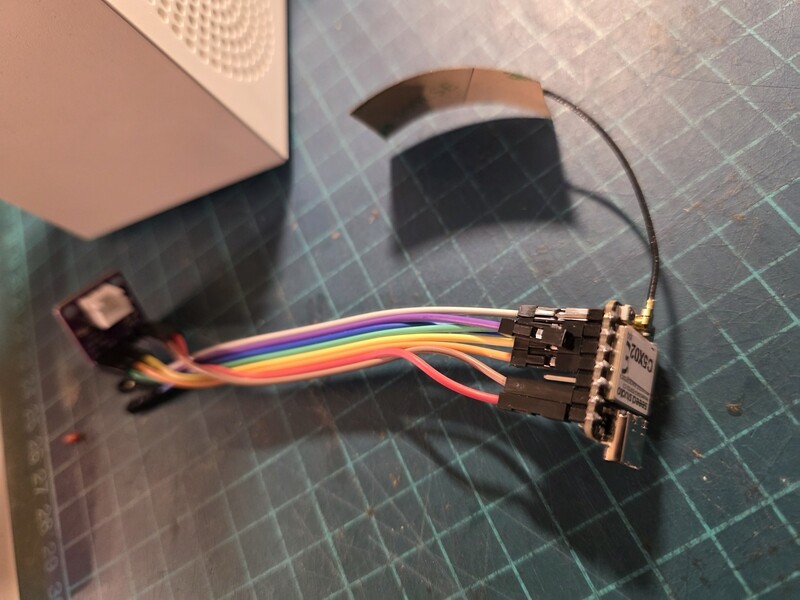
Jup, the config is ESPhome and i´m happy to share.
I build on info shared by others 
While experimenting i got to reusing specific part of the YAML quite often, so i discovered the advantage of !including packages and substitutions.
The packages are placed in the common subfolder under esphome.
Thus it was easy to switch / test a config for new sendpin development or different ESP board. This config is for a XIAO ESP32-S3.
I did not clean the code of all comments as i think it might help (at least it does for me).
Answering the question before:
KALLUPS is not too loud if compared with bigger speakers but for the size and price its quite ok. Its 3Watts so i wire the DAC with 5V instead of 3,3V.
Main YAML Code:
## ------------ Template v2 -------
## ------------ 08.03.2026 --------

# ----------------  Start --------------
substitutions:
  name: "audio-kallsup-01-s3x7"
  friendly_name: Audio-KALLSUP-01-S3X7
  api_key: !secret api_key
  ota_key: !secret ota_key

# ----------------  GPIOs ---------------

#  pin_i2c_sda: GPIO08  #sda/mtck/
#  pin_i2c_scl: GPIO09  #scl/mtdo

#  pin_spi_clk: GPIO12   #sclk/clk/sck/clock
#  pin_spi_cs: GPIO10  #cs/chip select
#  pin_spi_mosi: GPIO11  #mosi/sdo/data out
#  pin_spi_miso: GPIO13  #miso/sdi/data in

#  pin_spi_rst: GPIOxx   #rst/res/reset
#  pin_spi_dc: GPIO21
#  pin_spi_bl: GPIO46

  pin_i2s_lrclk: GPIO07 #leftrightclock/lrck fs/framesync /ws/word select
  pin_i2s_dout: GPIO08 #dout/sdout/ sd/sdata/dacdat/data
  pin_i2s_bclk: GPIO09  #bck/bcclk/bit clock sck/ serial clock (optional)
#  pin_i2s_mclk: GPIOxx  #mclck/master clock

#  pin_i2s_din: GPIO02  #din/sdin/data in /sd/serial data/ adcdat

#  pin_uart_rx: GPIO18
#  pin_uart_tx: GPIO17

  led_01: GPIO21  #onboard LED

  task_stack_in_psram: "true" # important to disable this for non-S3 model. Slower, use if running out of memory with many components.

# ---------------- Packages --------------

packages:
  - !include common/sendspin_06.yaml
  - !include common/wifi_02_s3.yaml

# ----------------  Basics --------------

esphome:
  name: ${name}
  friendly_name: ${friendly_name}
  name_add_mac_suffix: false

esp32:
  board: seeed_xiao_esp32s3
#  flash_size: 8MB # 16MB for N16R8. Put yours.
  framework:
    type: esp-idf

psram:
  mode: octal
  speed: 80MHz
  ignore_not_found: false

# ------------------- Connection ---------------

# Enable Home Assistant API
api:
  encryption:
    key: ${api_key}
  reboot_timeout: 0s # to avoid rebooting without HA

# Allow Over-The-Air updates
ota:
  - platform: esphome
    password:  ${ota_key}

#wifi:
# >>>>> see external wifi.YAML

http_request:

network:
  enable_ipv6: true

mdns:
  disabled: false


# -------------- Web Interface -------------

web_server:
  port: 80
  version: 3

debug:
  update_interval: 10s

# Enable logging
logger:
# level: none
# level: error
# level: warn
# level: info
  level: debug
# level: verbose
# level: very_verbose
  logs:
    wifi: info
    api: info
    mdns: info

# -------------- Interface Elements ------------

button:
  - platform: restart
    id: restart_button
    name: "Restart ${friendly_name}"
    entity_category: config
    icon: "mdi:restart"

  - platform: factory_reset
    id: factory_reset_button
    name: "Factory Reset"
    entity_category: diagnostic
    internal: true
    disabled_by_default: true

# -------------- Platforms ------------------

#i2c:

#  sda: ${pin_i2c_sda}
#  scl: ${pin_i2c_scl}
#  scan: true
# frequency: 200kHz #100kHz or 400kHz
# timeout: 1s

#spi:
#  - id: spi_bus0
#    clk_pin: ${pin_spi_clk}
#    mosi_pin: ${pin_spi_mosi}
#    miso_pin: GPIOxx
#    interface: hardware

#uart:
#  rx_pin: ${pin_uart_rx}
#  baud_rate: 9600

# -------------- Bluetooth -----------------

# -------------- Audio  -----------------

# >>>>> see external sendspin.YAML

# --------------- LED / LIGHT --------------

status_led:
    pin:
        number: ${led_01}

# --------------- Globals --------------
# Globals (since-boot only; not restored)


time:
    - platform: homeassistant
      id: time_homeassistant

    - platform: sntp
      id: time_sntp
      timezone: Europe/Berlin
      servers:
          - 0.pool.ntp.org
          - 1.pool.ntp.org

# ----------------Script --------------


# --------------- Sensors --------------

binary_sensor:
  - platform: status
    name: "Status"

# -------------buttons ---------------------

# Buttons for controling KALLSUP, still looking for good use for the BT button

  - platform: gpio
    pin:
      number: 04
      mode: INPUT_PULLDOWN
      inverted: false # Assume button connects to GND
    name: "Button Play"
    on_press:
      - media_player.toggle: external_media_player

  - platform: gpio
    pin:
      number: 43
      mode: INPUT_PULLDOWN
      inverted: false # Assume button connects to GND
    name: "Button BT"
    on_press:
      - media_player.mute: external_media_player

text_sensor:
  - platform: debug
    device:
      name: "Device Info"

sensor:
# ---------------diagnostic sensors -------------

  - platform: uptime
    type: seconds
    name: Uptime Sensor
  - platform: internal_temperature
    name: "Internal Temperature"

  - platform: debug
#    free:
#      name: "Heap Free"
#    block:
#      name: "Heap Max Block"
#    loop_time:
#      name: "Loop Time"
    psram:
      name: "Free PSRAM"
#    cpu_frequency:
#      name: "CPU Frequency"

# -------------real sensors ---------------------

# ------------ Displays ---------------------
Config for sound. Only media pipeline as i dont need announcements
sendspin_06.YAML
# -------------- Sendspin Player, no announcement ------------

# ----  223.03.2026
# ----  based on
# ----  https://github.com/esphome/esphome/pull/14933
# ----  component changes 26.03


esphome:
  min_version: 2026.3.0
  on_boot:
    priority: 220.0
    then:
      media_player.play_media:
        id: external_media_player
        media_url: audio-file://startup_sync_sound

network:
  enable_high_performance: true
# The optimization level is PSRAM-aware:
# - with PSRAM guaranteed:  (Psram configured with ignore_not_found: false): Aggressive settings with 512KB TCP windows and 512 WiFi RX buffers
# - without PSRAM guaranteed:  Conservative optimized settings with 65KB TCP windows and 64 WiFi buffers
# If you experience out-of-memory issues, you can disable these optimizations by setting enable_high_performance: false


esp32:

  framework:
    type: esp-idf
    version: recommended
    sdkconfig_options:

      CONFIG_ESP32S3_DATA_CACHE_64KB: "y"
      CONFIG_ESP32S3_DATA_CACHE_LINE_64B: "y"
      CONFIG_ESP32S3_INSTRUCTION_CACHE_32KB: "y"

      # Moves instructions and read only data from flash into PSRAM on boot.
      # Both enabled allows instructions to execute while a flash operation is in progress without needing to be placed in IRAM.
      # Considerably speeds up mWW at the cost of using more PSRAM.
      CONFIG_SPIRAM_RODATA: "y"
      CONFIG_SPIRAM_FETCH_INSTRUCTIONS: "y"

      CONFIG_BT_ALLOCATION_FROM_SPIRAM_FIRST: "y"
      CONFIG_BT_BLE_DYNAMIC_ENV_MEMORY: "y"

      CONFIG_MBEDTLS_EXTERNAL_MEM_ALLOC: "y"
      CONFIG_MBEDTLS_SSL_PROTO_TLS1_3: "y"  # TLS1.3 support isn't enabled by default in IDF 5.1.5


# -------------- External Components  -----------------

external_components:

  - source: github://pr#14933
    components: [const, generic_image, media_source, sendspin]
    refresh: 1h

  - source:
      type: git
      url: https://github.com/esphome/esphome
      ref: ff8ce89556748509d7ee8724e12d9d43d3c8c1e8
    refresh: 1h
    components: [http_request]

# -------------- Audio  -----------------

i2s_audio:
  - id: i2saudio_output
    i2s_lrclk_pin:
      number: ${pin_i2s_lrclk}  #lrclk - leftrightclock, WS wordselect, FS - framesync
      allow_other_uses: false
    i2s_bclk_pin:
      number: ${pin_i2s_bclk}  #BCLK - bit clock , SCK - serial clock
      allow_other_uses: false


# ===== Speaker & Audio Pipeline =====

speaker:
  # Hardware speaker output
  - platform: i2s_audio
    id: i2s_audio_speaker
    sample_rate: 48000   # 44100 Change this if most of your audio sources are 48 KHz (rare).
    i2s_mode: primary
    i2s_dout_pin: ${pin_i2s_dout}
    #mute_pin: XX
    bits_per_sample: 32bit #16bit
    i2s_audio_id: i2saudio_output
    dac_type: external
    channel: stereo
    timeout: never  #  speaker_timeout: 250ms
    buffer_duration: 250ms
    # 100ms There is still room to reduce the buffer duration.
    # Although at a quarter second, responsiveness is quite okay.


# ===== Sendspin Media Player =====

sendspin:
  id: sendspin_hub
  task_stack_in_psram: ${task_stack_in_psram}
#  kalman_process_error: 0.01

http_request:
  buffer_size_rx: 2048  # Reduces CPU load when streaming audio

media_source:

# Necessary for playing synchronized audio
  - platform: sendspin
    id: sendspin_source
    buffer_size: 500000 #

  - platform: http_request
    id: http_source
    buffer_size: 500000 #200000

  - platform: audio_file
    id: audio_source


audio_file:
  - id: startup_sync_sound
    file: startup_sound.flac
#      file: https://github.com/mrtoy-me/esphome-tas5805m/raw/main/components/tas5805m/tas5805m_boot_louder.flac


media_player:

# Only necessary for controlling a Sendspin group. It does not play synchronized audio!
  - platform: sendspin
    id: sendspin_group_media_player

# Necessary for playing synchronized audio and controlling the Sendspin group
  - platform: speaker_source
    id: external_media_player
    name: "${friendly_name} Player"
    media_pipeline:
      speaker: i2s_audio_speaker
      sources:
        - sendspin_source
        - http_source
        - audio_source

# -------------- Image  -----------------

# Only necessary for displaying cover art on a display

#generic_image:
#  - platform: sendspin
#    id: sendspin_cover_art
#    format: jpg
#    type: rgb565
#    resize: 200x200
#    image_source: ALBUM


# -------------- Sensor  -----------------

text_sensor:

  - platform: sendspin
    type: title
    id: sendspin_title
    name: "Stream - Title"

  - platform: sendspin
    type: artist
    id: sendspin_artist
    name: "Stream - Artist"

  - platform: sendspin
    type: album
    id: sendspin_album
    name: "Stream - Album"

  - platform: sendspin
    type: track
    id: sendspin_number
    name: "Stream - Track Number"

#  - platform: sendspin
#    type: year
#    name: Year
#    id: sendspin_year
#    name: "Stream - Year"

sensor:

#  - platform: sendspin
#    type: kalman_error
#    name: Sendspin Kalman error  # Time sync filter uncertainty estimate
#    entity_category: diagnostic
##    disabled_by_default: true

#  - platform: sendspin
#    type: audible_syncs
#    name: Sendspin Audible syncs  # Major sync events that are audible
#    entity_category: diagnostic
#    disabled_by_default: true

  - platform: sendspin
    type: track_duration
    id: sendspin_track_duration
The last YAML is for WiFi.
wifi_02_s3.yaml
esp32:
  framework:
    type: esp-idf
    sdkconfig_options:
        CONFIG_SOC_WIFI_HE_SUPPORT: y     # ESP32
        CONFIG_ESP_WIFI_11AX_SUPPORT: y   # ESP32


# ------------------- Connection ---------------

wifi:
  ssid: !secret wifi_ssid
  password: !secret wifi_password
  domain: .fritz.box
  enable_btm: true  # 802.11v BSS Transition Management (only ESP32)
  enable_rrm: true  # 802.11k Radio Resource Management (only ESP32)
  fast_connect: true
  enable_on_boot: true
  power_save_mode: NONE
  on_disconnect:
      then:
          - lambda: |-
              id(_wifi_disconnects_since_boot)++;

# Enable fallback hotspot (captive portal) in case wifi connection fails
  ap:
    ssid: "ESPhome-Fallback"
    password: !secret wifi_password2

# In combination with the `ap` this allows the user
# to provision wifi credentials to the device via WiFi AP.
captive_portal:


# --------------- Globals --------------
# Globals (since-boot only; not restored)

globals:
    - id: _wifi_disconnects_since_boot
      type: int
      restore_value: no
      initial_value: '0'


# --------------- Sensors --------------


text_sensor:
  - platform: wifi_info
    ip_address:
        name: "WiFi IP"
        entity_category: diagnostic
#    mac_address:
#        name: "WiFi MAC"
#        entity_category: diagnostic
#    ssid:
#        name: "WiFi SSID"
#        entity_category: diagnostic
#    bssid:
#        name: "WiFi BSSID"
#        entity_category: diagnostic
    power_save_mode:
        name: "WiFi Powersafe mode"
        entity_category: diagnostic

sensor:
  - platform: wifi_signal # Reports the WiFi signal strength/RSSI in dB
    name: "WiFi Signal dB"
    id: wifi_signal_db
    update_interval: 60s
    entity_category: "diagnostic"

  - platform: copy # Reports the WiFi signal strength in %
    source_id: wifi_signal_db
    name: "WiFi Signal Percent"
    filters:
      - lambda: return min(max(2 * (x + 100.0), 0.0), 100.0);
    unit_of_measurement: "Signal %"
    entity_category: "diagnostic"
    device_class: ""

  - platform: template
    name: "Wi‑F Disconnects (since boot)"
    id: wifi_disconnects_since_boot_sensor
    entity_category: diagnostic
    accuracy_decimals: 0
    update_interval: 30s
    lambda: |-
        return id(_wifi_disconnects_since_boot);