Yeah, so I took a look at the readme, and while it is certainly concise and well-noted, it references making use of 7 pins - but unless I’ve missed something in this thread, the only wiring diagrams I’ve seen show 6 wires being used. In fact, your code shows to use 7 pins, but that doesn’t leave 2 pins available for power and ground, so now I’m doubly confused! A complete mapping of the RJ45 end would be really appreciated. I’m al electronics n00b - there’s a reason I did this without soldering.
This uses the same wires, but it puts the ESP in the middle. So instead of tapping into the wire that connects the display and the controller and the ESP on one pin, now the display connects to the ESP on one pin and the controller connects to the ESP on another pin. The wire doesn’t connect from the display to the controller. @Mahko_Mahko if you understand what I’ve done, can you make an updated diagram with the changes?
I’ll see if I can do some doc refreshers and testing over the xmas break. Might make some doc pull requests etc.
Probably there’s a few areas to tidy up and a few feature requests to raise (such as implementing the memory presets in your component).
Testing has been complicated on my side a little by the fact that I use a more customised solution since I also built my own control panel. But I’m probably due to review it all anyway.
I’m pretty sure I still have my original “simple diy dongle” I can try to rewire and keep as a basic test device but I’ll need to put aside a little time. I’ll ping you on Discord to work through anything.
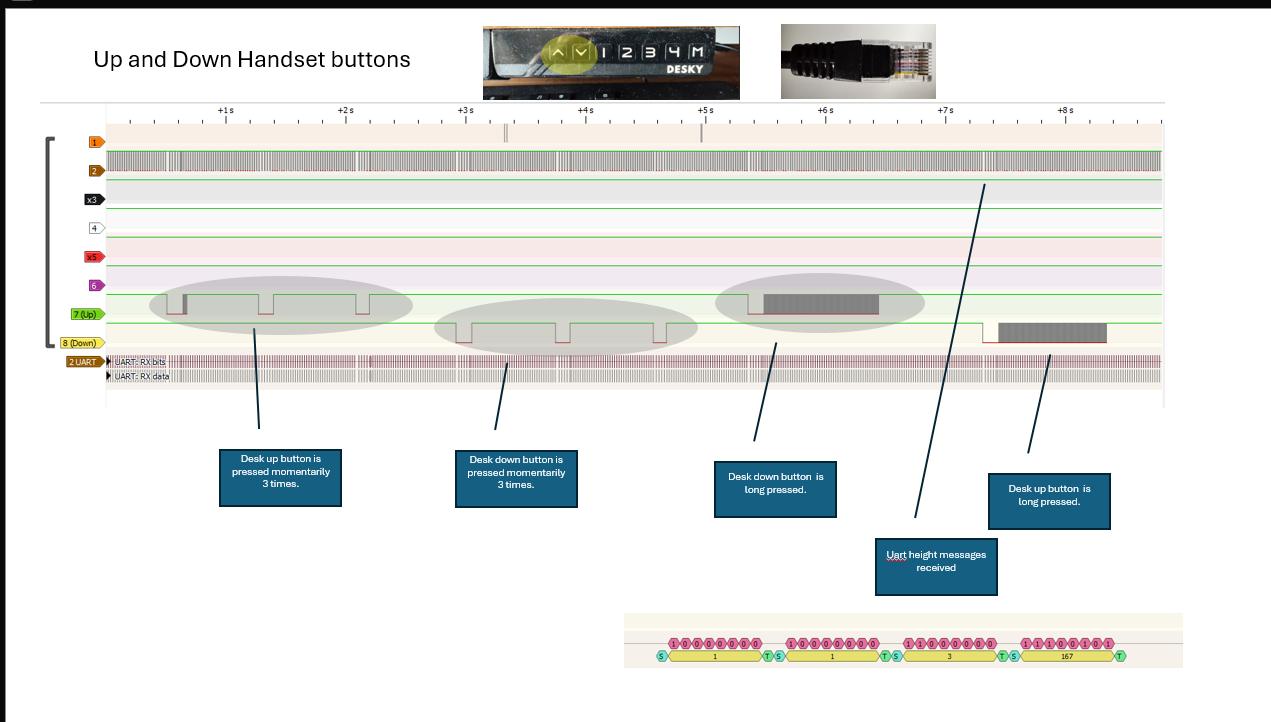
I’m just going to dump some signal sniffing in a few posts to help collate some content to work through some things with ssieb on Discord. A bit easier for larger chunks of text here.
Intial summary (and confirmation of earlier Phord findings).
Possibly it uses the same protocol on the integrated board.
You’d need to be willing to do lots of investigation to confirm if it is possible.
You’d need to pull it apart and may need a signal analyser.
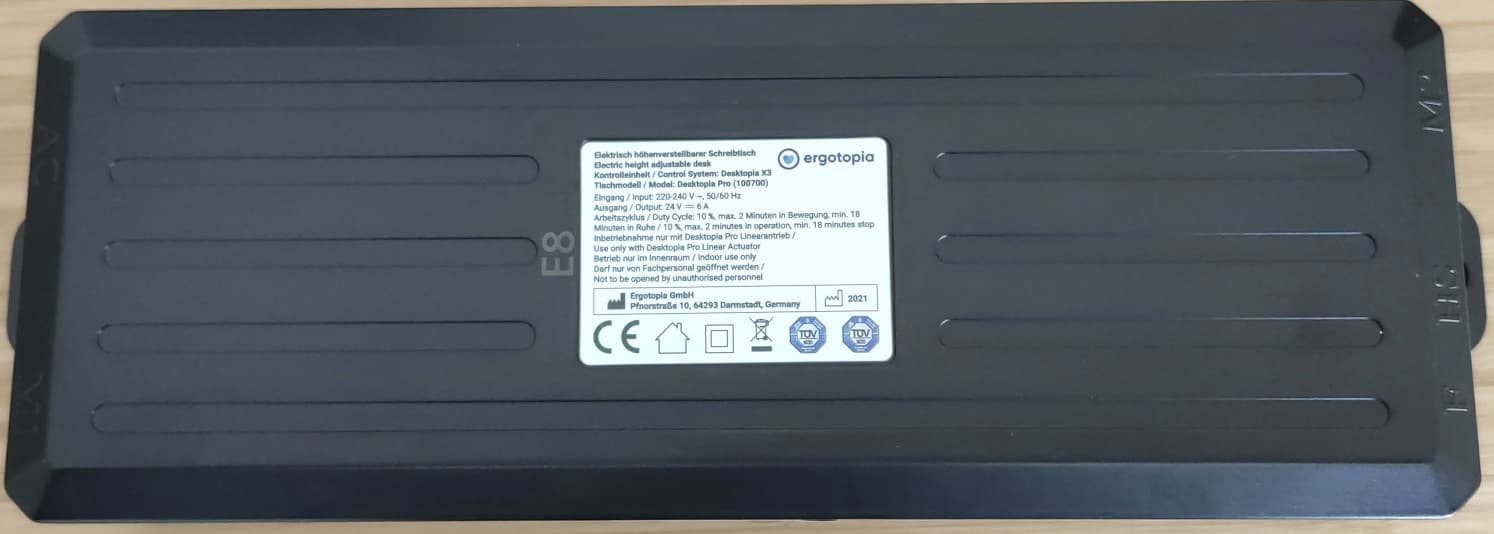
The control board would probably have some higher voltages on it so you’d need to be safe with that. It would have a lower voltage side too since it has a usb A port.
I was recommended this cheap one and I have been quite happy with it if you are interested in getting one.
I just found this on AliExpress:
AU$12.79 | USB Logic Analyzer 24MHz 8 Channel 24M/seconds Logic Analyzer Debugger For ARM FPGA Logic Analyzer Logic 24M 8CH https://a.aliexpress.com/_mtF369V
I have now switched over to the new buttons. But I am having the problem, that my desk is only moving for a split second, after pressing the button. I have used the exact setup. How could I fix that?
Thanks a lot for any help on how to do that.
EDIT:
I have now fixed it by replacing the 300ms with 30s … no clue why that works, but it does
I am using an ergotopia Desktopia Pro X since one week.
I’ve seen the solution from @solution3 using the RJ11 port to get data via an ESP32 to Home Assistant.
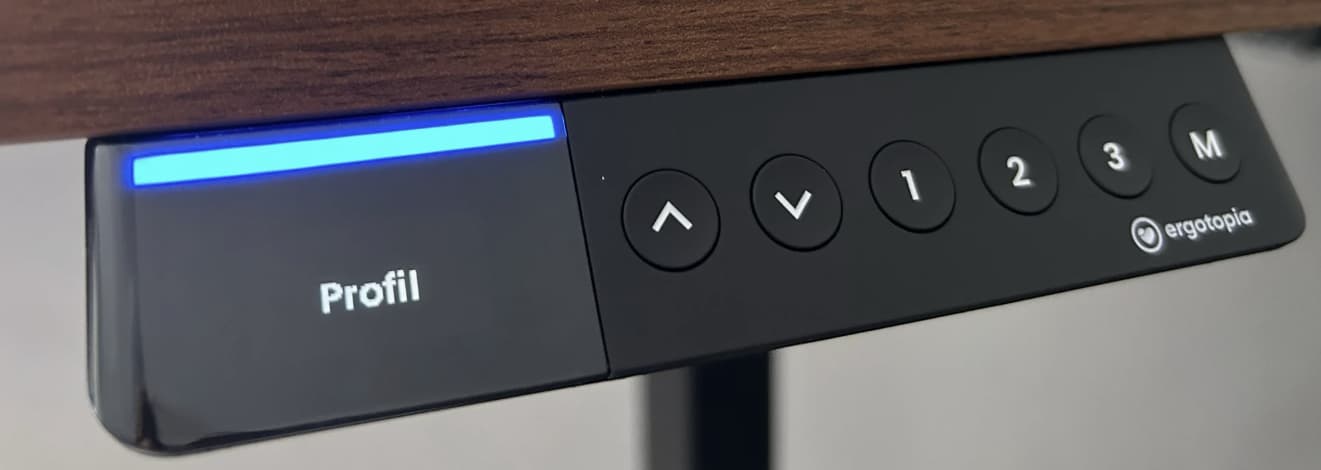
Do you know if it’s possible to use the same solution for the Desktopia Pro X? It has an other Frontpanel with only three memory slots but the controller also have a free RJ11 Port.
I know that ergotopia uses this port for their own bluetooth dongle - it’s necessary to connect it to the ergotopia Smartphone App - but I prefer the way to send the data to my Home Assistant.
I have a Desktopia Pro X myself and only a few days ago built an adapter for the desk’s RJ11/12 port.
This does work to a degree, at least with GitHub - Rocka84/esphome_components, the limitation being that you won’t be able to read the current height or limits.
That limits (no pun intended) the functionality a bit.
I wasn’t aware of a bluetooth dongle from Ergotopia. Do you happen to have one?
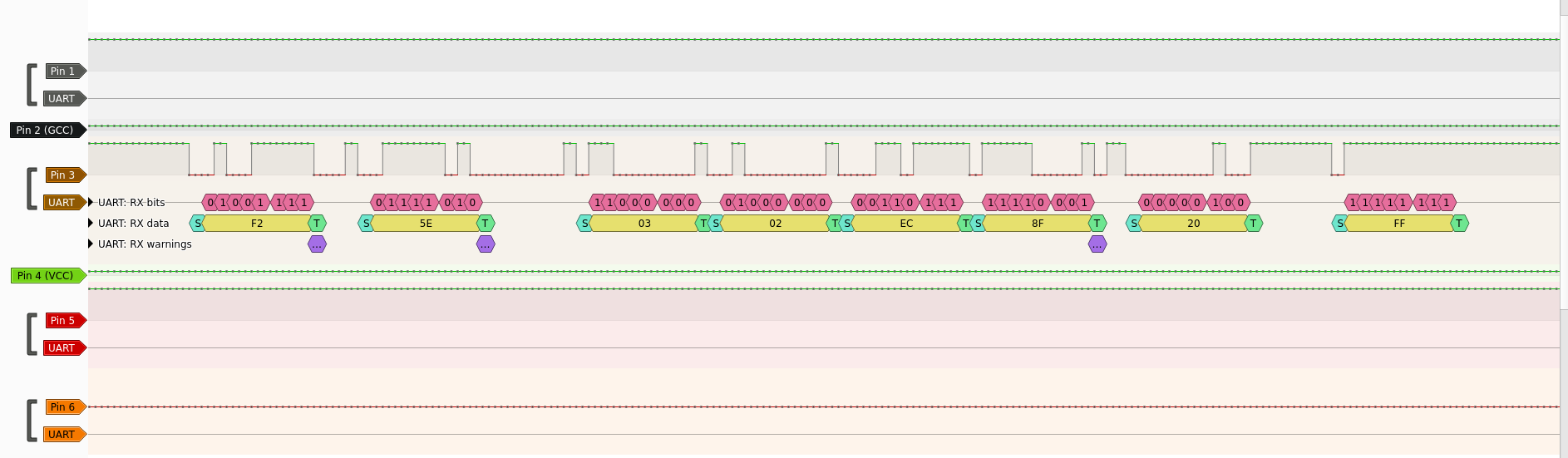
(captured at 20 kHz, UART decoders set to decode 9600 8N1).
Pin 3 is the same one that’s connected to my ESP32.
(That’s without the ESP connected)
I don’t think I’ve accidentally swapped RX and TX, else I wouldn’t expect to be able to control the table.
And I do have continuity from the third pin on the plug to the pad on the ESP32 board I’m using.
Does that look correct? I’m having some doubts about the 8N1 part (looks like the desk sends no stop bits at all), but I think that’s what the UART in esphome uses with my configuration?
If so, I’m wondering whether the framing errors may be what throws off the ESP. Can one get that kind of information out of esphome as well?
Hmm right. Are you getting that as a repeating structure (when you move the desk).
As-in do you always get 8 bytes that start with F2 and end with FF?
Edit: I see above yes.
Can you pick up some messages on the ESP like this? Maybe try tweaking:
    after:
      bytes: 8 # or 9
It’s good you’ve found some uart messages, now you need to try to find a stable repeating pattern. I am a bit rooky with uart so I don’t know about framing errors. I would make sure you are sharing ground between all devices (I think).