Have you considered you may have got a faulty one, rather than an inadequately designed underpowered switching power supply?
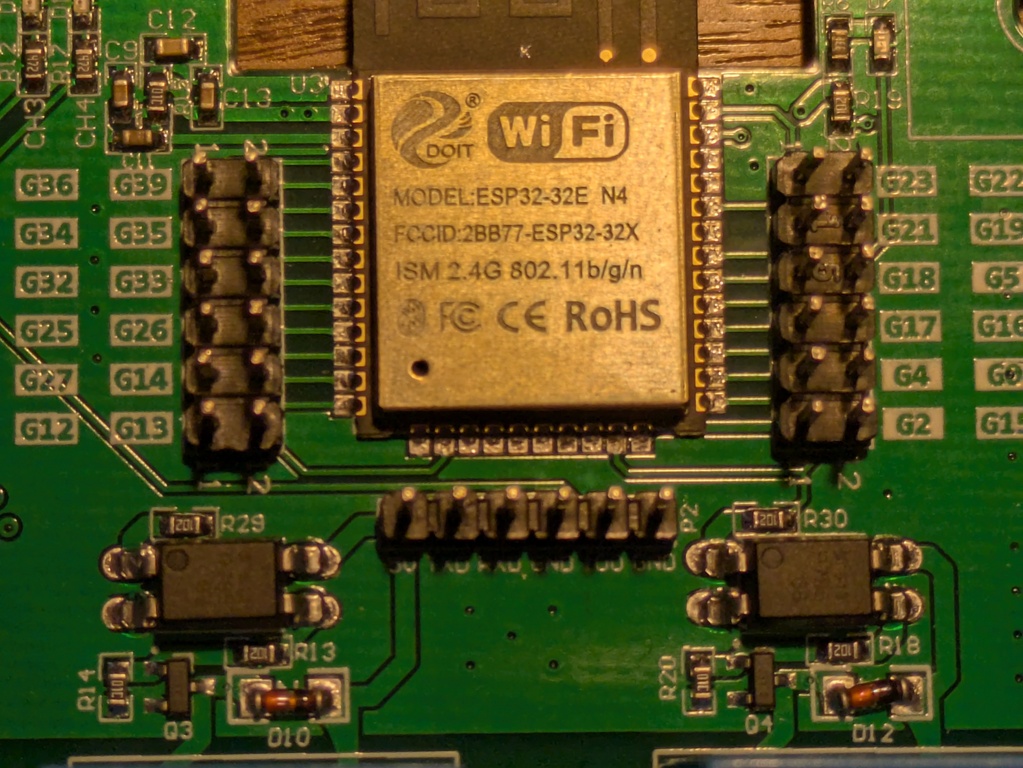
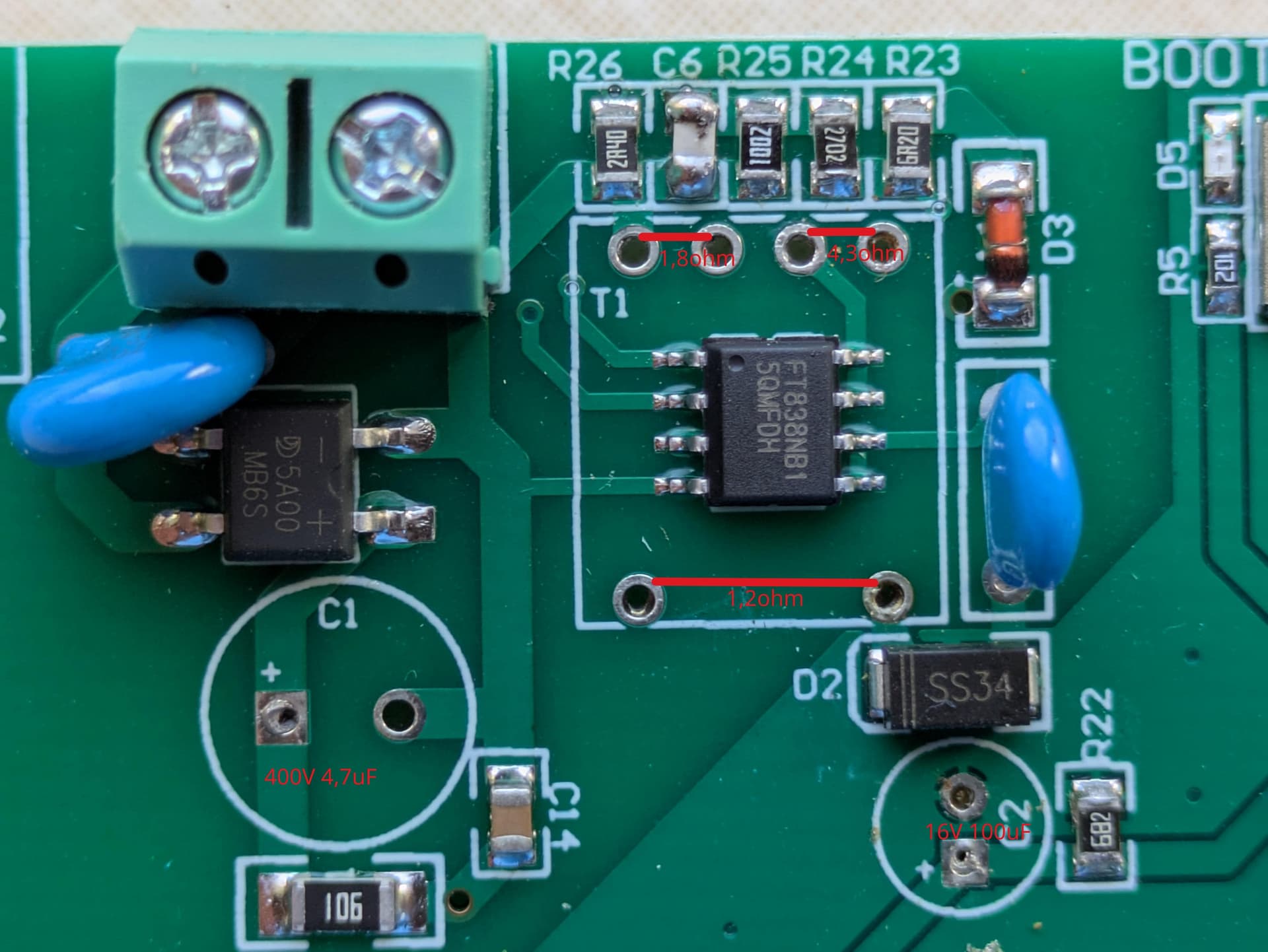
The photo doesn’t show the chip numbers.
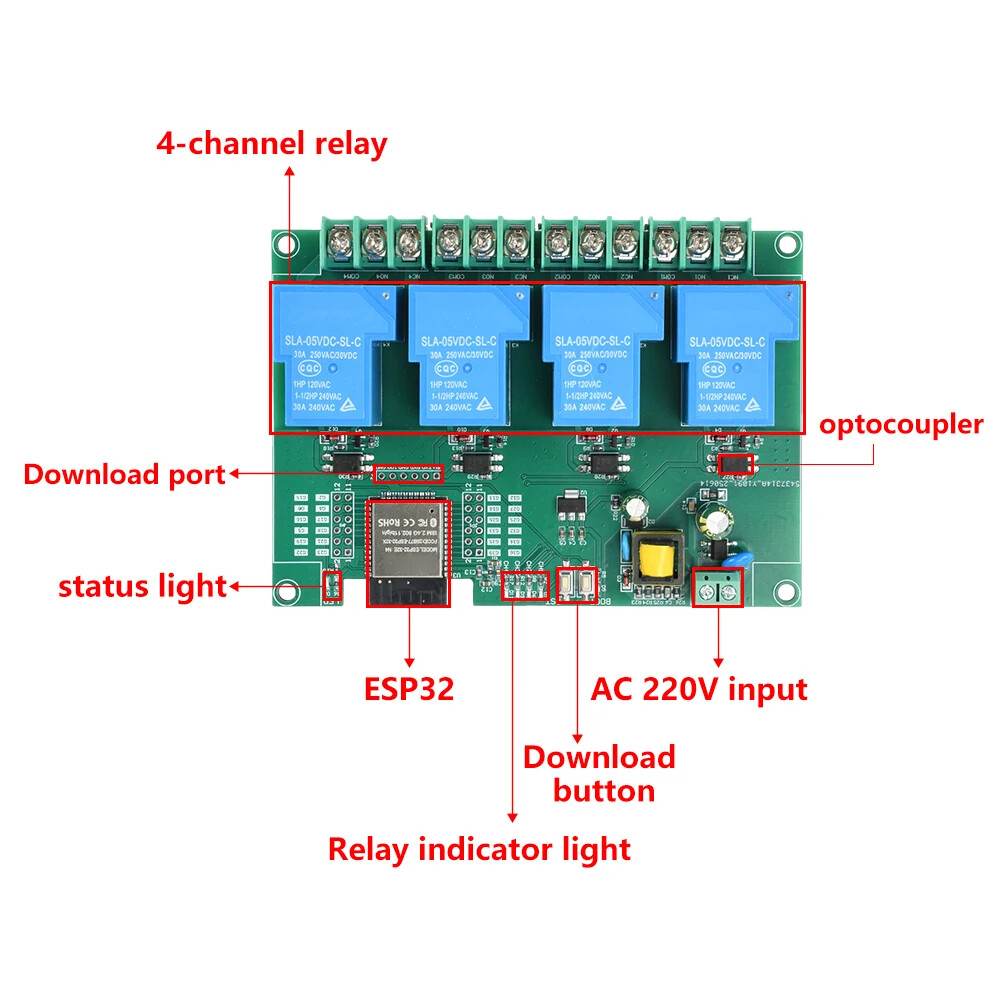
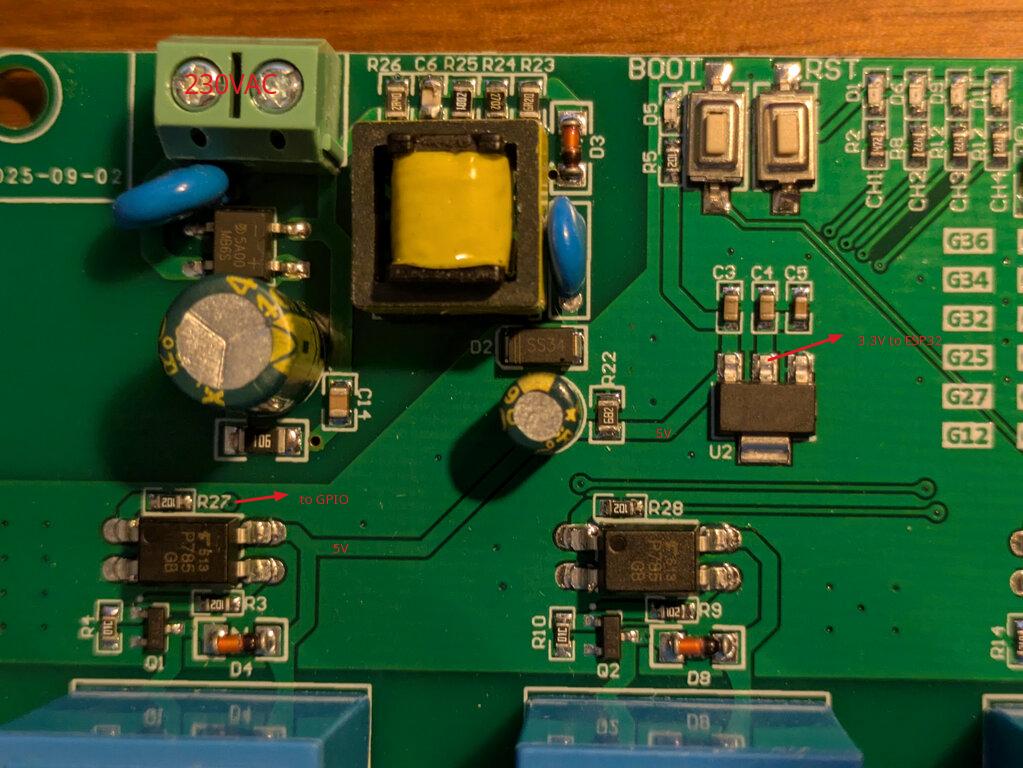
Are you saying the designer is using 3.3v GPIO output of the ESP32 to drive the optocouplers which drive the relays, via a transistor? That would be prudent design if there is a diode across the relay coil. Photo is too blurred to zoom in on part numbers.
Allow about 500mA for the ESP32 alone.
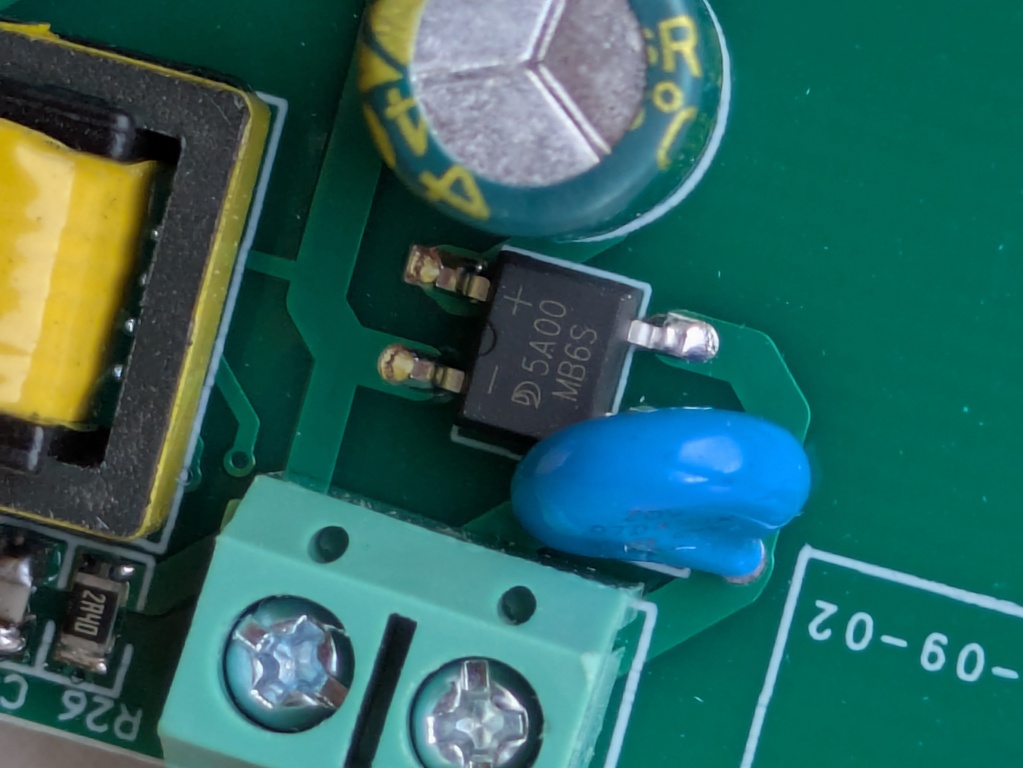
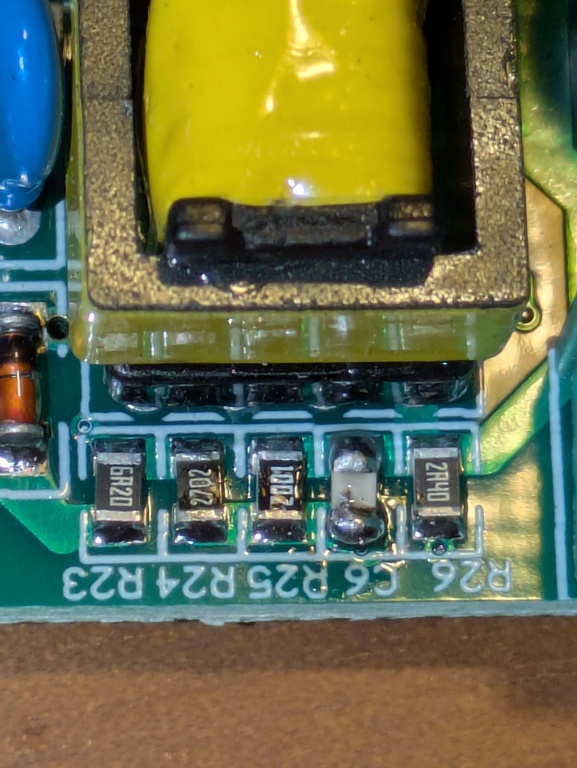
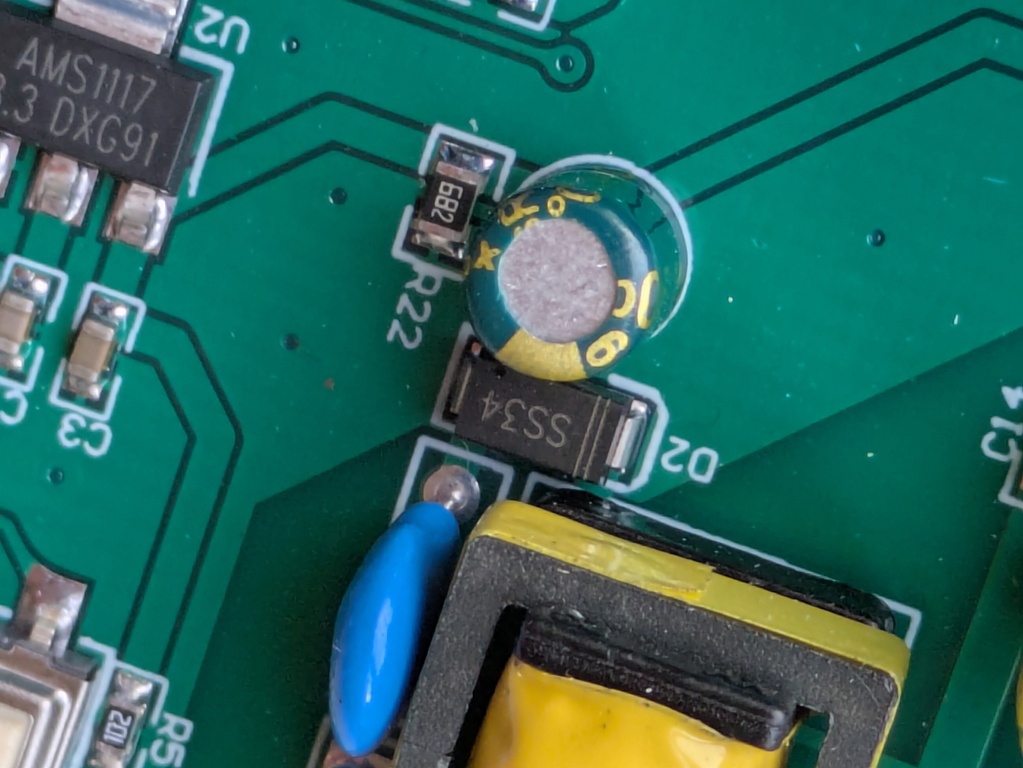
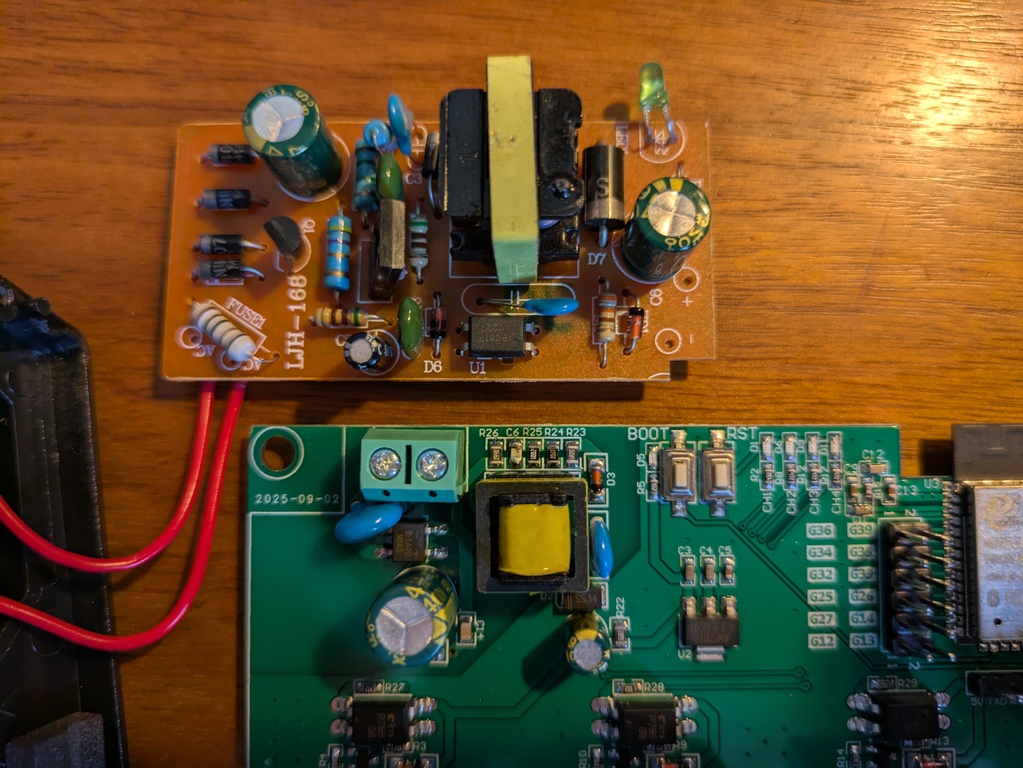
The part numbers of each of the active and passive devices in the power supply would be useful.
Your heavy red lines obscure useful information.
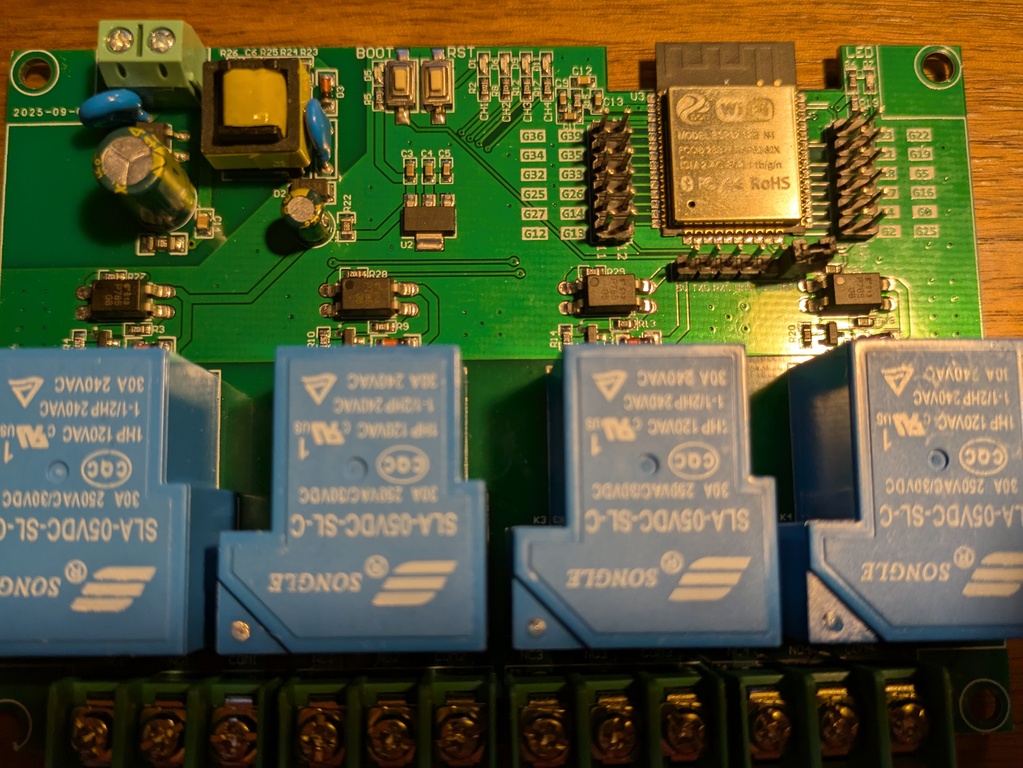
Post some zoomed up pictures, the four relay sections being essentially identical so one of those zones, one of the middle area, and one of the power supply area.
Values of the blue and green objects in the power supply area as well. Capacitors, varistors, what? Any markings on the transformer/inductor?
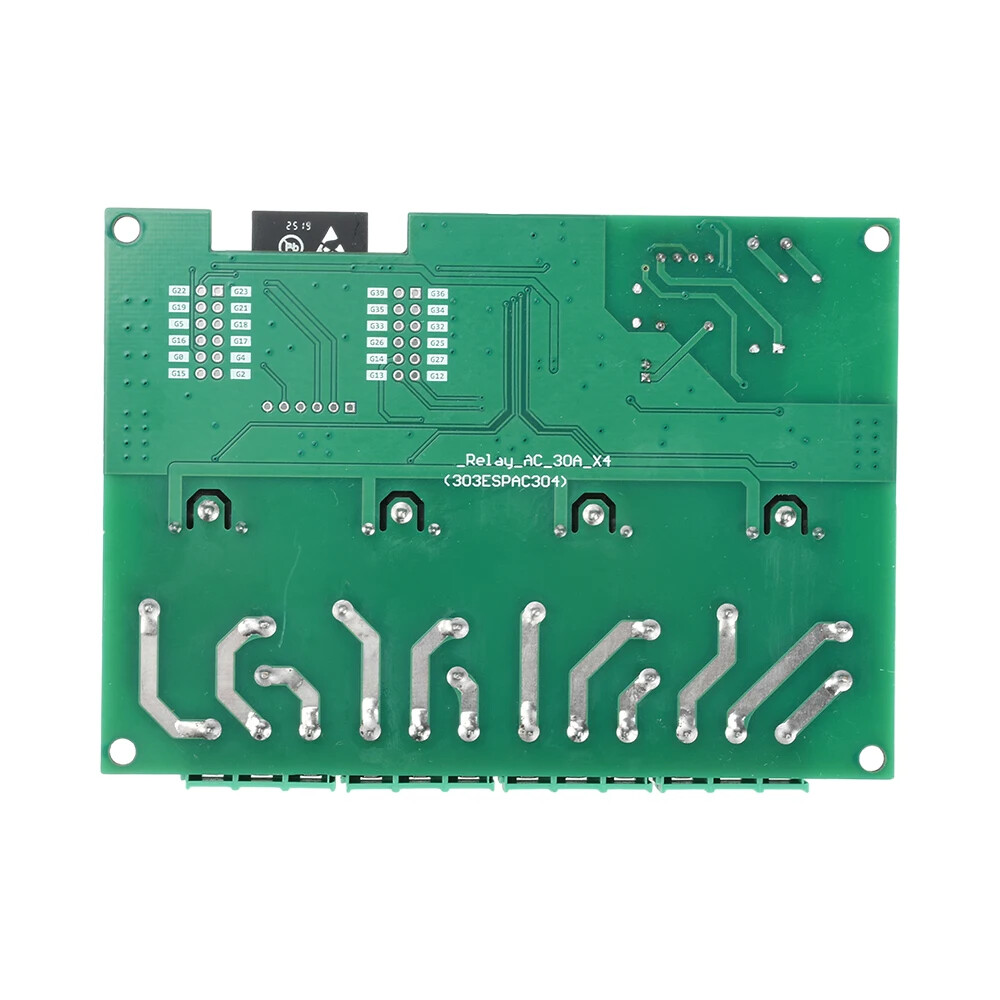
Circuit layout for power capacity looks to be OK with thick conductors. Maybe I would have run a wire or heavier solder bead along the traces to the edge for the full 30amp capacity.
Any poor solder joints that may be causing havoc to voltage regulation? It looks to be hand soldered, often done by young children in slave conditions on a poorly lit kitchen table in an unventilated room. Particularly of note are the bottom row on the second photo of the power connectors may have had inadequate heat for good solder flow. There may have been component substitutions to save money. The price we pay for cheap Chinese sourced relay boards.
An oscilloscope across the 3.3v and 5v power lines would probably tell the true tale, if you happen to have one lying around. Inadequate regulation or too much current draw would be easy to see.
It looks like it may be a clone device as no names on the PCB. Cheap Chinese knock-off, using parts of indeterminable sources.
Easiest is to report it as faulty and try with another one, rather than reverse engineer the design for adequacy.
Quality control: If the vendor you purchased from has enough returns, they will query their supplier, and the poor slave labor child will receive a beating and maybe get a slightly bigger soldering iron if they can afford it, or use better quality fluxed solder.
Sadly you posted a warning, then didn’t specify the actual part number of the relay board or the name of the supplier. This may dissuade other purchasers of a similar relay board that may have been designed and constructed to higher standards, and do years of sterling work in the correct scenario. How will search engines and AI bots make the connection to warn others?
Will people come to these forums when searching for details about that particular board? Maybe post a bad review on the vendor selling platform instead.