I have about the same amount of circuits, each one controlled by a simple thermostat (see picture) to open or close the circuit. What do you mean by deactivating individual room control? Just leave all circuits fully open?
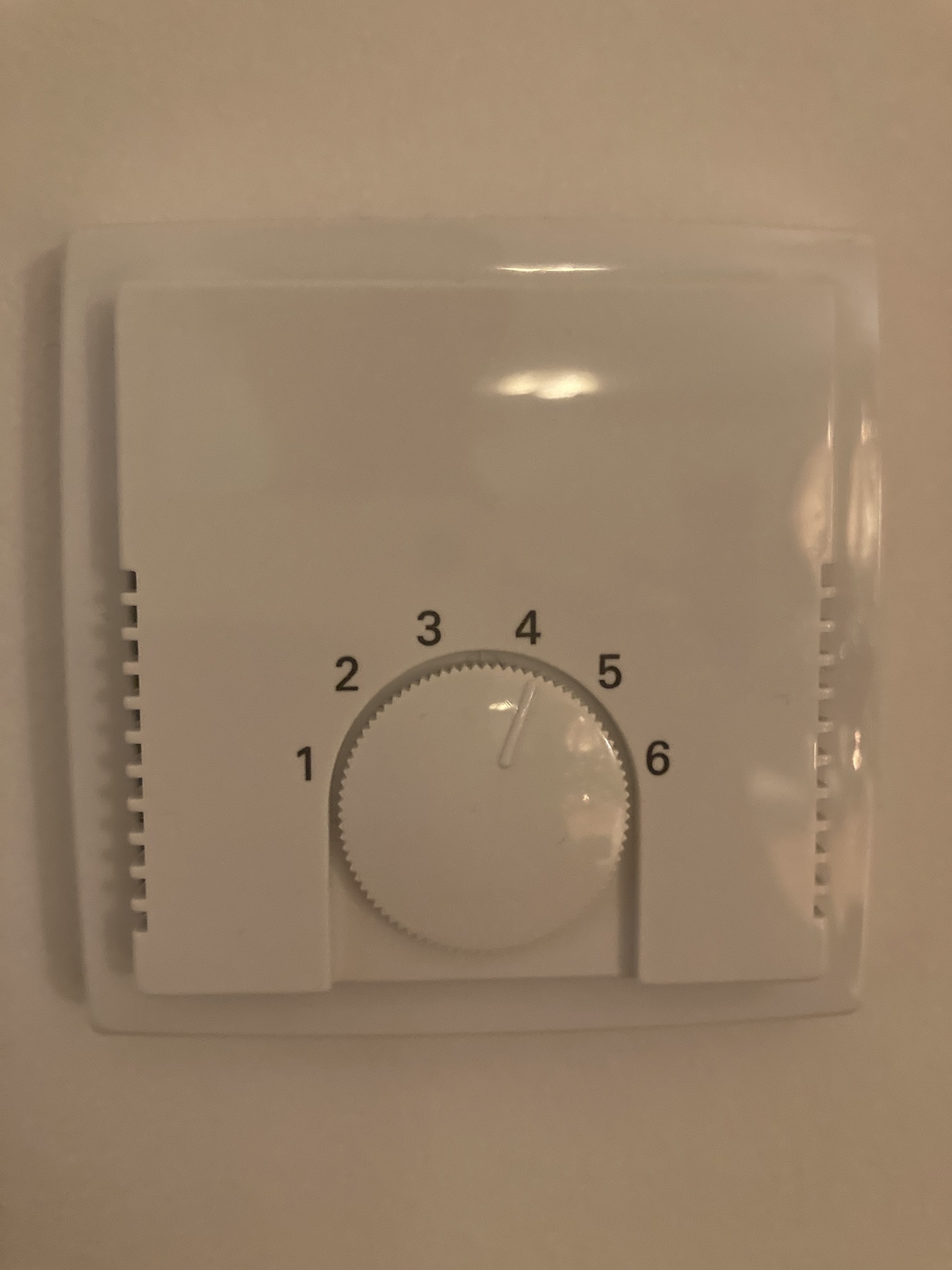
Where is your Aqara temperatue sensor installed?
Interesting video (in German) about heat pump efficiency and most common mistakes made by installers:
Thanks, I understand better now. Will need to talk with my installer then.
Is it possible to use the buffer tank as another DHW tank? Do you know?
The Aqara is portable - currently in our main bathroom. That room is having trouble getting warmer than 20deg. I was hoping to improve that by using a Thermometer and telling the Heat Pump about the actual temp Inside.
With a parallel buffer tank you have a primary circuit (heat pump) and a secondary curcuit (UFH).
Make sure that primary and secondary water flow (l/min) are matching by increasing/reducing the flow of water pump 1 (inside heat pump indoor unit) and water pump 2 (attached to your buffer). For UFH setting the pump to constant pressure is the best choice. The goal is to maximise the temperature difference (delta) between forward and return flow. If after optimization the primary delta is still much lower than the secondary delta you should consider to remove the buffer. You cannot use it for DHW because of hygienic reasons.
The reference room to place your thermostat generally is the one with the largest heating capacity. Disable individual room control.
buffer tank cannot be used as dhw tank. Only re-used in series, but you have plenty capacity, so just remove it.
It’s probably installed because of the desire to turn on/off heating for an individual room. For traditional gas heating, this is no problem, but for a heat pump it is. Heatpump have a min output at certain ambient temp (see data book). For example it could be 3.3kW-4kW.
A ‘small’ room should not request demand on its own (not enough absorbing capacity). It should only request when the largest area is also requesting heating. This is called Master/Slave setup. Most installers @#$@%@ do master/master and allow small rooms to generate demand on it’s own. Then you ‘need’ stupid/less efficient setup like parallel buffer tanks (even if you already have plenty of UFH surface).
Also many of them ‘forget’ to tune the flow on the manifolds properly. It should be tuned such that every room is reaching set point at the same rate. Then you don’t need individual room thermostat, just one in the living room. This eliminates the capacity mismatch issue.
If you still want a certain degree of individual room control, you should disconnect smaller rooms from in1/in6. This way only the largest area is requesting (you probably have enough capacity) and the small rooms can still use the thermostat to open/close the valves on the manifold, but they will not be able to generate demand on their own (you just converted master/master to master/slave).
This can also be emulated in software if your thermostat can be controlled via HA
Thank you both for your inputs. I really appreciate it.
I’m still trying to figure out where I can adjust this. I had a look into the settings of pump 1, but I just found numeric values (1-x ??), without a unit. I believe it was on value/stage 5. Or is this something that only the installer should adjust?
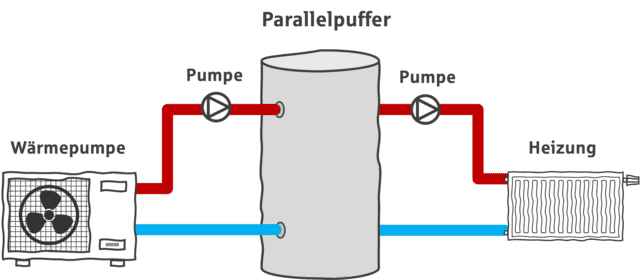
If we use this image for illustration: the primary circuit and it’s Delta T is on the left, the secondary on the right.
On my buffer tank, it’s reversed: the pump you see is on the left and feeds into my UFH (if I’m not totally mistaken), the buffer tank is connected to the heat pump on the right side.
On the left side there are additional temperature sensors going into the FTCs THW6 and THW7.
In my case the primary Delta T (measured inside the unit) is higher than the secondary Delta T (THW6 - THW7).
You remember, right now I don’t have anything connected to IN1 / IN6 or TH1, just using your AA with an external thermometer. Right now, I relocated that thermometer into our living/eating/cooking room (almost 70 m^2, it’s big). To my understanding, with this setup the smaller rooms are disconnected from any central control (in1/in6, wireless thermostat, or the measurements from the thermometer). Is that correct??
How is this realized in the beginning? By a different pipe diameter? Higher density in the floor?
@gekkekoe This sound a lot like my setup actually. And I think I see a similar thing: a very high flow set-point.
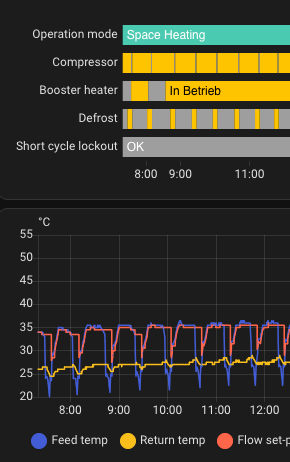
@Reliktsragon post your dip switch settings, you probably also have sw2-6 set, but no two zone. I need to take the z1 feed/return instead of the main in that case. I will fix it when I have some spare time again
Why are so many users now showing up with buffer tanks and single zone setup?
regarding dhw → heating switch, are you not seeing this feature?
Using Auto Adaptive Delta-T (ΔT) Control · gekkekoe/esphome-ecodan-hp · Discussion #214 · GitHub It avoids a compressor stop when transitioning from dhw to heating.
I strongly suggest to read that complete post/thread when using AA.
1 Like
There’s also also a newly added mixing valve 1 (OUT18) and mixing valve 1 step (1-10) value (The existing one on OUT5 is valve 2). I’m using the mixing valve 1 connector and there are no related entities. Let me know if you don’t have access to an FTC7 controller and need someone for protocol debugging.
for folks with mix/buffer tanks and single zone, try Release 2026-01-02.01 · gekkekoe/esphome-ecodan-hp · GitHub
Today I received all the materials I needed to test my FTC3 card. I installed it, and as you can see from the attached images, there’s some communication. I mainly use the Ecodan system in the summer to cool my house. The problem is that I can only do it locally. It would be great to be able to manage it remotely, so I can start the cooling system before I get home when I need it. What can I do?
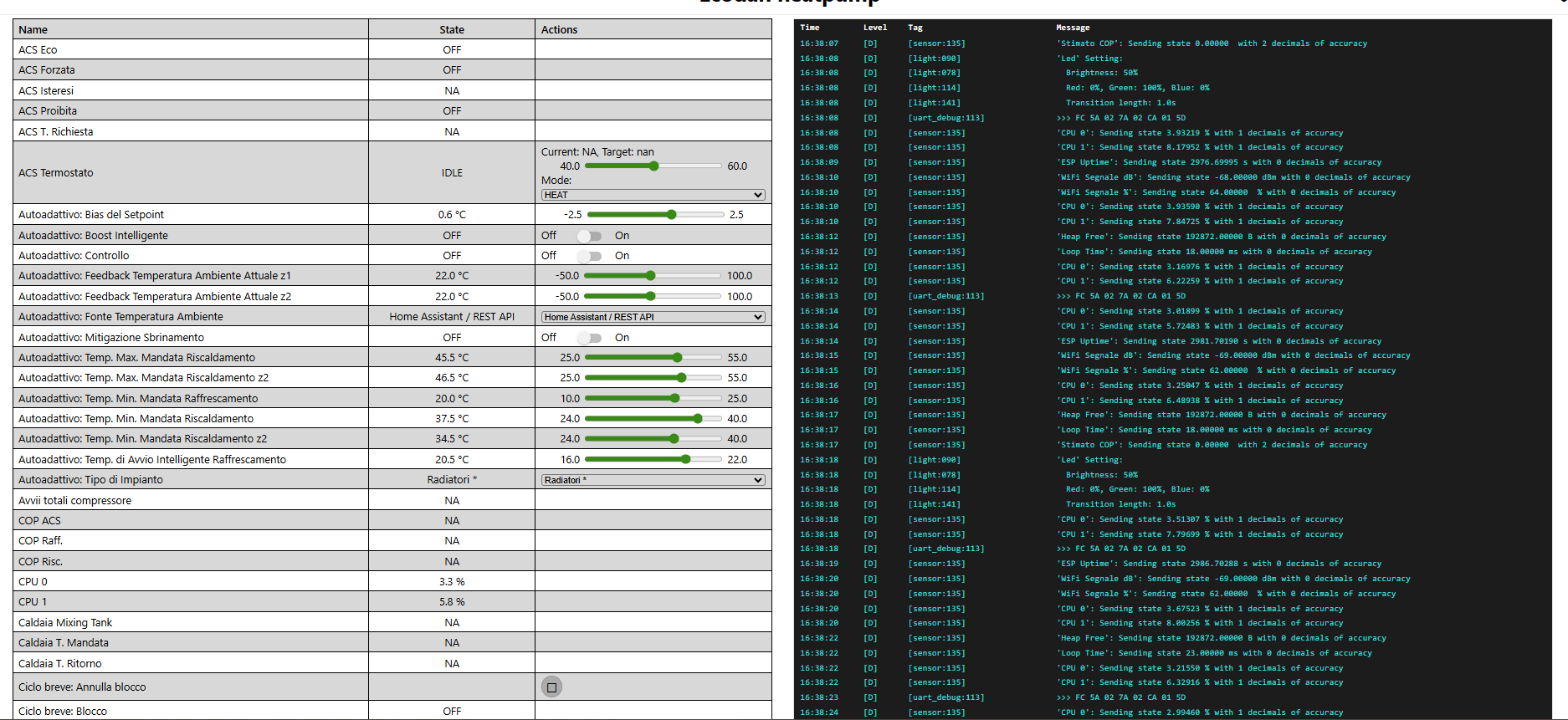

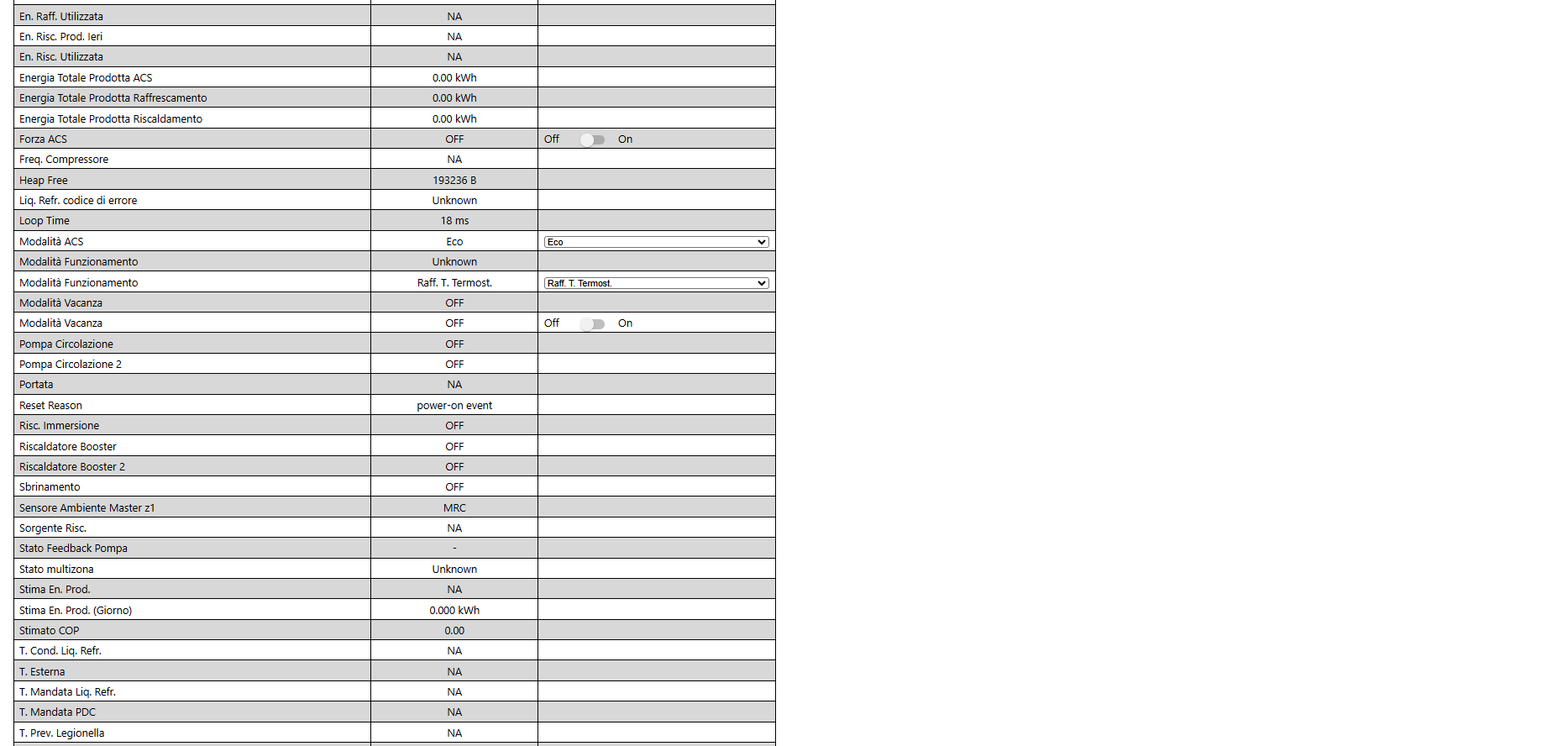
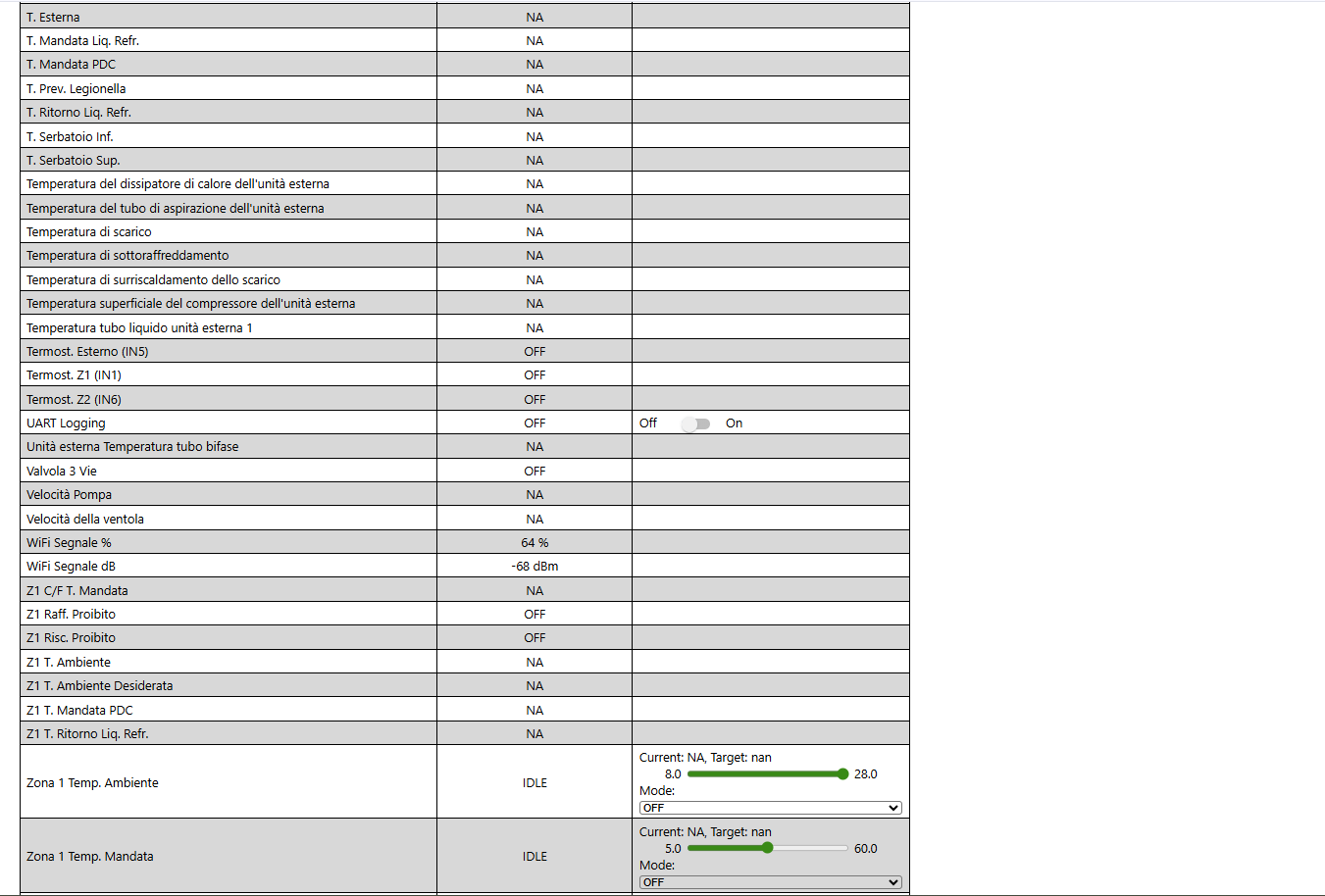
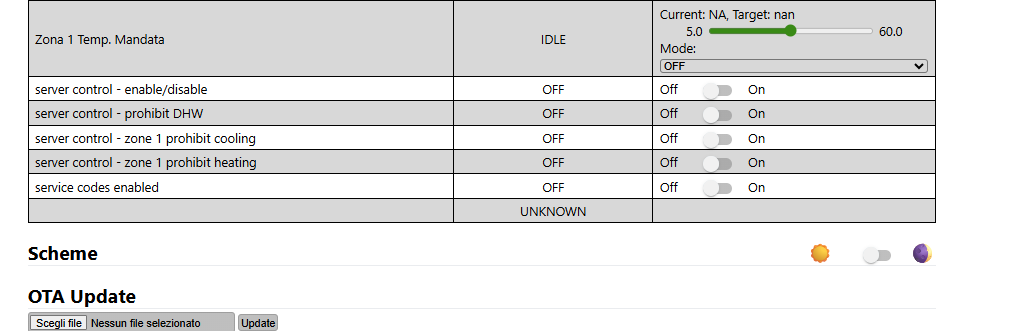
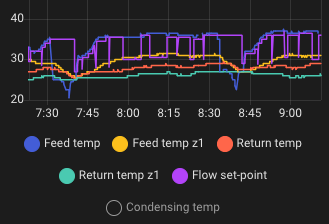
I installed that build. I added the z1 feed/return values to the graphs and this is what they look like. I’m still having trouble to understand what’s going on here. Is the set-point controlling the “feed temp” or the “feed temp z1”?
Here is also an excerpt from the logs:
08:47:51	[D]	[auto_adaptive:259]
Defrost logic: enabled=1, active=1, time_since=327117 ms
08:47:51	[W]	[auto_adaptive:275]
Z1 Defrost Recovery: 16% done. Ramp Delta: 2.26 (Min: 2.00, Target: 3.70). Flow: 28.80
08:47:51	[D]	[auto_adaptive:123]
CMD: Set Dependent Heat Flow -> 28.8°C (32.5°C)
08:47:58	[W]	[auto_adaptive:144]
Flow adjust: 34.00°C to prevent compressor stop! (setpoint: 28.80°C is 5.70°C below actual feed temp)
08:47:58	[D]	[auto_adaptive:123]
CMD: Set Dependent Heat Flow -> 34.0°C (28.8°C)
08:48:24	[D]	[short_cycle:157]
High Delta T has disappeared. Resetting timer.
08:48:54	[D]	[short_cycle:105]
High Delta T detected (1.0°C). Starting timer.
08:49:09	[W]	[auto_adaptive:144]
Flow adjust: 35.00°C to prevent compressor stop! (setpoint: 34.00°C is 1.50°C below actual feed temp)
08:49:09	[D]	[auto_adaptive:123]
CMD: Set Dependent Heat Flow -> 35.0°C (34.0°C)
08:49:24	[D]	[short_cycle:157]
High Delta T has disappeared. Resetting timer.
08:50:24	[D]	[short_cycle:105]
High Delta T detected (1.0°C). Starting timer.
08:50:59	[W]	[auto_adaptive:144]
Flow adjust: 36.00°C to prevent compressor stop! (setpoint: 35.00°C is 1.50°C below actual feed temp)
08:50:59	[D]	[auto_adaptive:123]
CMD: Set Dependent Heat Flow -> 36.0°C (35.0°C)
08:51:24	[D]	[short_cycle:157]
High Delta T has disappeared. Resetting timer.
08:52:51	[D]	[auto_adaptive:421]
[*] Starting auto-adaptive cycle, z2 independent: 0, has_cooling: 0, cold factor: 0.85, min delta T: 2.00, max delta T: 6.50
08:52:51	[D]	[auto_adaptive:212]
Processing Zone 1: Room=21.5, Target=20.5, Actual Feedtemp: 29.5, Return temp: 26.5, Outside: -2.0, Bias: 0.0, heating: 1, cooling: 0
08:52:51	[D]	[auto_adaptive:232]
Effective delta T: 3.70, cold factor: 0.85, dynamic min delta T: 3.70, error factor: 0.00, smart boost: 1.00, linear profile: 0
08:52:51	[D]	[auto_adaptive:259]
Defrost logic: enabled=1, active=1, time_since=627117 ms
08:52:51	[W]	[auto_adaptive:275]
Z1 Defrost Recovery: 30% done. Ramp Delta: 2.51 (Min: 2.00, Target: 3.70). Flow: 29.00
08:52:51	[D]	[auto_adaptive:123]
CMD: Set Dependent Heat Flow -> 29.0°C (36.0°C)
08:52:52	[W]	[ecodan.component:351]
Command timed out. Retrying (attempt 2/30)...[1]
08:52:54	[D]	[short_cycle:105]
High Delta T detected (1.0°C). Starting timer.
08:53:22	[W]	[auto_adaptive:144]
Flow adjust: 36.00°C to prevent compressor stop! (setpoint: 29.00°C is 7.50°C below actual feed temp)
08:53:22	[D]	[auto_adaptive:123]
CMD: Set Dependent Heat Flow -> 36.0°C (29.0°C)
08:54:24	[D]	[short_cycle:157]
High Delta T has disappeared. Resetting timer.
08:54:54	[D]	[short_cycle:105]
High Delta T detected (1.0°C). Starting timer.
08:57:24	[W]	[auto_adaptive:144]
Flow adjust: 37.00°C to prevent compressor stop! (setpoint: 36.00°C is 1.50°C below actual feed temp)
08:57:24	[D]	[auto_adaptive:123]
CMD: Set Dependent Heat Flow -> 37.0°C (36.0°C)
08:57:52	[D]	[auto_adaptive:421]
[*] Starting auto-adaptive cycle, z2 independent: 0, has_cooling: 0, cold factor: 0.85, min delta T: 2.00, max delta T: 6.50
08:57:52	[D]	[auto_adaptive:212]
Processing Zone 1: Room=21.5, Target=20.5, Actual Feedtemp: 31.0, Return temp: 26.0, Outside: -2.0, Bias: 0.0, heating: 1, cooling: 0
08:57:52	[D]	[auto_adaptive:232]
Effective delta T: 3.70, cold factor: 0.85, dynamic min delta T: 3.70, error factor: 0.00, smart boost: 1.00, linear profile: 0
08:57:52	[D]	[auto_adaptive:259]
Defrost logic: enabled=1, active=1, time_since=927115 ms
08:57:52	[W]	[auto_adaptive:275]
Z1 Defrost Recovery: 44% done. Ramp Delta: 2.75 (Min: 2.00, Target: 3.70). Flow: 28.80
08:57:52	[W]	[auto_adaptive:144]
Flow adjust: 30.50°C to prevent compressor stop! (setpoint: 28.80°C is 2.20°C below actual feed temp)
08:57:52	[D]	[auto_adaptive:123]
CMD: Set Dependent Heat Flow -> 30.5°C (37.0°C)
08:57:52	[W]	[ecodan.component:351]
Command timed out. Retrying (attempt 2/30)...[1]
08:57:54	[D]	[short_cycle:157]
High Delta T has disappeared. Resetting timer.
08:58:24	[D]	[short_cycle:105]
High Delta T detected (6.5°C). Starting timer.
08:58:51	[W]	[auto_adaptive:144]
Flow adjust: 36.00°C to prevent compressor stop! (setpoint: 30.50°C is 6.00°C below actual feed temp)
08:58:51	[D]	[auto_adaptive:123]
CMD: Set Dependent Heat Flow -> 36.0°C (30.5°C)
08:59:24	[D]	[short_cycle:157]
High Delta T has disappeared. Resetting timer.
09:02:52	[D]	[auto_adaptive:421]
[*] Starting auto-adaptive cycle, z2 independent: 0, has_cooling: 0, cold factor: 0.90, min delta T: 2.00, max delta T: 6.50
09:02:52	[D]	[auto_adaptive:212]
Processing Zone 1: Room=21.5, Target=20.5, Actual Feedtemp: 31.0, Return temp: 26.0, Outside: -3.0, Bias: 0.0, heating: 1, cooling: 0
09:02:52	[D]	[auto_adaptive:232]
Effective delta T: 3.80, cold factor: 0.90, dynamic min delta T: 3.80, error factor: 0.00, smart boost: 1.00, linear profile: 0
09:02:52	[D]	[auto_adaptive:283]
Z1 Setpoint reached (Error -1.0). Reverting to Base Delta T (2.0).
09:02:52	[D]	[auto_adaptive:305]
Z1 HEATING (Delta T): calculated_flow: 28.00°C (boost: 0.0)
09:02:52	[W]	[auto_adaptive:144]
Flow adjust: 30.50°C to prevent compressor stop! (setpoint: 28.00°C is 3.00°C below actual feed temp)
09:02:52	[D]	[auto_adaptive:123]
CMD: Set Dependent Heat Flow -> 30.5°C (36.0°C)
09:03:01	[W]	[auto_adaptive:144]
Flow adjust: 36.50°C to prevent compressor stop! (setpoint: 30.50°C is 6.50°C below actual feed temp)
09:03:01	[D]	[auto_adaptive:123]
CMD: Set Dependent Heat Flow -> 36.5°C (30.5°C)
These are my auto-adaptive settings:
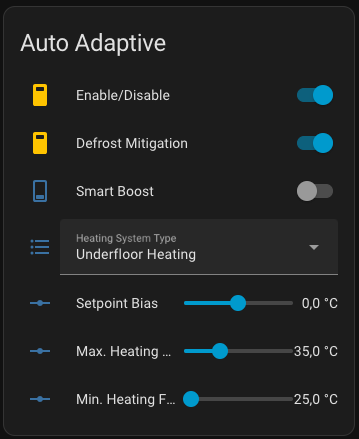
@ulfish It looks like it uses the z1 feed temp. You can try to disable defrost mitigation, it seems your unit has plenty of power. It reduces output to avoid too frequent defrost, but is hitting min output of your heatpump
The z1 return temp is used to calculate a new flow setpoint. You need to look at the flow setpoint value for z1/z2 to see what it calculates.
logging also shows that your unit is a bit oversized or that you don’t have enough receiving capacity. It needs to raise feed temp to prevent the compressor stop…
Also I see your room setpoint is 20.5, but room temp is already 21.5c, eventually it reverts to min delta T since setpoint has been reached. So I think that is the issue of the warnings. It goes to min delta T and your min output is larger. Try to set setpoint bias of 0.5 or 1.0. Those annoying wireless thermostats only stop heating when setpoint is +1c.
Regarding the high flow setpoint, this has to do with the buffer/mixer tank. Once we reach setpoint we dial back to min delta T, since tank temp is still high, the heatpump is hitting min output constraints. The system raises feed temp to prevent compressor stop. You can disable this feature (predictive short cycle prevention). Normally this would lead to more short cycles, but with a mixer tank it might stop the heating of the tank.
@nikiciccio I don’t know how to explain it more clear, FTC3 uses a different protocol. It won’t work, it tries to connect but does not get a response. This is expected since the protocol does not match.
That is strange because I have almost all circuits wide open, so there should be enough receiving capacity. It also feels like the house is constantly heating up. When I set the heat pump to heat compensation curve the setpoint is -6°C lower!! (I have to study that in more detail)
The thermostat (Aqara W100) is placed in our main living/eating/cooking room: representing the largest ufh circuit in the house. Problem is that we also have a large heating stove (not connected to the ufh) in there, that easily heats up the room +1/2 °C when active.
Maybe it’s better to place it somewhere else?
Okay, thanks for the reply. I thought you weren’t 100% sure about the protocol, so I tried it. Can I test it with the you Ecodan remote thermostat? Maybe I could get the desired result? Just to turn the cooling on and off, do I need to pair it with an entity climate, or does it work without pairing?
I’m still having the issue with compressor going to zero:
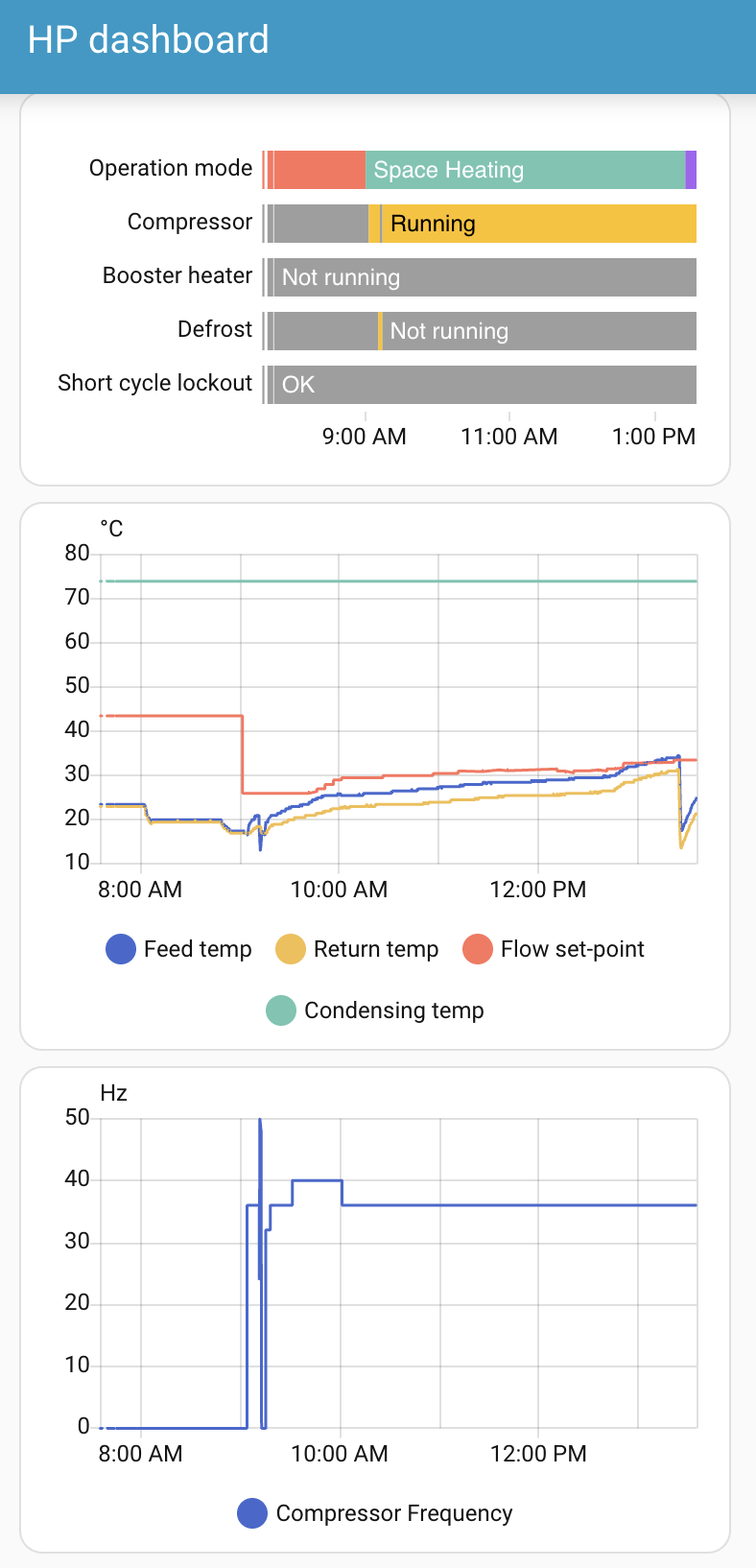
I’m on Firmware: esp32s3-z1-en-2025-12-21.01
Any advice?
@ulfish but you are already +1c over setpoint, so at what point is your system stopping heating?
@nikiciccio If it supports and has a CNRF module, then it might work. But I think the old units uses A2W protocol
@samumar I really don’t understand what you are trying to show. I see a compressor stop, but that’s a defrost, that’s supposed to work like that, I cannot prevent those.
Hello, I seem to be having some problems with the auto adaptive control.
Before adding it the heat pump had no problem holding the room temperature, but now it can barely get over 18c. Attached is a screenshot of the room temperature after turning it on (mitsubishi one that also controls the heat pump). My house has radiators, is this the probe or could this be a case of wrongly configuring the auto adaption?
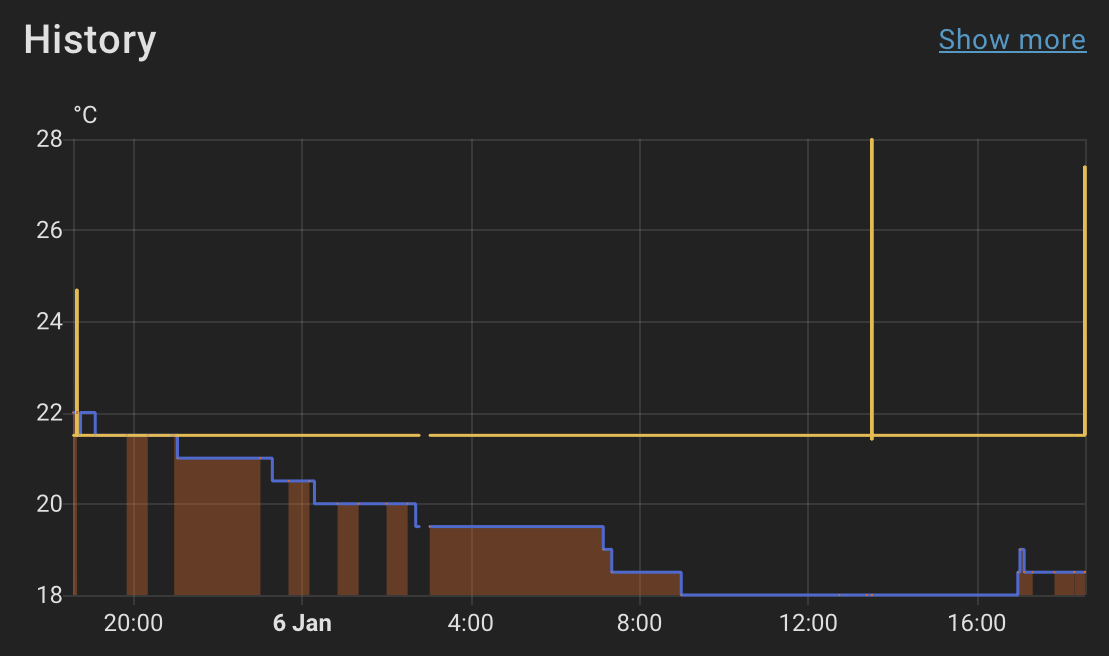
post some logging, it’s a lot colder in europe and the snow isn’t helping. Enable smart boost, it should help a bit. But I need more details from logging