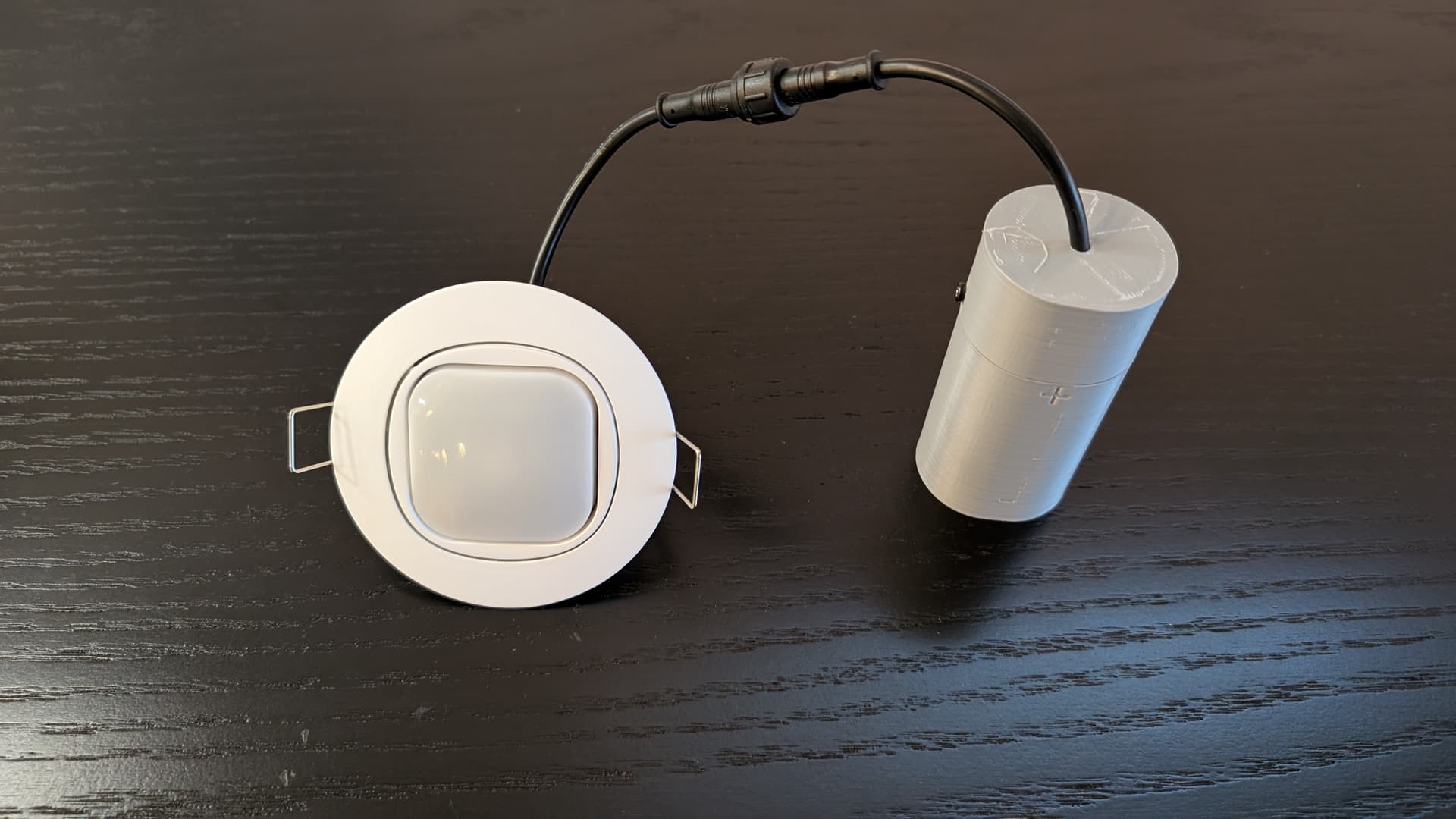
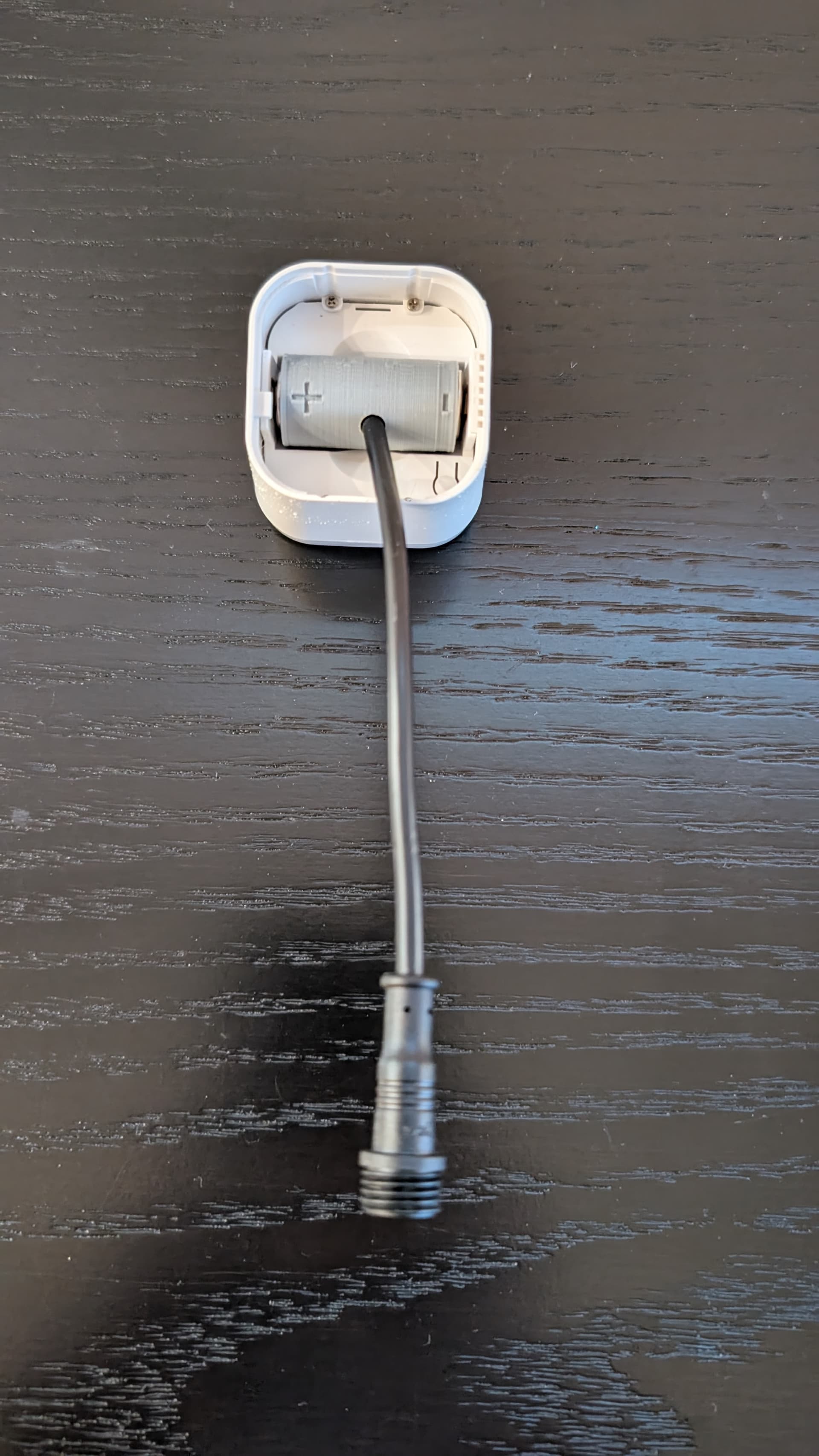
Being an HA user with 15 Aeotec TriSensors (with recessed mounts) spinkled throughout my home, the regular replacement of sensor batteries is among the least enjoyable chores. My cousin (also an HA user with ~20 TriSensors) and I set out to see if we could create a extended-life battery solution. The result of our effort seems to be a success. After 36+ months of operation, all sensors show 100% battery levels.
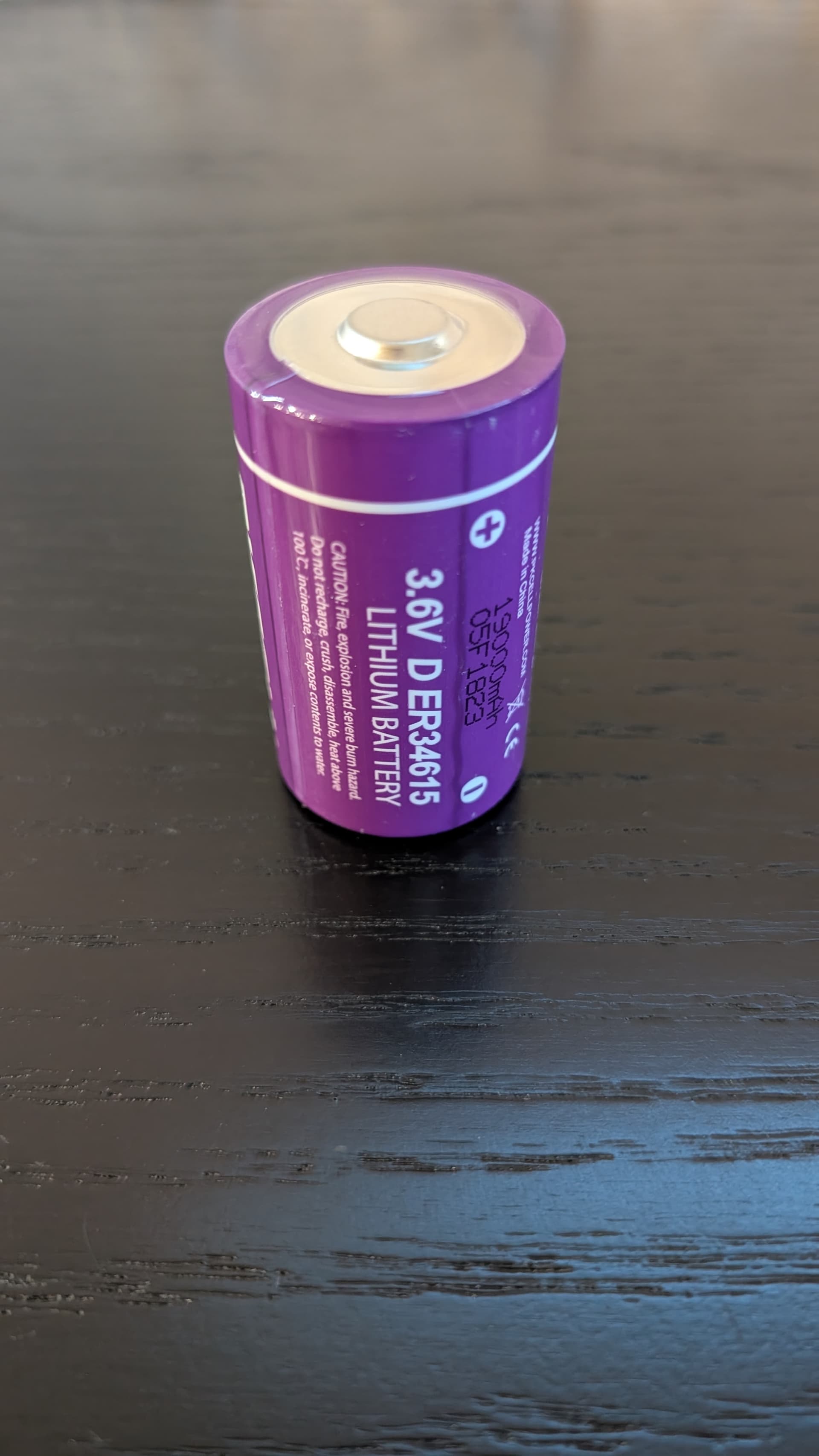
We now speculate, given the load requirements of the sensors and the 19,000 mAh capacity of the 3.6V D-cells, that the batteries may last as long as 10 years in this application.
The solution involves:
Aeotec TriSensor (or Trisensor 8)
Aeotec Recessor
3.6V ER34615 D-cell Lithium battery
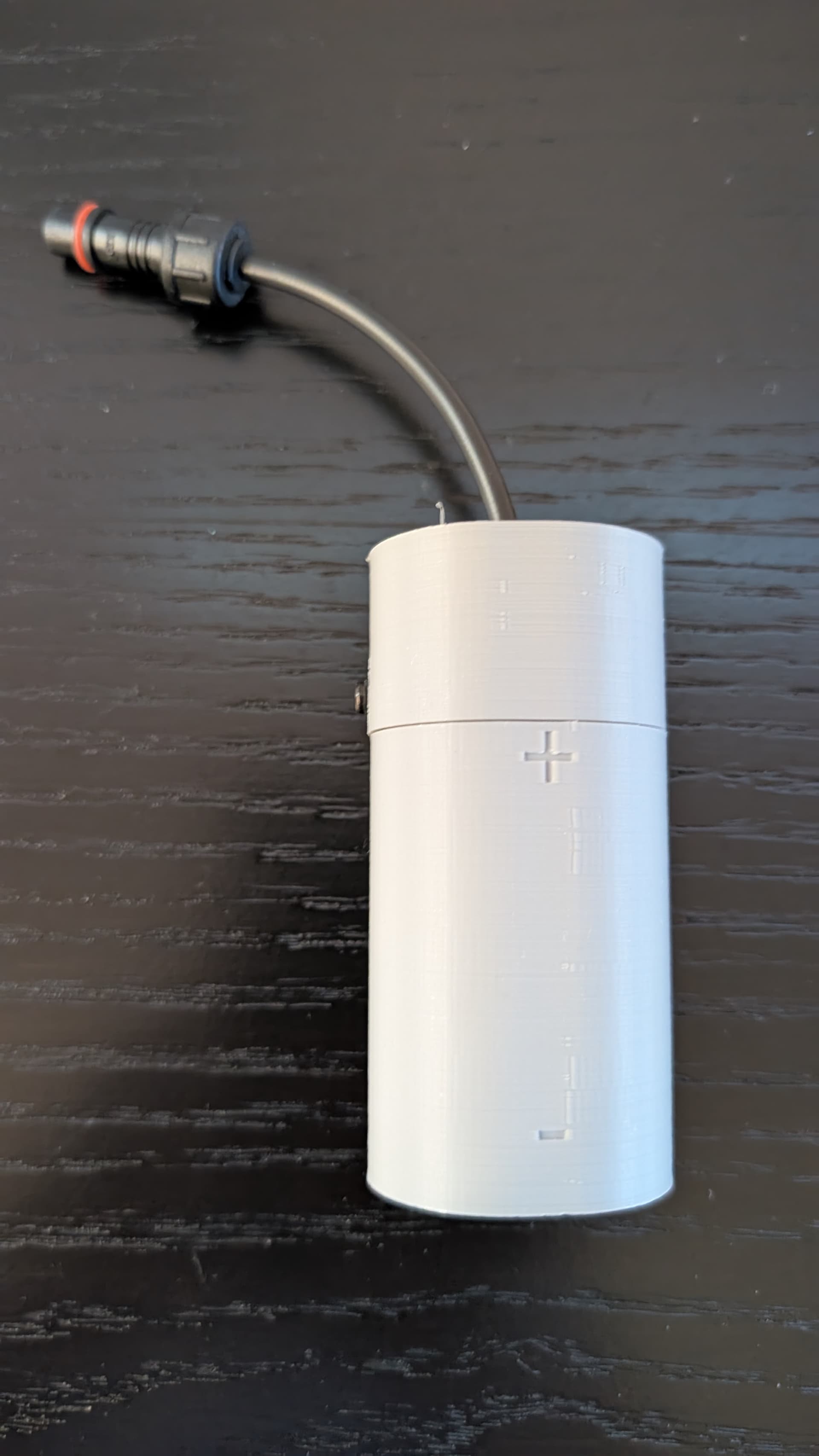
3D printed battery container
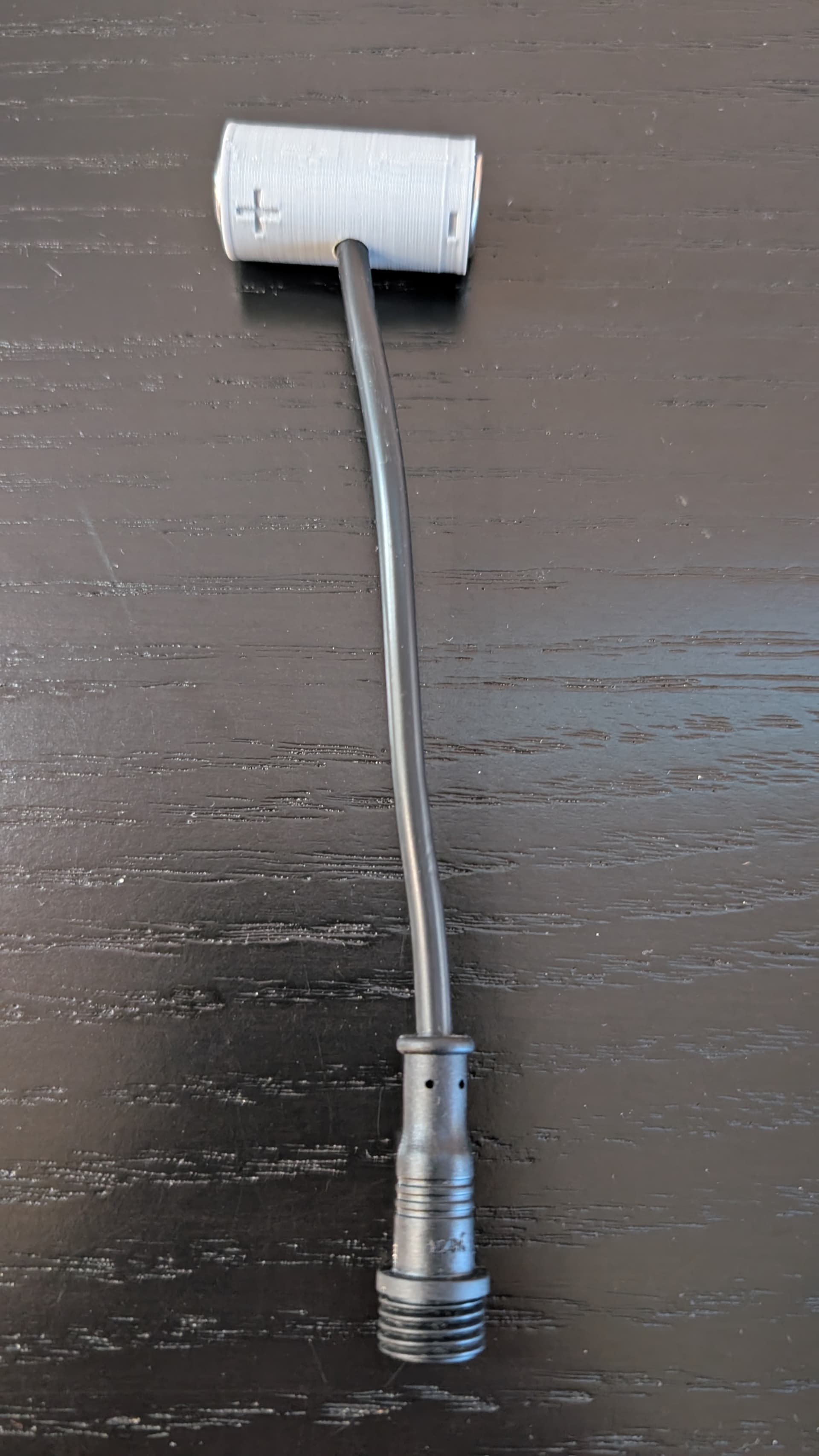
3D printed CR123A slug
battery contactors, wire, and connectors
small drilled hole in the Trisensor cover
The output of the 3.6V battery is 0.6V higher than that of a CR123A; however, the sensors seem to handle the excess voltage. Drilling a hole in the back cover of the sensor is necessary in order to permit space for the wire connected to the CR123A slug (see photo below). A Dremel or round file will also do the job.
I am sharing this info in order to measure the level of interest in the community for such a solution. A simple, ‘like’ is helpful. Certainly, if you have questions, ask.
Lithium thionyl cells have a lower self discharge rate compared to Lithium ion cells. The battery sensor is expecting Lithium ion so reading will be less accurate. Thionyl cells hold their voltage until near the end unlike ion cells that have a more predictable voltage to capacity graph.
Such high density device would give me a safety concern used inside in this manner.
I have the multisenor (6in1?) Even 5 years would be nice. Did you increase the freqency of reads now you have the extra juice? Would you consider selling these or just provide the instructions and printer details for diy?
We do not have a unit for the MultiSensor 6 given it requires 2x CR123A batteries. We did test the unit we created for the TriSensor in the MultiSensor 6 and the sensor did function properly but HA shows the battery level at 50%.
With respect to the ‘frequency of reads’, we set the motion clear time to 15 seconds. That created a more desirable behavior in spaces that have frequent traffic.
I would be interested in that CR123 slug printed with a 12v to 3.3v converter chip inside with a pigtail I could connect to 12v. I recently ordered some converters and tested them but I’m lacking in soldering practice and a 3d printer. Would also want CR2 for my Aeotec contact sensors.
All that said, I hate my TriSensors, they stop motion detection once a month and that is all I use them for. I have to remove the battery to reboot them to get them working again. Clearly your experience must be better?
We approximately 50 TriSensors installed in various places. Many have been continuously operating without incident or failure for several years.
To answer your question, we do not have a step-down from 12v or a model that fits the contact sensor. As a side note, we have had a good experience with the Third Reality contact sensors (Zigbee). Excellent battery life (2x AA) and consistent operation.
Have you attempted to update the firmware? v2.21 for the original model TriSensor and v2.8.4 for the TriSensor 8.