With these pull requests submitted to Home Assistant by Open Home Foundation employees (and lined up to be maybe be merged into 2025.10 for beta-testing?) it looks like the cat is now partially out of the bag on an upcoming “Home Assistant Connect ZBT-2” as a new upcoming best-in-class official Home Assistant branded USB radio adapter that can be either a Zigbee Coordinator and Thread Boarder Router (to allow Home Assistant to effortlessly connect Zigbee or Thread devices depending on what the user choose to configure it for):
-
“Create a new integration for the Home Assistant Connect ZBT-2. This is functionally identical to the ZBT-1 integration (with hardware variants and multi-PAN removed). ”
-
“This adds documentation for the Connect ZBT-2 integration. Like the ZBT-1 integration, this is a stub that points to a documentation page (TBD). ”
-
Add zbt2 brand by MartinHjelmare · Pull Request #7862 · home-assistant/brands · GitHub
“Add zbt2 brand: Add a symlink to the homeassistant brand for now for ZBT-2.”
Spotted as well that the zigpy project’s backlog tracker are and tagged with ZBT-2 and got some related comments and screenshots from developers:
-
https://github.com/zigpy/backlog/issues?q=label%3AZBT-2
“We like to redesign the setup/config flow for onboarding a new Zigbee/Thread adapter into Home Assistant. This should apply to the hardware discovery flow for the ZBT-1 and Yellow Radio modules and the upcoming ZBT-2 Adapter.”

FAQ for the ZWA-2 also include wording that strongly hits that a ZBT-2 will come sooner or later
-
Home Assistant Connect ZWA-2 - Home Assistant
“Why is it called Connect ZWA-2? Connect ZWA-2 was built on our second-generation platform, which prioritizes high performance and openness in its design. It is a big leap from our first-generation Connect ZBT-1, and all Connect line products going forward will use this new platform. There is no ZWA-1, as we jumped directly to 2 to represent the generation of technology inside this adapter.”
And another hint is in the latest newsletter blog post from the Open Home Foundation here:
-
“We have now launched the first in a long line of second-generation Connect devices, Home Assistant Connect ZWA-2. Being the second generation, it’s all about having the most performant and open design.”
Update: An integration documentation page for Home Assistant Connect ZBT2 is now published on the release candidate (beta) pages but the matching product pages that are linked in the above mentioned pull request does not yet exist or is not public yet (though that is understandable considering there is still no official launch date announced for the Connect ZBT-2 adapter as a product):
Paulus also hinted again during the Home Assistant 2025.9 Release Party (September 2025 release video) more or less saying between the lines that a replacement to the Home Assistant Connect ZBT-1 (formerly named Home Assistant SkyConnect) is planned, and hinting that there is probably a USB-to-Ethernet bridge in the works as well(?):

Again, there are no hits as to a release date, nor is there any leaked information on its specifications so I wonder if it will be based on the ERF32MG24 (MG24) or a newer ERF32MG26 (MG26) digital radio microcontroller chip from Silicon Labs? But surley must be based on one of those (plus use an ESP32-S3 only as a USB-to-Serial converter chip for the board), not the older EFR32MG21 chip that ZBT-1 is based on, and if the Zigbee/Thread radio in it is based on the newer ERF32MG26 then that should on paper make it more future-proof product in the long term as the newer MG26 series has a lot more CPU, RAM + Flash Storage resources, and perhaps more importably the ERF32MG26 series radio MCU chips RX Sensitivity of -105.4 dBm, compared to -104.3 dBm of the older Silabs EFR32MG21 (MG21) and -104.5 dBm of the EFR32MG24, which in layman’s terms means the should get better signal reception (as its radio’s recieving circuits are more sensitive).
 versus
In theory the newer MG26 chip should also be better at handling Multi-PAN (mutliprotocol) but even if that is the case that multi-protocol method of using Zigbee and Thread on the same radio chip is still not a stable technology so should not really be taken into consideration by end-users today (however might mature in the future so hardware could maybe have extra long life), but currently it will for now be best to just buy two separate radio adapter and use them each as dedicated radios for each different IoT protocol standard.
Anyway, here is to hoping that the physical radio chip components on its circuit board has a good RF Shielding metal cover that is properly grounded as well, unlike the first batch of ZWA-2 adapter circuit board which does not have RF shield on its PCB (but then Z-Wave is way less sensitive to EMF/EMI/RMI interference compared to Zigbee and Thread so is not as important as having RF shielding for Zigbee and Thread circuit boards).
regarding improving the hardware design of the circuit board all type of radio adapters, I am curious if and why it was decided not to add an “RF shield” covering (e.i. an EMF shielding plate cover for electromagnetic shielding / EMI / RF shielding for faraday caging) on top of the radio chip and its components on the PCB?
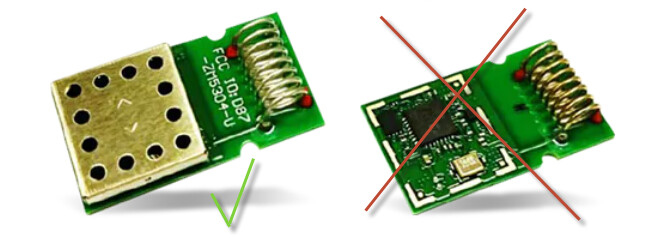
PS: @miranda-gb Please do not refer to these as a “stick”, the correct terminology for adapters like ZBT-1 / ZBT-2 should a Zigbee Coordinator USB radio adapter and the term for adapter like ZWA-2 should be Z-Wave Controller USB radio adapter  (however many such wireless USB adapters are also commonly known as as dongle which is a generic term for computer hardware that connects to a port on another device to provide it with additional functionality). And the etymology for ”stick” in this context comes from some (but not all) radio adapter looking like USB flash drives which in turn are sometimes called memory sticks, so therefore ”dongles" is better than “sticks” when refering in general to wireless USB radio adapters if you read up on the etymology