Frient joins Works with Home Assistant

We’re making new frients this week, and they’re bringing an extensive line of Zigbee devices to our Works With Home Assistant program. Each device is tested by our team, ensuring they provide the best experience possible for Home Assistant. Frient is widely available across Europe, and are well-known for their sleek, unobtrusive designs that its customers love for their high Home Approval Factor.

Our newest frient

Based in Denmark, the frient brand was developed by Onics, (formerly Develco Products), and they have years of experience with Zigbee devices. Frient is bringing its proven technology to the Works With Home Assistant program, as well as their Danish design that easily blends into almost any home.

Recent Works With partners have brought Z-Wave, Matter, and even Bluetooth devices to Home Assistant, but it’s been a couple of years 😅 since Zigbee-specific devices have joined the program. Zigbee is one of the most popular open protocols that is used with Home Assistant, with hundreds of thousands of users making use of it today. It’s a proven technology that connects directly to Home Assistant, no cloud or Wi-Fi connection required. Zigbee is a mesh protocol, where some devices act as repeaters, strengthening the network as more are added. It was built from the ground up to power the smart home, and has been optimized to give devices really long (sometimes multi-year) battery life.

"Joining the Works With Home Assistant program is a proud milestone for frient. It reflects our strong commitment to open, user-centric smart home experiences and ensures that our products seamlessly integrate with one of the most trusted platforms in the market. For Home Assistant users, it means more choice and flexibility — and for frient, it strengthens our position as a key player in the connected smart home space."

- Martin Langballe, International Business Development Manager at frient

All you need to get started with Zigbee in Home Assistant is a Zigbee adapter or ‘stick’, such as the Home Assistant Connect ZBT-1 (wow, we released this in 2022, I wonder when we’re finally going to build a successor? 😉). By plugging the adapter into a USB port on your Home Assistant system, it should then discover the device and add the ZHA integration. After that is set up, you can start adding devices to your Zigbee network.  We’ve even added in a cool new visualization so that you can see how your Zigbee devices interact with each other.

ZHA is built with the support of the Open Home Foundation, and it even has a full-time developer (@puddly) dedicated to improving it and helping certify new Works With partner devices. Your support makes this possible, whether through a Home Assistant Cloud subscription or by purchasing official hardware.

Devices
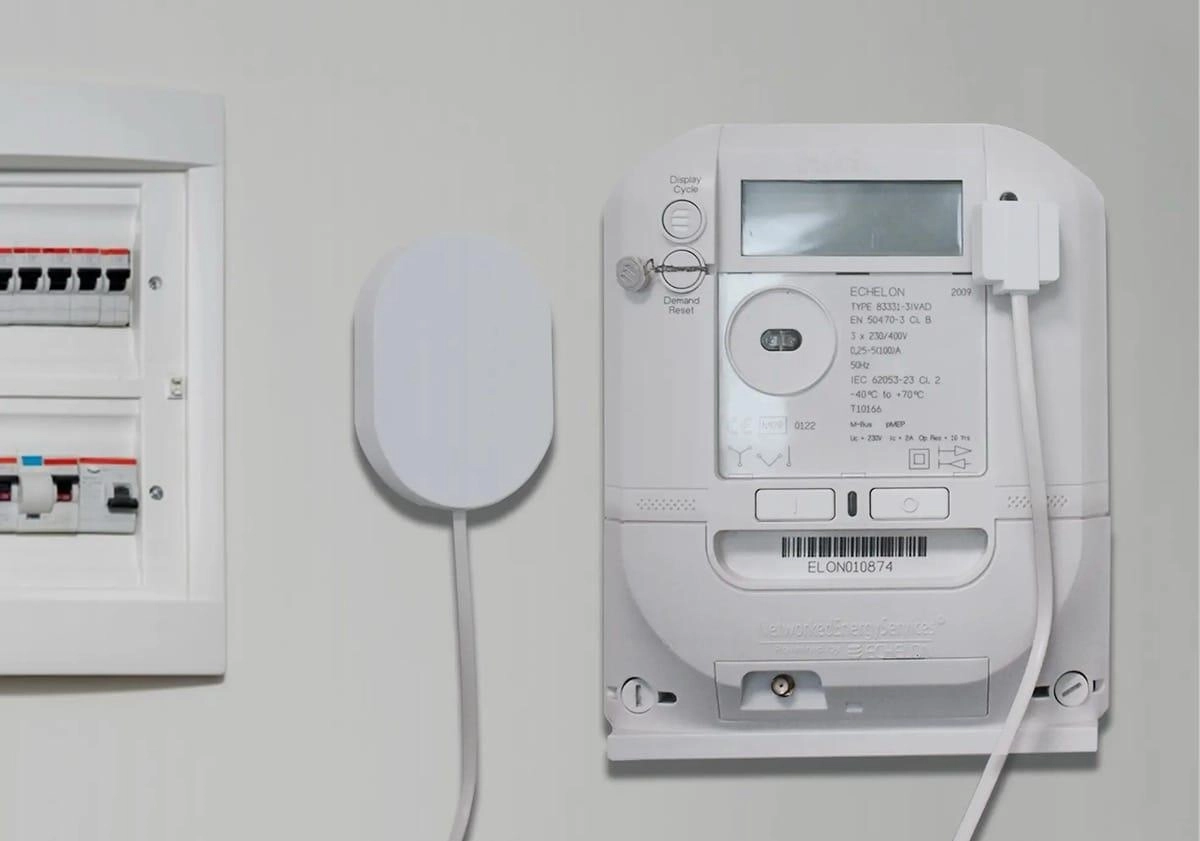
When your energy company won’t provide your raw usage data, there’s always another way 😉

In case you didn’t know, Works With Home Assistant differs from other certification programs as products are rigorously tested in-house to ensure they work seamlessly out of the box with Home Assistant. Any company joining also commits to providing long-term support and firmware updates while being a positive force in the Home Assistant community. Works With Home Assistant is operated by the Open Home Foundation, and the support of Home Assistant Cloud subscribers funds this work.

Our team has worked extensively with frient to ensure that the following items work seamlessly with Home Assistant.

This is a big portion of frient’s product line, and provides energy monitoring, device control, safety, and security sensors. The frient IO Module is the first certified Zigbee module that can be used to turn low-voltage dumb devices like electric blinds or garage doors into devices that can be controlled by Home Assistant.

There are some great devices here for building a more sustainable smart home. The Electricity Meter Interface 2 LED allows you to get the data off your energy meter and record it into Home Assistant. Another win for sustainability is their use of AA and AAA batteries wherever practical, meaning you can use rechargeables instead of constantly buying and recycling coin cells.

I also selfishly love to see some great UK-specific devices being brought into the program with the frient Smart Siren having both UK and EU versions.

Best frients forever

It’s great to see Zigbee get some high-quality certified Works With Home Assistant devices after a multi-year wait. Frient has put a good deal of work into this launch and are big fans of our work and the community. There are more exciting Zigbee developments to come, so stay tuned!

FAQs

Q: If I have a device that is not listed under “Works With Home Assistant” does this mean it’s not supported?

A: No! It just means that it hasn’t gone through a testing schedule with our team or doesn’t fit the requirements of the program. It might function perfectly well but be added to the testing schedule later down the road, or it might work under a different connectivity type that we don’t currently test under the program.

Q: Ok, so what’s the point of the Works With program?

A: It highlights the devices we know work well with Home Assistant and the brands that make a long-term commitment to keeping support for these devices going. The certification agreement specifies that the devices must have full functionality within Home Assistant, operate locally without the need for cloud, and will continue to do so long-term.

Q: How were these devices tested?

A: All devices in this list were tested using a standard HA Green Hub with the ZBT-1 and with the ZHA integration. We haven’t tested these devices with Zigbee2MQTT, so we would recommend checking their device compatibility documentation. If you have another hub, Zigbee adapter, or integration, that’s not a problem, but we test against these as they are the most effective way for our team to certify within our ecosystem.

Q: Will you be adding more frient devices to the program?

A: Why not! We’re thrilled to foster a close relationship with the team at frient to work together on any upcoming releases or add in further products that are not yet listed here.


This is a companion discussion topic for the original entry at https://www.home-assistant.io/blog/2025/09/02/frient-joins-works-with-home-assistant
7 Likes

Cool! However wonderibg if there is a chance Frient have developers that could help extend/enhance and improve the ZHA integration support for their Frient Intelligent Keypad to make it fully support all of its features and functions without each user having to implement their own workaround?

While I think that specific issue linked might be a limitation in zigpy/zha libraries and the zha component code in Home Assistant core with those not yet fully supporting all Zigbee IAS (Intruder Alarm System) events for different alarm control panels (which is are Zigbee IAS ACE, Ancillary Control Equipment) in combination with the fact that Zigbee devices like these that can have unique events and attributes which are device specific so not yet exposed in the ZHA integration (or at least not in its UI). Regardless it be very nice if Frient and other manufactuers could help their popular alarm control panel keypads like this KEPZB-110 model from Frient be fully supported in Home Assistant’s ZHA integration UI and the zha component (especially when it is the promoted as Open Home Foundation supported native Zigbee gateway implementation built-into Home Assistant). Anyway, at this time it has been reported that exit_delay or entry_delay is exposed in ZHA security entities or zha library security clusters (in the zigpy project)?

Delays for exit and entry are useful alarm systems, like example as alarm control panels for the custom ”Alarmo” integration that makes it very each to put together your own DIY home alarms:

1 Like

With these pull requests submitted to Home Assistant by Open Home Foundation employees (and lined up to be maybe be merged into 2025.10 for beta-testing?) it looks like the cat is now partially out of the bag on an upcoming “Home Assistant Connect ZBT-2” as a new upcoming best-in-class official Home Assistant branded USB radio adapter that will function as either a Zigbee Coordinator or a Thread Boarder Router (to allow Home Assistant to effortlessly connect Zigbee or Thread devices depending on what the user choose to configure it for, and if you want both functions then you shoulf get two):

Update: First PR was merged into Home Assistant 2025.10 and is even mentioned in the full changelog:

Also now added a symlink to the Home Assistant brand for ZBT-2 that indicate it is official HW:

So now there is a component in Home Assistant core named “Home Assistant ZBT-2” that more or less is a copy if the “Home Assistant ZBT-1” component:

Spotted as well that the zigpy project’s backlog tracker have tagged many issues with a “ZBT-2” label for tracking and those got some more related comments and screenshots from developers:

and initial “[Firmware] Release ZBT-2 firmwares” released:

FAQ for the ZWA-2 also include wording that strongly hits that a ZBT-2 will come sooner or later

  • Home Assistant Connect ZWA-2 - Home Assistant

    Why is it called Connect ZWA-2? Connect ZWA-2 was built on our second-generation platform, which prioritizes high performance and openness in its design. It is a big leap from our first-generation Connect ZBT-1, and all Connect line products going forward will use this new platform. There is no ZWA-1, as we jumped directly to 2 to represent the generation of technology inside this adapter.

And another hint is in the latest newsletter blog post from the Open Home Foundation here:

Update: An integration documentation page for Home Assistant Connect ZBT2 is now published on the release candidate (beta) pages but the matching product pages that are linked in the above mentioned pull request does not yet exist or is not public yet (though that is understandable considering there is still no official launch date announced for the Connect ZBT-2 adapter as a product):

That includes a NabuCasa’s silabs-firmware-builder pull request that mention ZBT-2 Zigbee and OpenThread firmware with same type of LED and accelerometer drivers that the ZWA-2 has:

From the code it looks to be based on EFR32MG24A420F1536IM40, i.e. ERF32MG24 (MG24).

Paulus also hinted again during the Home Assistant 2025.9 Release Party (September 2025 release video) more or less saying between the lines that a replacement to the Home Assistant Connect ZBT-1 (formerly named Home Assistant SkyConnect) is planned, and hinting that there is probably a USB-to-Ethernet bridge in the works as well(?):

Judging from all this evidence I would guess that the ZBT-2 hardware design is probably already ready and Open Home Foundation developers are now trying to make the overall Zigbee Coordinator adapter onboarding and migration experiences in the ZHA integration better before they will ship hardware to independent testers and reviewers for pre-launch testing while at the same time ramping up manufacturing before an official product launch.

Updated: Again, there are no hits as to a release date, nor is there any leaked information on its specifications so I wonder if it will be based on the ERF32MG24 (MG24) or a newer ERF32MG26 (MG26) digital radio microcontroller chip from Silicon Labs? But surley must be based on Silicon Labs MG24 or MG26 (plus use an ESP32-S3 only as a USB-to-Serial converter chip for the board), not the older Silabs EFR32MG21 chip that ZBT-1 is based on, and if the Zigbee/Thread radio in it is based on the newer ERF32MG26 then that should on paper make it more future-proof product in the long term as the newer MG26 series has a lot more CPU, RAM + Flash Storage resources, and perhaps more importably the ERF32MG26 series radio MCU chips RX Sensitivity of -105.4 dBm, compared to -104.3 dBm of the older Silabs EFR32MG21 (MG21) and -104.5 dBm of the EFR32MG24, which in layman’s terms means the should get better signal reception (as its radio’s recieving circuits are more sensitive).

image versus image

Updated: Sadly sounds as if the upcoming ZBT-2 will be based on the older MG24 chip, which is sad because, in theory, the newer MG26 chip (which also been available fora while and do not cost that much more) would be much better at handling Multi-PAN (mutliprotocol) but even if that is the case that multi-protocol method of using Zigbee and Thread on the same radio chip is still not a stable technology so should not really be taken into consideration by end-users today (however might mature in the future so hardware could maybe have extra long life), but currently it will for now be best to just buy two separate radio adapter and use them each as dedicated radios for each different IoT protocol standard.

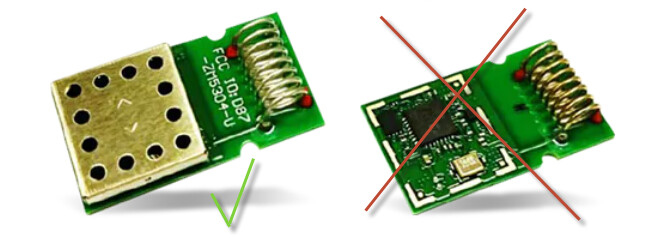
Anyway, here is to hoping that the physical radio chip components on its circuit board has a good RF Shielding metal cover that is properly grounded as well, unlike the first batch of ZWA-2 adapter circuit board which does not have RF shield on its PCB (but then Z-Wave is way less sensitive to EMF/EMI/RMI interference compared to Zigbee and Thread so is not as important as having RF shielding for Zigbee and Thread circuit boards).

regarding improving the hardware design of the circuit board all type of radio adapters, I am curious if and why it was decided not to add an “RF shield” covering (e.i. an EMF shielding plate cover for electromagnetic shielding / EMI / RF shielding for faraday caging) on top of the radio chip and its components on the PCB?

PS: @miranda-gb Please do not refer to these as a “stick”, the correct terminology for adapters like ZBT-1 / ZBT-2 should a Zigbee Coordinator USB radio adapter and the term for adapter like ZWA-2 should be Z-Wave Controller USB radio adapter :wink: (however many such wireless USB adapters are also commonly known as as dongle which is a generic term for computer hardware that connects to a port on another device to provide it with additional functionality). And the etymology for ”stick” in this context comes from some (but not all) radio adapter looking like USB flash drives which in turn are sometimes called memory sticks, so therefore ”dongles" is better than “sticks” when refering in general to wireless USB radio adapters if you read up on the etymology :stuck_out_tongue:

2 Likes

I hadn’t heard of Frient before this announcement, but have just ordered an Electricity Meter Interface 2 LED. Looking forward to trying it out! Cheers.

3 Likes

I hope manufactures understand exactly that.

You join the “Works with Home Assistant” program and people will buy because of that.

4 Likes

One of the best zigbee manufacturer.

Will OTA Firmware updates be available for Frient devices?
(i have 2 SMSZB-120 working fine using ZHA for at least 2 years now. I assume newer firmware has been released since)

3 Likes

I had heard of Develco in my early times with HA, and what I heard sounded good. Then I had trouble finding them, and didn’t hear anything for quite a while. So it is indeed very good news that Frient exists, and also has joined Works with HA. I’ll certainly be checking them out.

I currently have 2 frient smoke detectors connected via ZHA.
Should I remove them and connect them again with the frient integration?

There is no frient integration, as all of their devices are using Zigbee. The Works with Home Assistant program simply means that frient themselves are actively supporting their products in ZHA.

Which was already working before the program, to be fair. But might help adding new devices sooner and maybe enhancing some functionality on the existing devices.

2 Likes

I’m one of the creators of the Blueprints mentioned in the GitHub issues. Hope frient can help with the issues that are currently happening with the KEPZB-110 when paired with ZHA.

As I started having issues around March 15th, 2025 I’ve switched my KEPZB-110 to Z2M and it’s been stable every since.

The issue that happens is that ZHA sometimes hangs when sending commands to the Keypad and then suddenly keeps sending commands where it keeps switching between armed/unarmed states. Also tested by just sending a single command without having my Blueprint active and randomly it keeps sending commands.

Already tried repairing the device several times and it works for a time and then started happening again. As not all states were available in ZHA it was not fully usable anyway, so switching to Z2M solved that as well.

1 Like

The frient integration is just a “virtual integration” that in this case simply redirect to the ZHA integration. That is only done so companies that have joined the Works with Home Assistant will get to show their brand when adding devices. So you can see it as advertisement which is more oe less a bonus only for brands what are part of the Works with Home Assistant program. (Though virtual integrations are alos used for some other devices that are supported by integrations that are not named after the product). For more background information read this

and

1 Like

Way over my head, however if you wish to assistant the zigpy/zha developers (and frient) then I suggest maybe consider open a new issue if it is not the same problem as described here → Add exit delay support for Alarm Panels · Issue #524 · zigpy/zha · GitHub

I have 2 of the smoke alarms and not had to change the batteries in over 2 years. They are seriously loud as well and uae them as the siren for my alarm. 100% recommend!

1 Like

The smoke detector integration is in dire need of some love however.

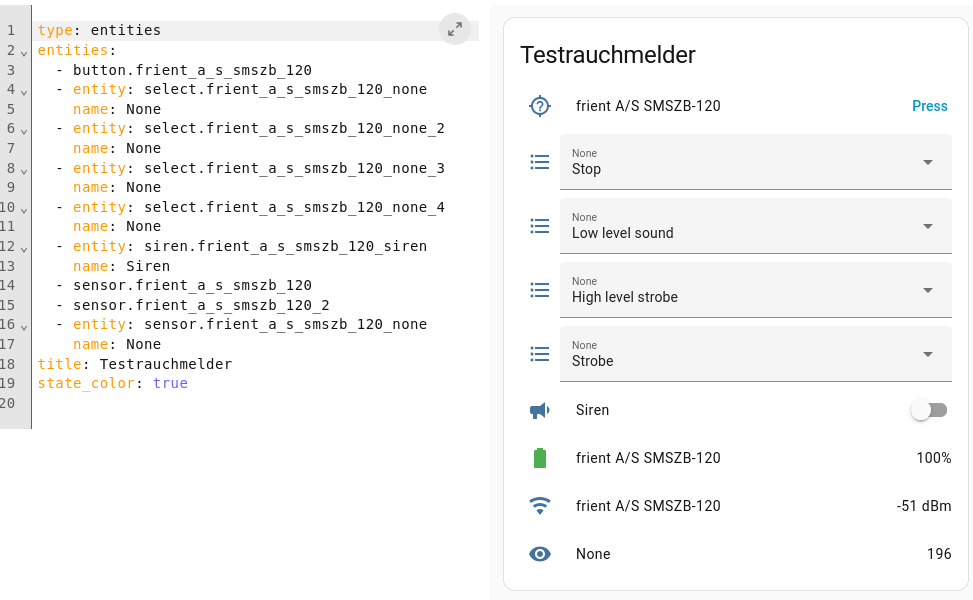
What do all these “none” entries even mean?

This is one device I bought for testing. How the heck will I distinguish 20 of those, when the entity name doesn’t have a serial number or some other per-device characteristic?

The Z2M entry for this device provides some hints of what your none entities refer to.

Your select entities seem to map to:

  1. mode
  2. level
  3. strobe_duty_cycle
  4. strobe

The sensor entity at the bottom is most probably your LQI. The 2 entities just above it with no none but also no description are battery & RSSI, respectively.

I think that would be in both ZHA users and the Frient as a company to themselves report issues write custom ZHA Device Handlers (also known as a zha-quirks) or at least submit device support request to the upstream zigpy project for tracking each problem with their device which need will manufacturer specific features and functions (i.e. unique Zigbee clusters and attibutes) that zigpy/zha libraries have to translate/convert/map into Home Assistant entities which will either be standardized and/or properly documented so they can be used relativly easily by users of the ZHA integration. For reference read this:

In sunmary, ZHA Device Handlers (also known as a “zha-quirks”) are translators/converters that extend entity mappings so that they translating/converting all attributes into standard ZCL (Zigbee Cluster Library) formatting and/or expose all entities (attributes) that are not yet exposed/showing by default in the current version on the ZHA integration.

Therefore you should really submit matching device support request or a bug report for each device that is missing entities or showing the wrong thing, and best is to submit proper issue reports directly to the zha-device-handlers repository on GitHub:

Note! Be sure to post to the ”issues” section there and not the ”discussions” section as discussions are not monitored or tracked.

Sorry, but it’s not working seamlessly out of the box.

The default value is 1000 pulses/kWh and we cannot change it on ZHA.

Reported 2 years ago:

1 Like

FYI, making a post on the forums is not “reporting it” as developers never see the issue. Issues should be reported on github.

1 Like

I think that would be if Frient themselves as a company could write a custom ZHA Device Handler

They’re a “works with” … partner. I suppose that makes it their job to submit a reasonable Quirks file.
NB where do I find the list of devices that are actually included in the program?

FYI, making a post on the forums is not “reporting it” as developers never see the issue

Don’t worry. I did. Zigbee Frient smoke detector integration is incomplete · Issue #151967 · home-assistant/core · GitHub

2 Likes