Hi everyone,
I wanted to share something I’ve been working on lately.
It all started from a moment of frustration: I’ve spent countless hours configuring my Home Assistant setup, but I realized my family wasn’t using it at all.
I started by implementing touch screens everywhere, and while they have their advantages, they also have big limits. They can be way too complex for non-tech people. Too many sub-menus… “click here, then there, then scroll…” Try explaining that to your dad, or even worse, your grandpa! 
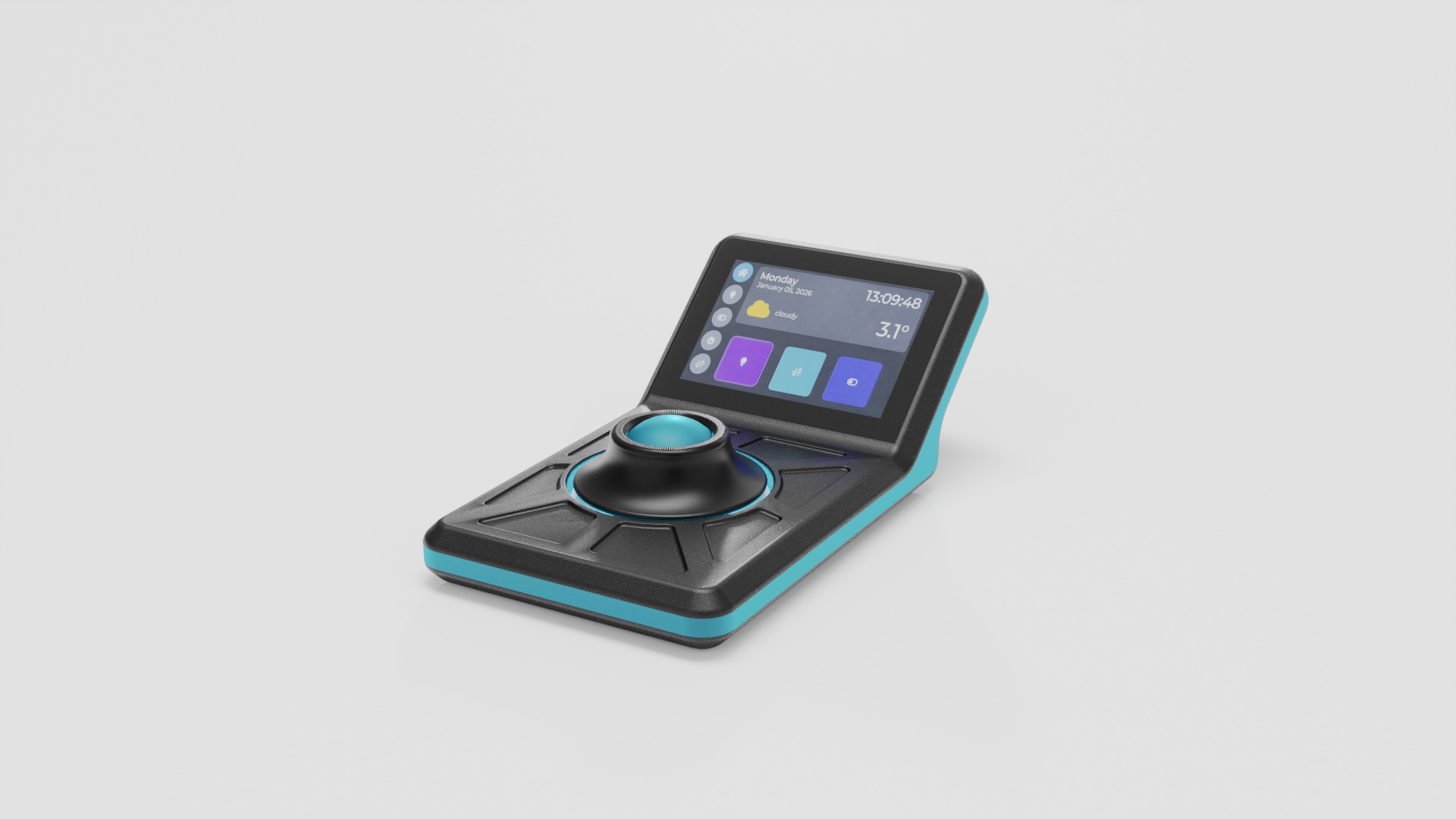
So I decided to develop an application on a device I’ve been working on. It’s an open-source hardware project based on an ESP32-S3 with a 3.5" IPS display . But here’s the catch: it’s not a touchscreen. The UI is managed by a simple rotary encoder with a push button.
I found out that having a physical, “clicky” knob is simply… better. It’s tactile, it’s fast!! It forces the UI to be simple, which is exactly what a smart home needs to be “approved by everyone.”
A few quick technical details for those who want to dive deeper:
-
I created a small app for Home Assistant that lets you configure everything via a local web interface.
-
It’s 100% local , it works with a Home Assistant API KEY.
-
Integration link: https://github.com/cloudmouse-co/cloudmouse-example-home-assistant
-
I’ve also released the OS and an SDK for it: https://github.com/cloudmouse-co/cloudmouse-sdk
The goal was to create something that sits on a desk, an entryway cabinet, or a nightstand and just works for those 5-10 things you do every single day.
I’m really curious to hear what you guys think about the “no-touch” approach. Does a physical knob make sense to you in 2026?
I’ll be happy to answer any questions! 
Open source project cloudmouse .co