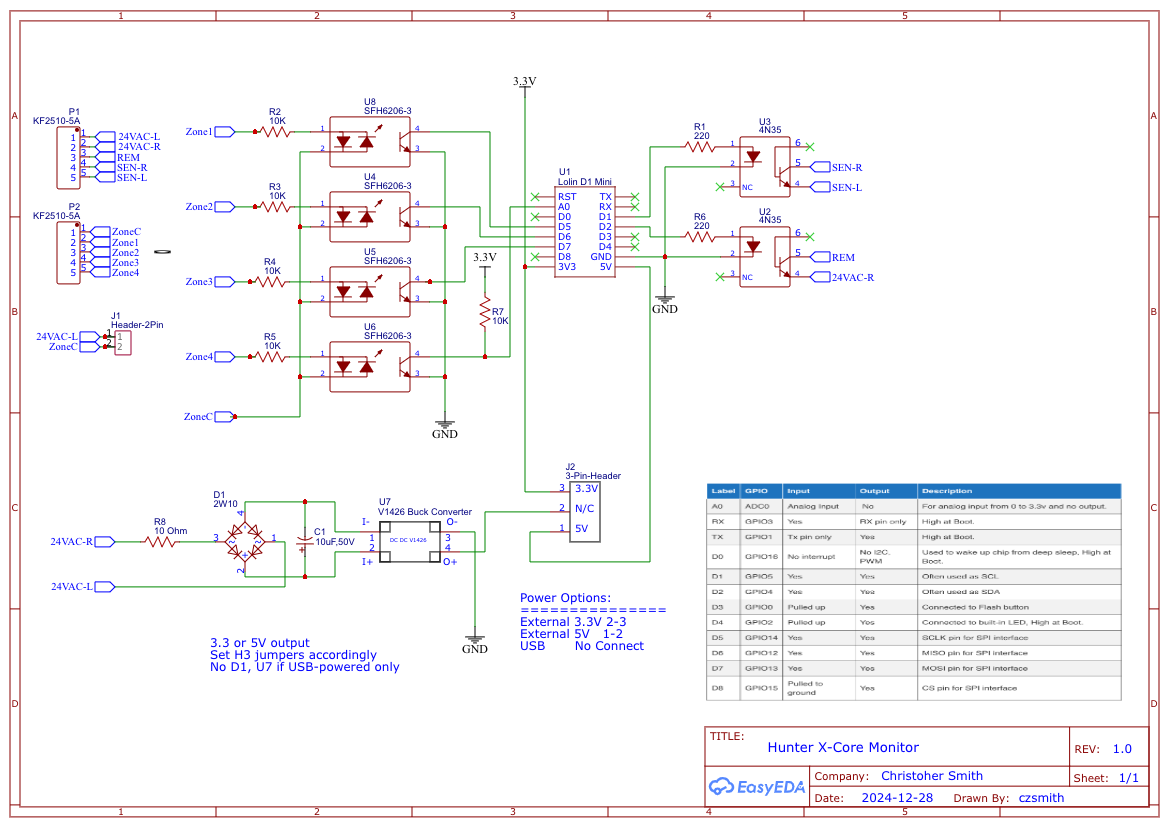
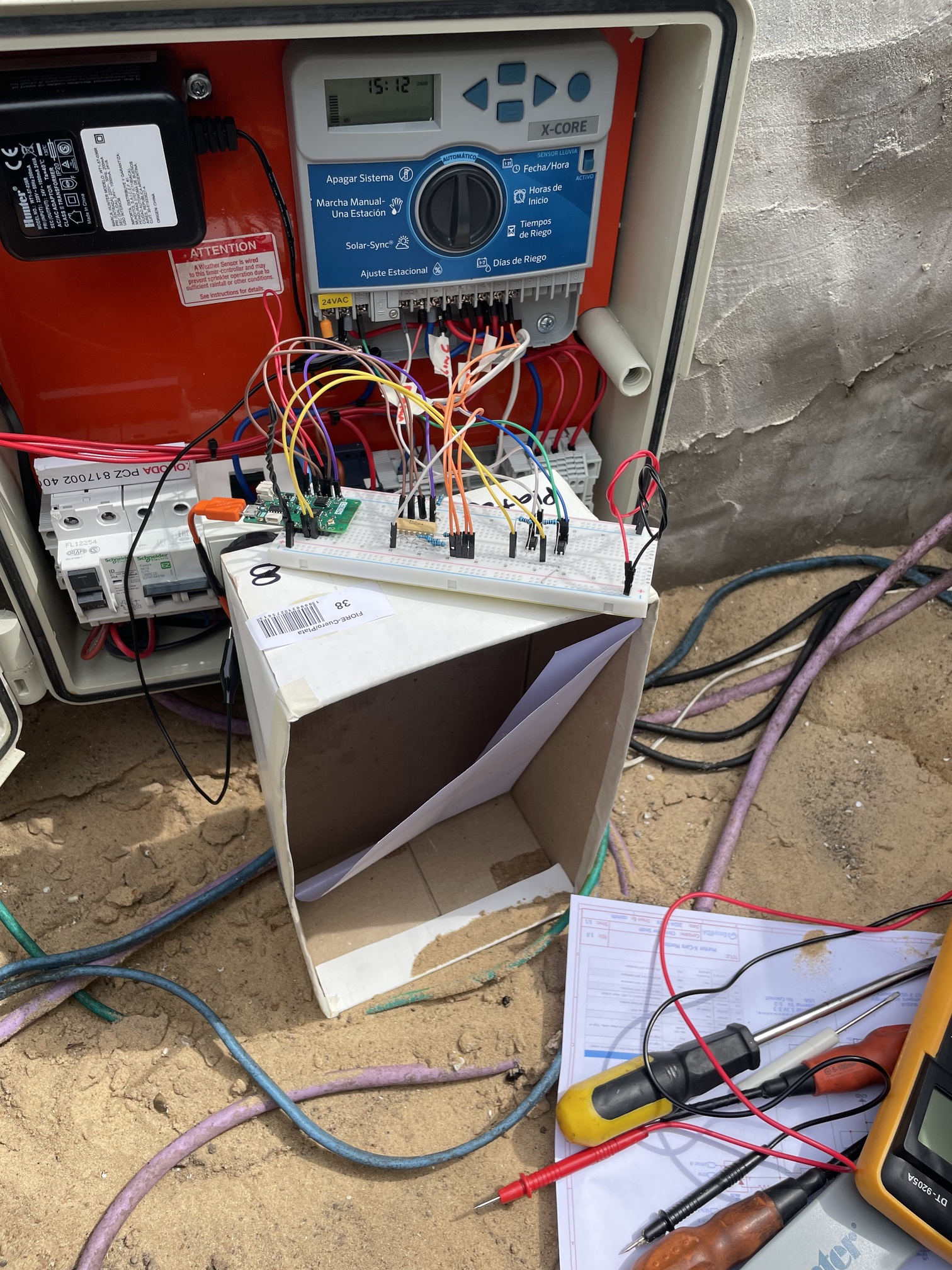
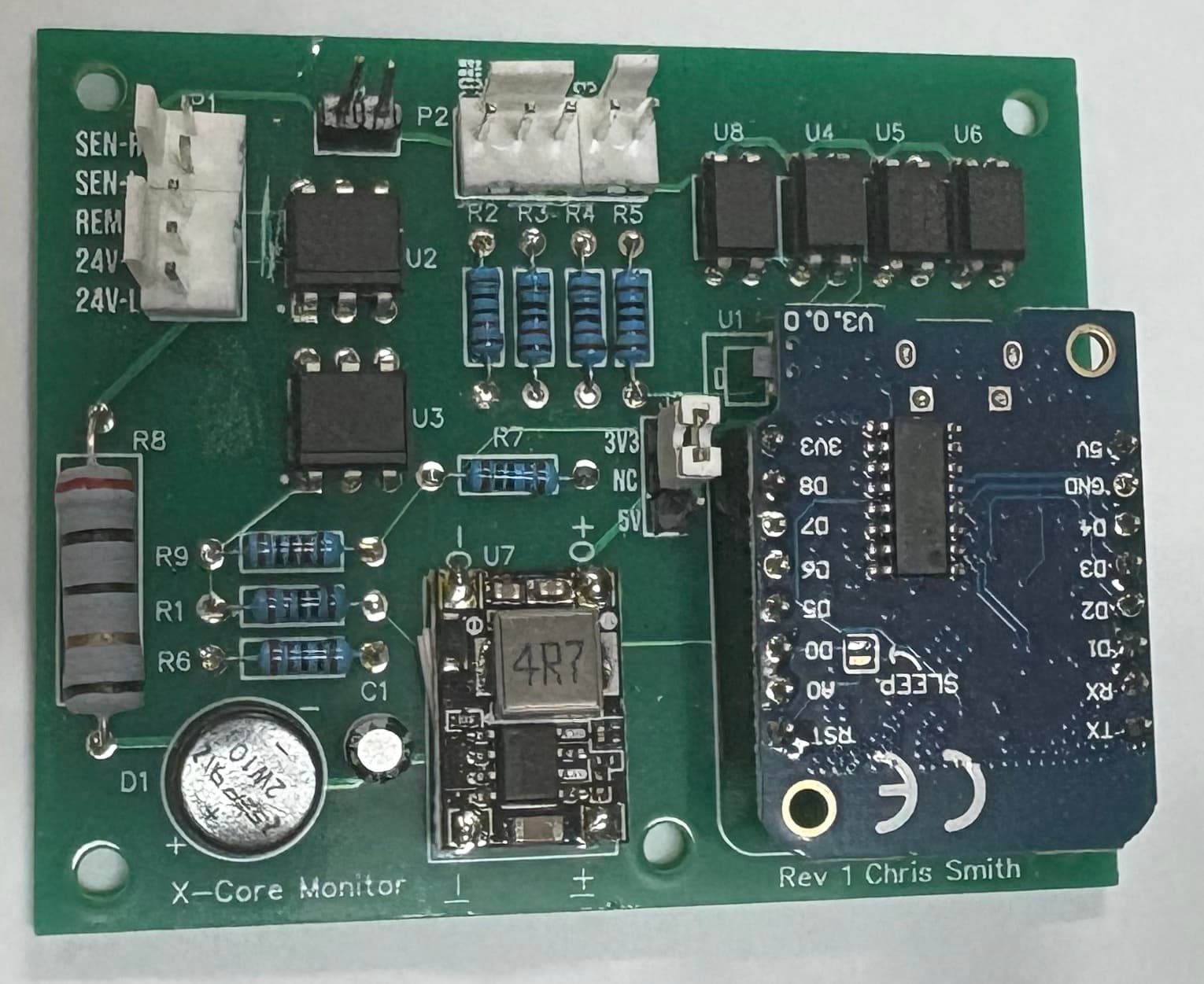
Well the project is mostly done. Everything’s breadboarded and tested on my bench X-Core 400. What’s left is to try this on my real irrigation controller outside, finish a PC board layout and finalize the power supply. (I’m running awfully close to the limits on the DC-DC converter and I want some more protection.)
I want to thank everyone here for the information provided, and to Javier VIdao for providing a working ESPHome component to send commands to the Hunter X-Core on the ROAM interface.
In the next week or two, I’ll be finishing a PCB design. That’ll be the only way to fit everything on a 2x2.5 inch board to fit inside the Hunter unit.
Again, Thanks to everyone.
(And if anyone needs crediting, just let me know & I’ll update the README file on Github.)
Amazing job Chris @czsmith , I have implemented it on a Wemos D1 Mini Pro I had and today I connected the protoboard to test and it just works !!.
I used a TLP620-4 for the inputs and PC817 for the outputs. Now I will put everything in a small board and fit it inside XCORE definitely
As my garden is using only 3 zones right now, I will block the use of zone 4 inside code to avoid big fingers starting the submersible pump without any open valve.
As my system has installed the Hunter rain sensor, you need to connect the optocoupler output in series with the sensor to work because the SEN input is waiting a NC contact to allow XCORE works.
I also have only 3 sensors on my own house. Since I’m in an HOA, I don’t decide if the pump is on or nor. So, I keep looking for some way to determine if there is really pressure in the main lines. (without having to drill a hold into them… they’re not mine) and use the 4th input to tell if I am actually watering my yard. Maybe some type of vibration sensor?
In your case you could use the 4th input to sense the rain sensor line. Would let you know if you are really watering or not.
In my case it’s 2 years that is running fine without any complaint from Hunter device. I have to admit that after installing a new “brain” the hunter itself it’s always set to the OFF settings, al lthe scheduling etc is done on opensprinkler
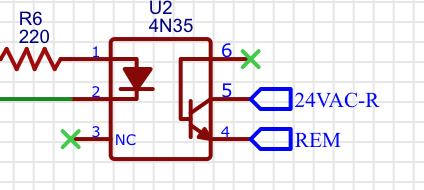
oops… the wires are backwards on U2. Pin 5 (collector) goes to VAC-24R and pin 4 (emitter) goes to REM. So sorry about that. Have to cut a couple traces on my pc boards. ;(
Hello everyone. I have recently become interested in the irrigation system. Hunter is for sale in my country. I looked at a lot of reviews on the internet and found out that it doesn’t have any ready-made solutions for communication. I have been following this topic since the very beginning. What I don’t like about the Hunter is that for that kind of money it still remains a dumb garden waterer.
Can you tell me the main advantages of this controller? Well, except for the fact that after purchasing I will still have to make a separate ESP for control.
Hi, so i spent the last day trying to implement my Hunter Pro-C via espHome. As I wanted a simple solution I went for only start/stop. Sadly I can only get the individual zones to start for the defined time, it can not be stopped. I also tryed sending 0 time but that wouldn’t work.
I wired it up as described here with a split usb cord
Maybe somebody can point me in the right direction what else I could try.
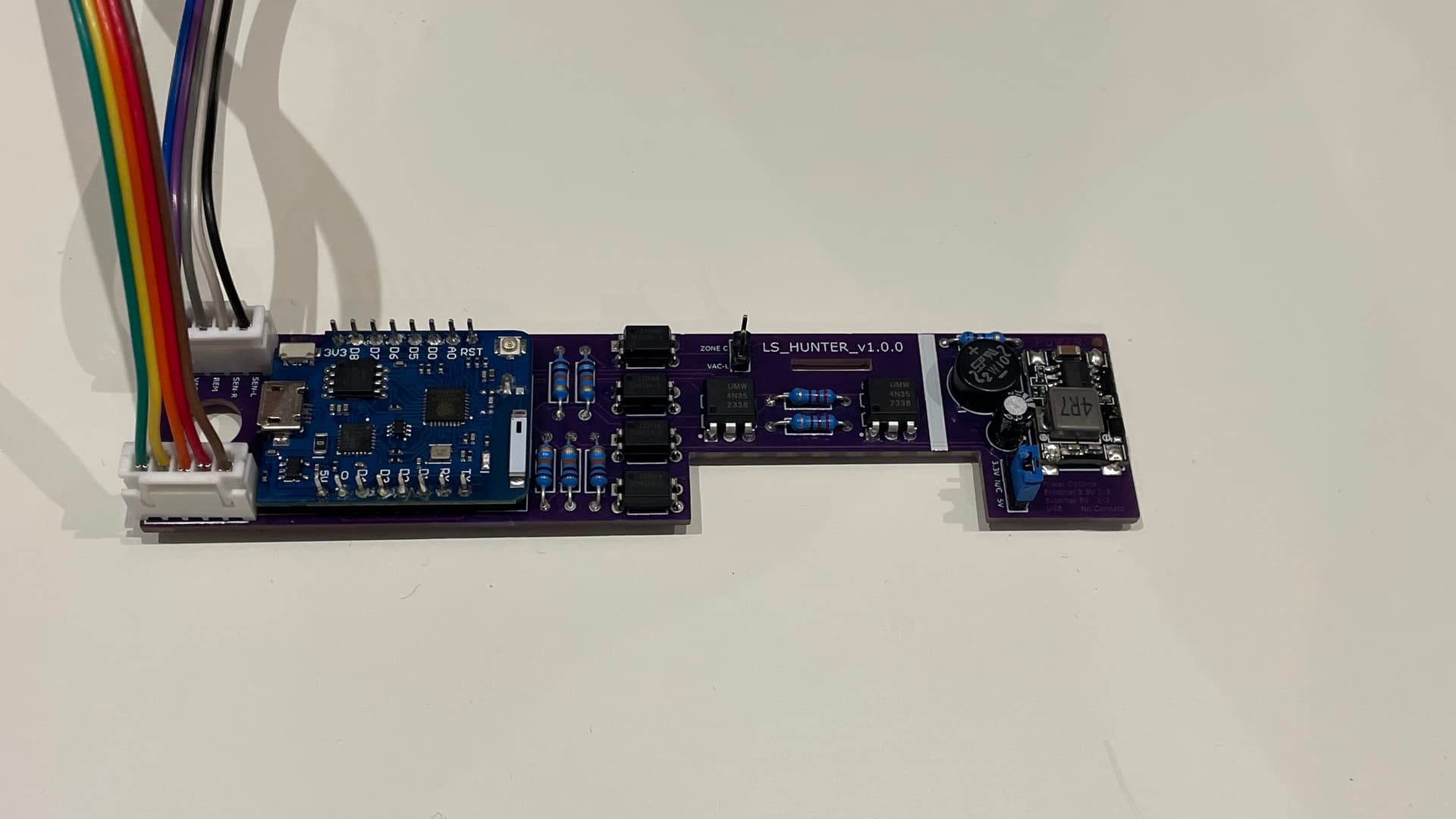
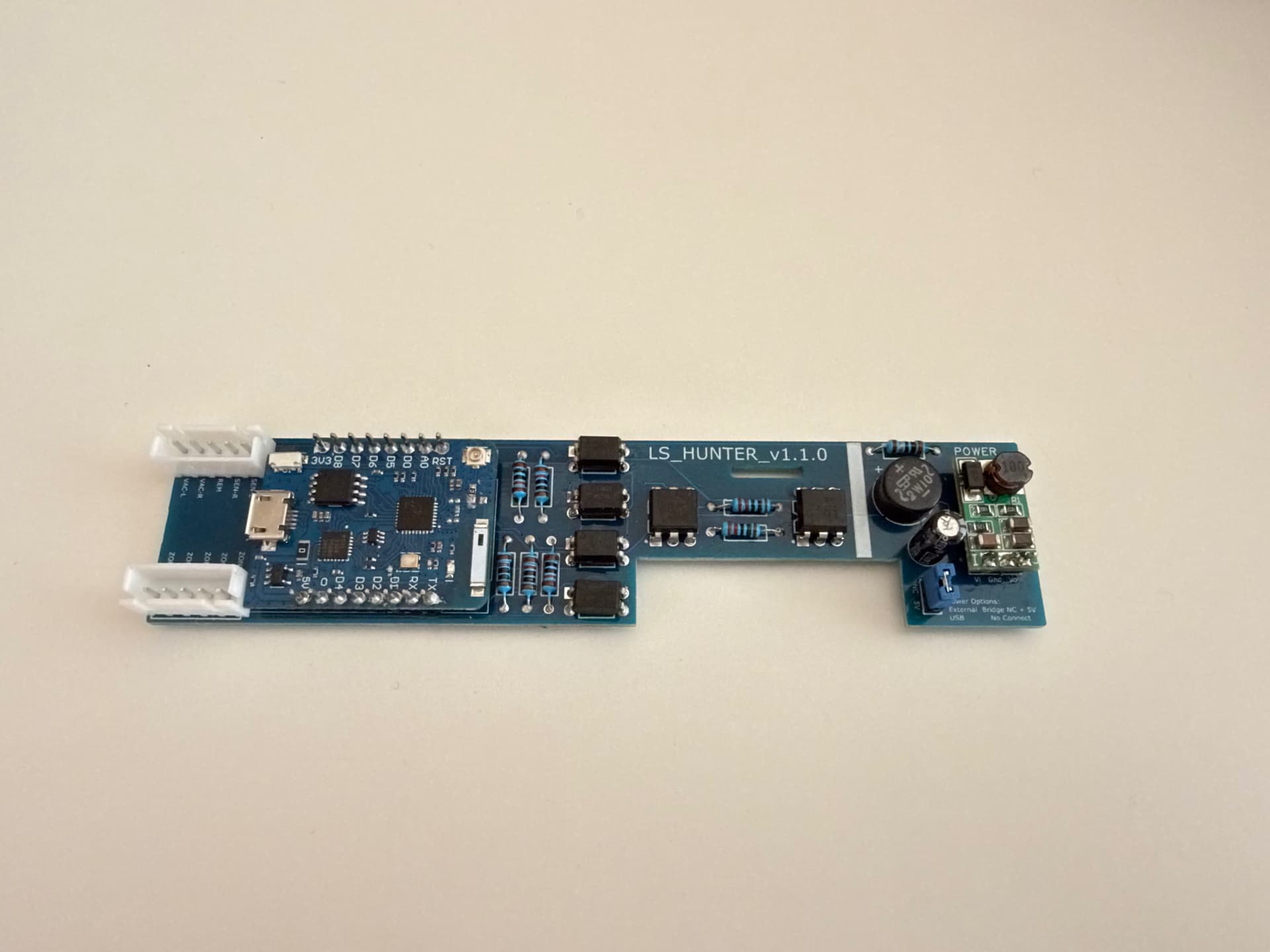
That’s a beautiful looking board. And I like the way you managed to fit everything in the internal version of the X-Core. Having the external version, I have a different space to work with. Fortunately there’s enough room to mount the ESP board a bit off the main board so I can get a USB cable in there.
(Sadly, I’d ordered the PC board before I found that I’d gotten two wires backwards for driving the REM pin, so there’re two cut traces and wires on the bottom of my board.)
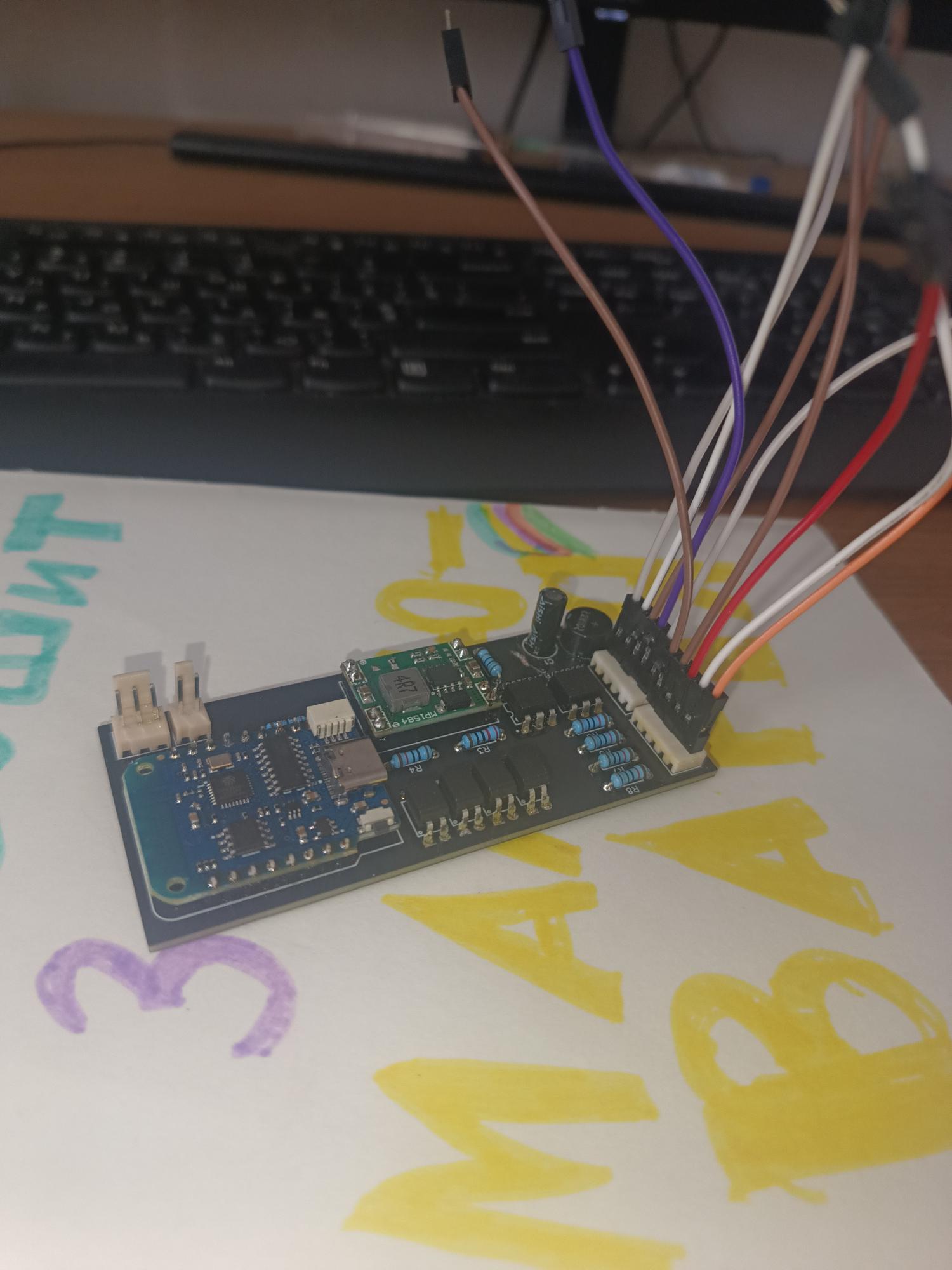
Thank you very much for your work, This is what I got so far. I also did a mistake with wiring (in my case for DC-DC converter). The board works like a charm
Again, a nice engineering job. I was lucky to have the external model X-Core which leaves a large square space on the bottom.
The one thing I’m still searching for is a good way to determine if the main irrigation line is pressurized without having open tap the line itself. (The main is community-owned; just downstream from the valves are mine.) Something that can be placed on/around the main line and can detect static pressure, not just flowing water.