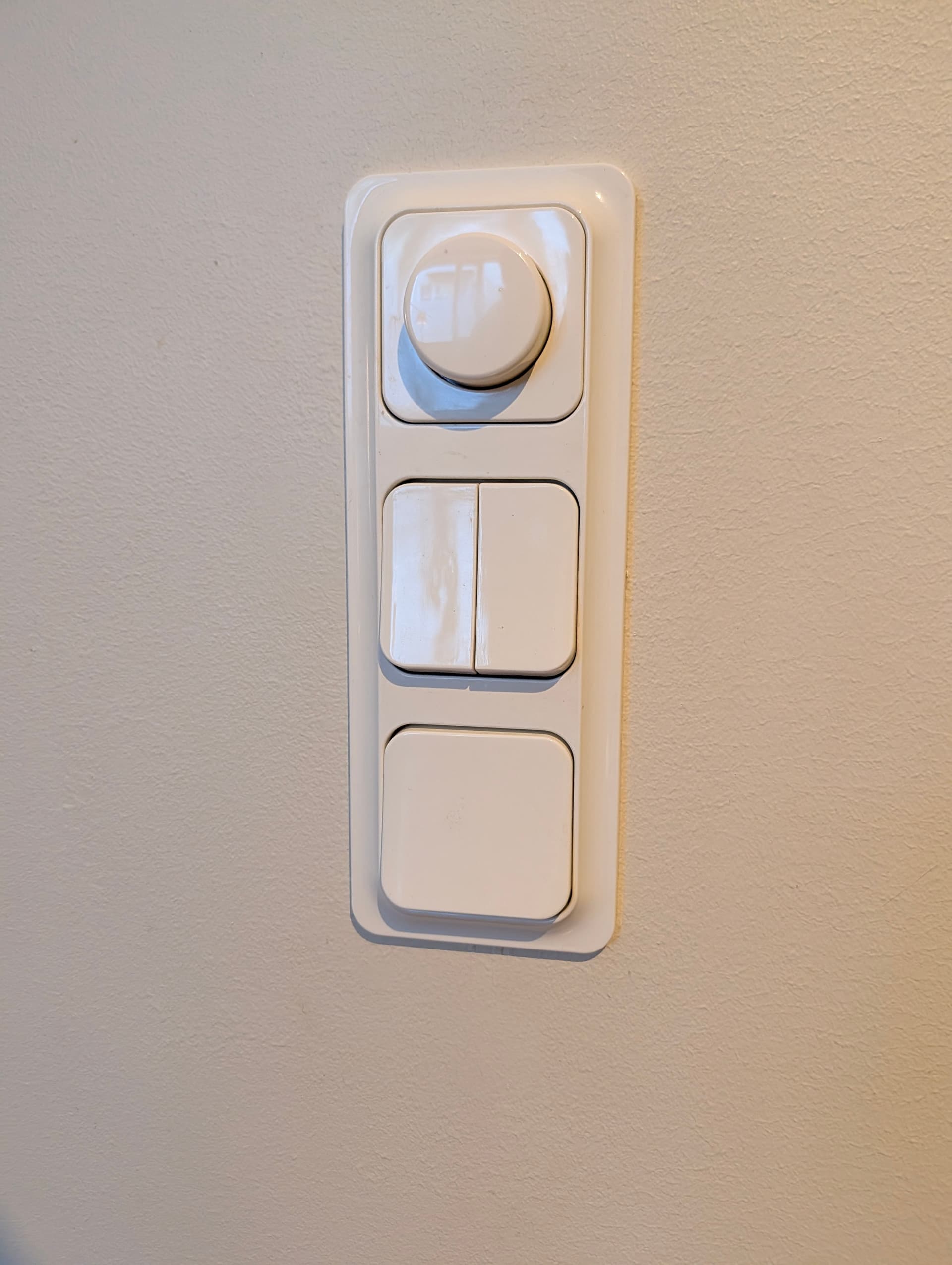
I just moved to a new apartment where there are some in ceiling spotlights. These lights are connected to an analog dimmer in one end of the room and a regular switch in the other (the dimmer can also turn the lights on and off).
I would like to connect these lights to Home Assistant, but I don’t really know how. And there are some rules and regulations that are limiting my options.
My first thought was to replace the dimmer and switch with Zigbee counterparts, but since the apartment is a rental I can’t do that (Swedish laws would also require me to hire a registered electrician, which I find too expensive).
So the next best option is to replace the lights themselves with Zigbee lights, and install separate, wireless Zigbee switches/dimmers next to the existing ones.
But there is a problem with that approach as well. If someone doesn’t know that the built in dimmer shouldn’t be used, I’m not sure how the smart lights will behave if that dimmer is used. Will they just turn off (which might be fine. A regular dumb switch would do that too) or will they flicker and/or get damaged? Will it even work with the dimmer at 100%?
My goal has always been to not break the existing dumb electronics by making it smart (which I won’t here), but also to not have the dumb switches to break the smart features (which they can here, since they will control the physical wires). It doesn’t seem like I will be able to avoid that here though. What are my options? Am I out of luck?
Maybe I’m interpreting the laws to strictly. I am allowed to replace switches, but not install new ones. Replacing a dumb one with Zigbee might be okay then.
I might have part of a plan in that case. I have a Sonoff ZBMINI-L that supposedly works with existing 2-way switches (trappkoppling in swedish). If I install that where the regular switch is, I should get on/off working from both existing switches. The only thing that won’t be smart is the dimmer (since that is analog, it’s a bit more complicated I think?), but that’s fine by me.
It has a little bug that it sometimes forget if it’s on or off.
So it can be on for hours and then suddenly go off.
It happens perhaps once a year so it’s not an issue. It’s more like a funny thing that happens.
If you then place a smart switch at the other end but don’t connect the L1 connection then you (probably, if I understand the connection correct) get live at all times to the dimmer and you can use an automation to make the switch control the dimmer.
Or you just remove it completely and place a remote from IKEA on the blank plate.
Perhaps you can use the same plate , the dimmer knob seems to be the same size.
The way I suggested the other switch will just be a mains powered remote using HA to convey the message.
So instead of physically breaking the power it just keeps the power on but tells HA a state change has been made and HA will use this message to send a command to the dimmer to toggle.
This also means they will be independent of each other.
As I understand it now the switch has to be on for the dimmer to work, that won’t be the case anymore.
That is also why I said there is a possibility for a remote which would probably be cheaper.
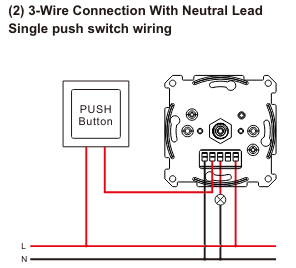
According to the manual, the dimmer has support for external push buttons as well. So I might be able to just add a spring to the other switch and connect it to the dimmer on the other end.
But I believe that will require more work.
Again, as I understand your wiring, the live comes to the switch, then goes to dimmer, then up to the light.
So adding a spring will keep the live turned off.
That means you need to pull another live to the dimmer.
That is not legal for unqualified, it’s not a hard work, perfectly capable for someone with two hand and a brain.
But not legal.
Edit: I’m not saying qualified persons can’t do it one handed or without thinking.
Interesting. And who decides that you knew what you were doing when shit happens?
I thought in scandinavia diy jobs are limited to changing a light fixture.
I see you are right. And honestly I would like to see other countries applying similar approach.
“Shit happens cases” with insurance company might be pretty complicated though.