Full home renovation in Pittsburgh. I’ve been following Home Assistant projects for years and would love to have HA in my new home, especially while the walls are open and we can run wire all throughout the house, but it is overwhelming to start from a blank slate. Hoping I can hire someone to help.
Run ethernet wires to all rooms coming back to one room. Use can 6 or 7 cables and you will set up a decent infrastructure. It is not that big of a deal as you are building it from the scratch.
Edit:
And if you plan to use cameras also run ethernet wires to outside of the house coming back to the same room.
The ethernet seems easy enough. I’m more concerned about the power lines, what circuits we should be making, should we be going with a centralized lighting control system (Something similar to the higher end Lutron systems) and do we need low voltage runs.
I’ve seen a lot of systems that run on a Shelley DIN rail that are relatively affordable and have essentially unlimited customization but rewiring a whole house is probably more than I can DIY right now
No.
Your house should be manually controlled. Using smart switches with radar sensor is a bonus and not must have.
If anything goes down you should be able to turn on/off lights.
The most important thing is to run ethernet wires in every room and outside if you plan to use cameras. If you want ot have smart doorbell with indoor unit run wires too. But be aware that this should be placed somewhere where you can control it and it is using poe if you want local control.
Another thing is alarm system that can be also hard wired if you want to use such. But you will have to run wires for that comming back where the alarm central will be positioning.
Ethernet everywhere. Got it.
2 & 3. We will have a lot of lights and are ending up with a ton of switches with the only solution being to tie more lights together but then we have less control. Do the smart switches solve this? (I thought those are simple just an on/off as well, thus not giving us more granular control over individual lights) Ideally we would have something like the Lutron Pico keypads without spending the Lutron money https://epicsystems.tech/cdn/shop/files/hqwt-u-p4w-cp.jpg?v=1771527245&width=446
I’ve already assumed that resale is tanked with all of my other smart home gadgets. We plan on being in this house for the next 10+ years
I’m not sure what you are implying/asking, but yes smart switches/dimmers can solve it. I’ll give you a real-world example.
When my kitchen was being renovated I asked the contractor to run an electrical circuit for under-cabinet lighting… which he did. Unfortunately he ran multiple separate circuits to the various wall cabinets which went to separate wall boxes along the kitchen. Which meant every time I wanted under-cabinet/task lighting, I had to push three separate wall switches to illuminate all my counter-top areas.
Enter Z-wave dimmers to the rescue. I created direct-associations between three different dimmers, so that when I controlled one switch for on/off or dimming, all the lights reacted together. Works for both physical and remote control. And the best thing about Z-wave associations is that they work even without the HA hub being present, after they are initially setup.
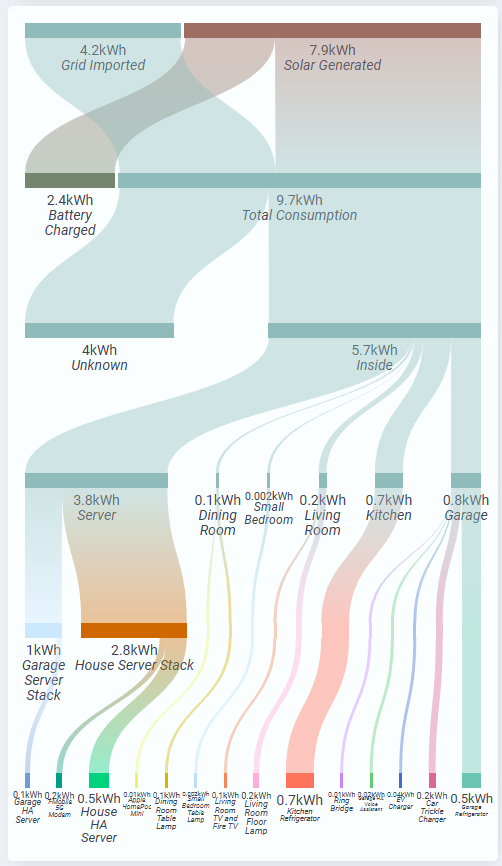
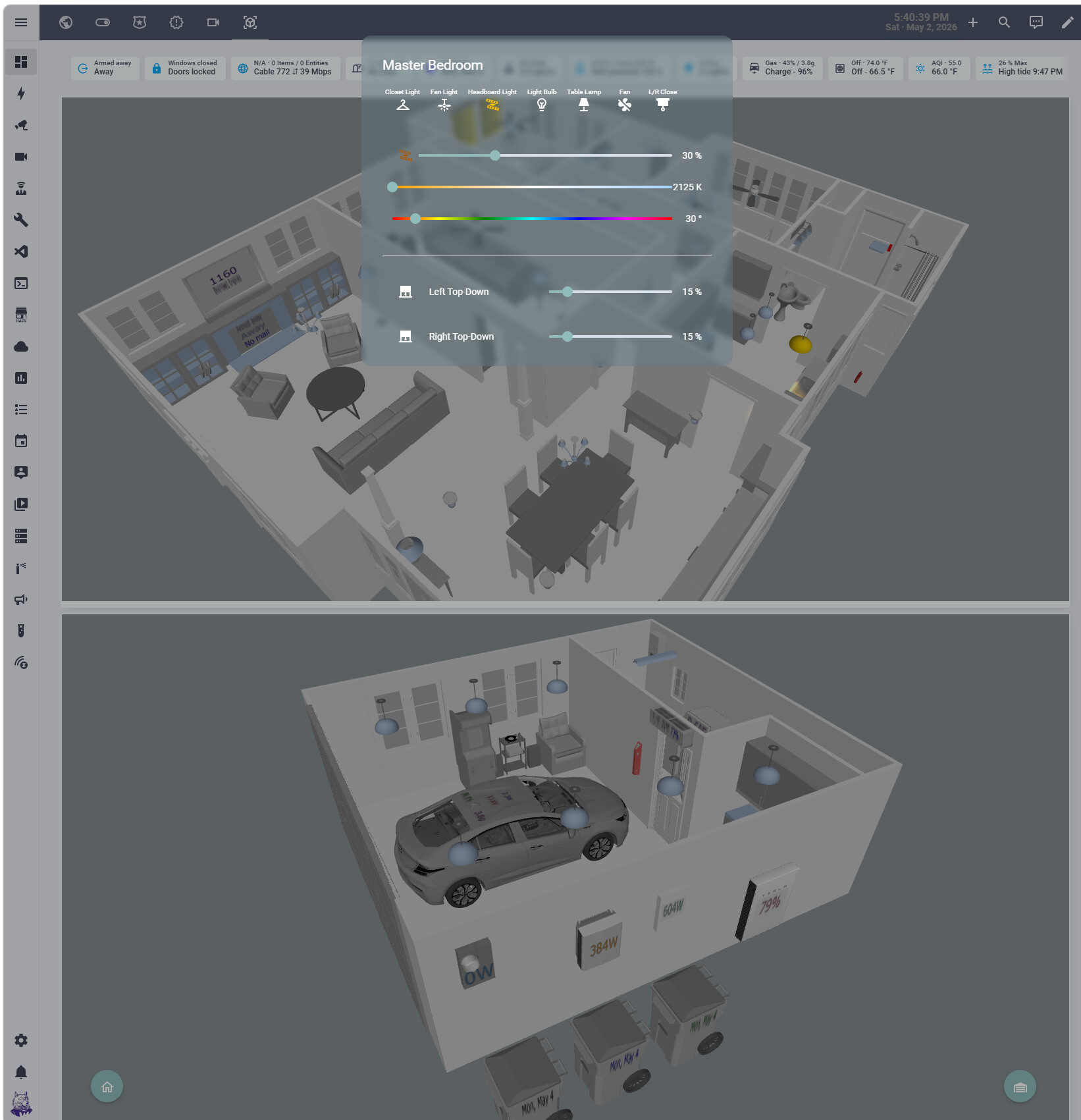
I would also consider a smart electrical panel (such as Load Centers | Smart Circuit Breaker Box | Leviton), gateway for solar and battery backup (such as https://www.tesla.com/support/energy/powerwall/learn/system-design), smart water meter(s) and water valves or perhaps conventional water meters that can be read by a camera with AI help, same for gas meter, security system/alarm, thermostats, and more. It would also be helpful to get architectural drawings to set up a 3D house model.
My home is 115-years-old with a minimum of retrofitting. My goal is to control and account for every electron and molecule and track every critter on the premises–and after six-years of tinkering I’m nearly there. DM me if you want to set up a time offline to chat.
Exactly. In my current house, which is a much more basic set up, I have some Lutron smart switches and some govee strip lights but our place right now is so small that most of the light switches only control one light and then the give strip lights I have hard wired in and turn on/off through automations so I wasn’t sure when our contractor wires 3 lights together, what level of granular control I would have. I’m going to respond to @FortranFour with a rendering that will hopefully explain more using our master bathroom as an example.
This is exactly what I would like to do as well! And since the walls are open now, I want to make sure im setting myself up for success down the road.
I am hoping for pretty fine tune control, especially as AI with HA gets better and better, I’ve seen some pretty awesome projects with a personal Jarvis. Want to set a good foundation as AI home automation gets better and better.
Here’s a rendering of our master bathroom. It’s AI so it’s not perfect but I have the light locations in red and then the outlets in black. I can think of two distinct scenes. First would be night time, where we would want a presence sensor and upon entry probably only want the LEDs that are under the vanity, above the sink, and above the mirror emit a soft glow. While in the morning and day we would want most of the lights on. And then we would need someway to adjust the brightness of the light without phone control if you wanted it dimmer during the day or lighter late at night. I hope all of that is making sense.
Brightness/dimness is easily controlled by smart switches. The only place to consider smart bulbs is where you need to be able to change the light’s color.
What you describe is fairly trivial. You can easily set up conversational voice control using Home Assistant Voice with any number of voice units, easiest being this one: Home Assistant Voice Preview Edition - Home Assistant – using local or cloud-based LLMs. You can control individual lighting units or set scenes, e.g.
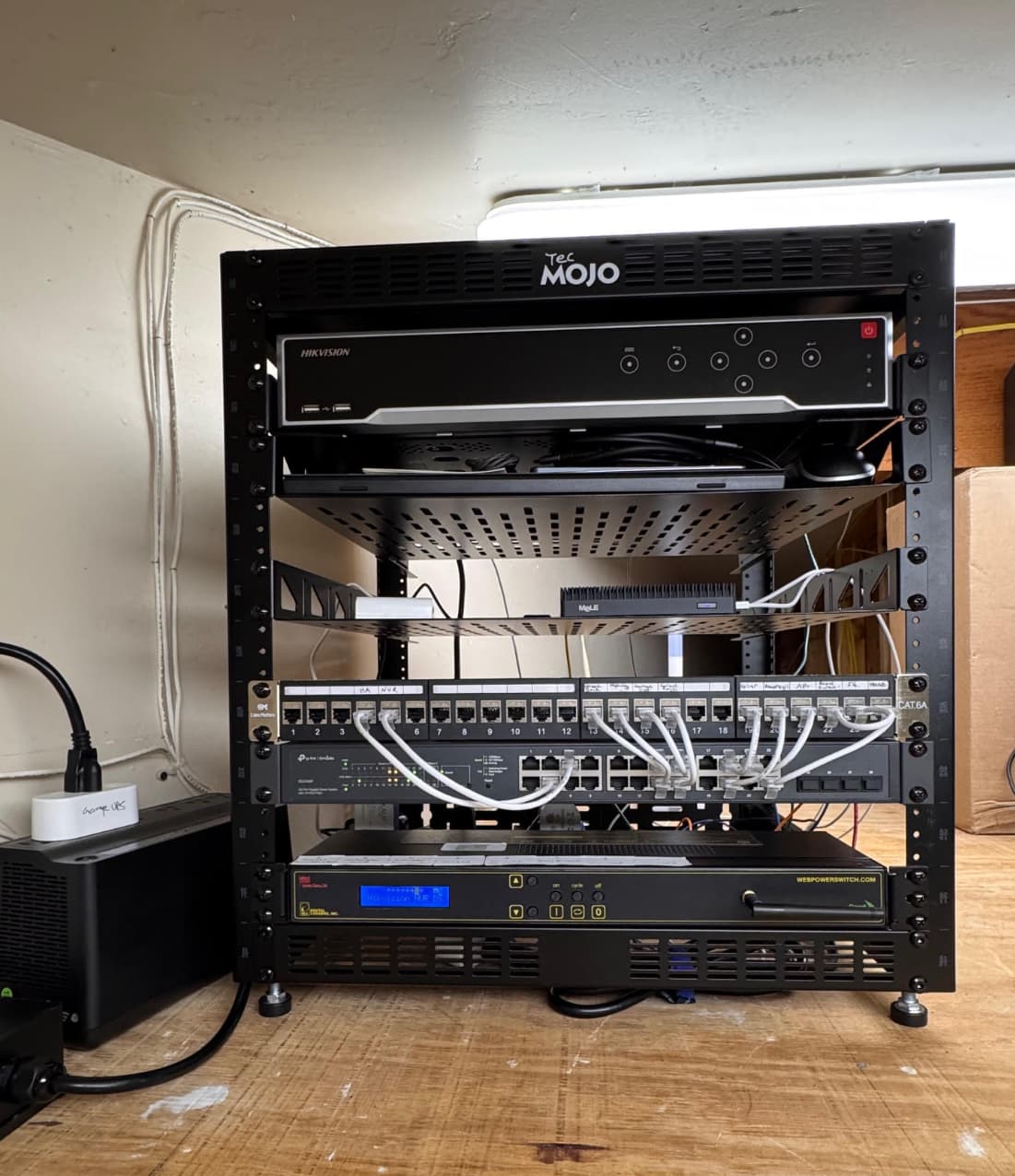
The only real need I see for ethernet is for external POE security cameras and possibly smart doorbells. You should invest in a good router/controller/switch ecosystem such as Ubiquiti Unify or TP-Link Omada, find a well-ventilated closet to locate all the equipment, and plan your access point (the WiFi antennas) locations carefully.
It is important to have electrical outlets near where you want to place smart devices, such as motorized window shades and presence detectors. My house was built in the earliest days of electrification and consequently has few. You don’t want to have to deal with replacing batteries:
One of the advantages of having a wired, professional alarm installation is that you can use the door and window sensors for various automation and, because they are wired, you will not have to change batteries. You may want to make sure that the alarm controller has local integrations available for HA. Alarm.com systems are common but the integration is cloud-based and the vendor frequently changes its API making the integration tenuous.
Yeah for alarm like lights you want to use at maximum wired devices. One system that integrates in local and very well with HA is Satel (we install quite a lot of them here in Europe) but not sure they are avalaible on US market. One thing important also is that day your alarm system dies or some sensors you can replace them easily as you are not locked (while Radio systems are all proprietaries…).
There are only 3 things you need to concern yourself with at this point if you intend on future proofing your circuits for smart home compatibility:
Have Neutral wires pulled at every light switch location.
Go with the deepest backboxes you can find for both light & switch sockets.
Make sure conduits are wide enough to accommodate more wires, try to avoid sharp 90 degree bends & have a pull wire installed in every switch run. That pull wire is gonna be your most future-proof “cable” 10 years from now.