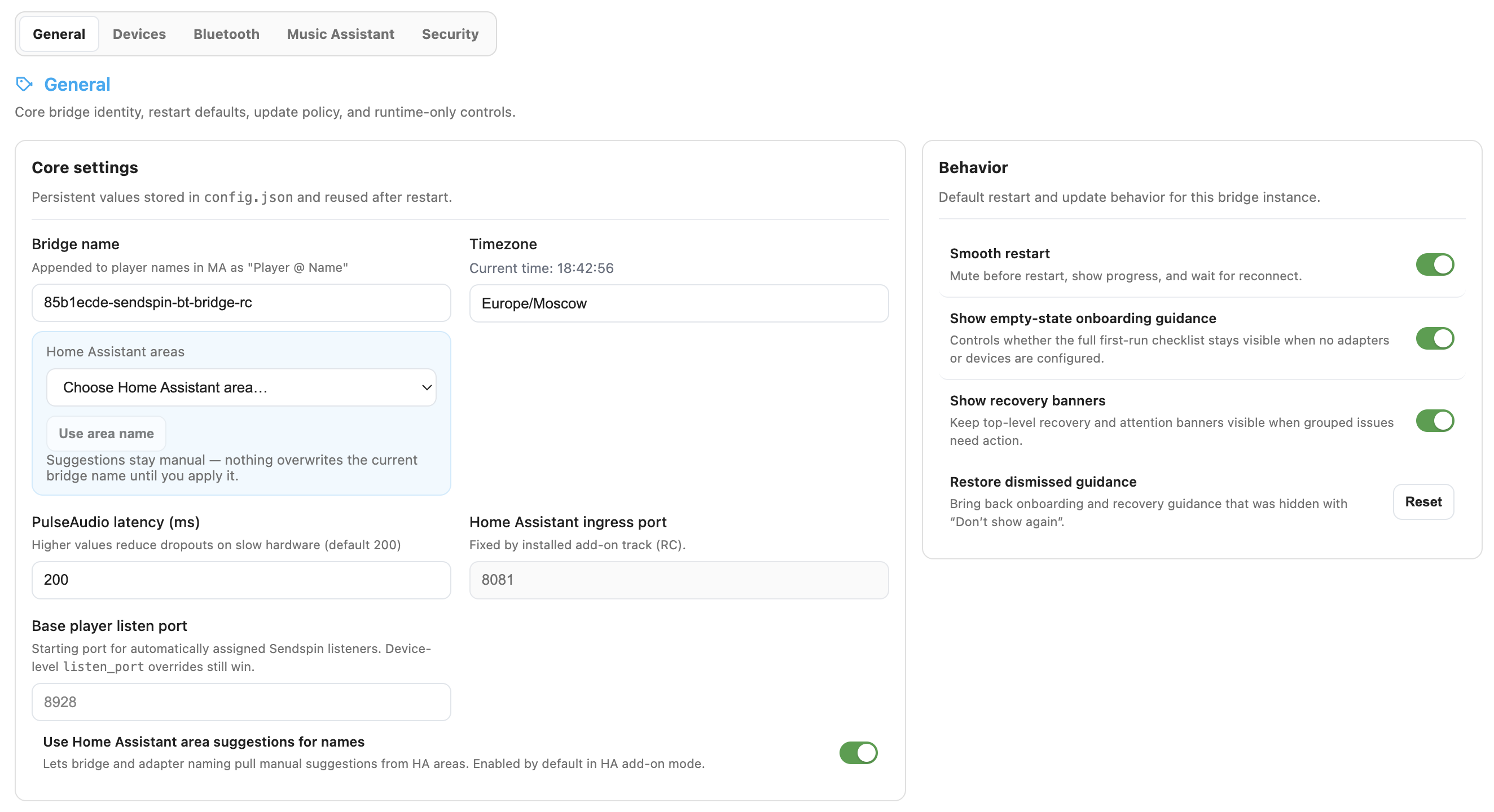
I probably should have said I am doing this on an old Pi 2B, so ARM 7 (I am now getting no matching manifest for linux/arm/v7 in the manifest list entries). I am using this as a replacement to an old setup I had for 2 outdoor speakers I had running using two instances of Snapcast.
Changing the permissions, I can now connect to MA, and can connect to the speakers, but I get a JBL Flip 6 @ rpi-outsidespeakers lost bridge transport error, but I do get an audio sink.
Logs:
2026-03-23 20:13:09,729 - __main__ - WARNING - [JBL Flip 6 @ rpi-outsidespeakers] daemon stderr:   File "/app/services/daemon_process.py", line 576, in <module>
2026-03-23 20:13:09,731 - __main__ - WARNING - [JBL Flip 6 @ rpi-outsidespeakers] daemon stderr:     main()
2026-03-23 20:13:09,733 - __main__ - WARNING - [JBL Flip 6 @ rpi-outsidespeakers] daemon stderr:   File "/app/services/daemon_process.py", line 572, in main
2026-03-23 20:13:09,733 - __main__ - WARNING - [JBL Flip 6 @ rpi-outsidespeakers] daemon stderr:     asyncio.run(_run(params))
2026-03-23 20:13:09,736 - __main__ - WARNING - [JBL Flip 6 @ rpi-outsidespeakers] daemon stderr:   File "/usr/local/lib/python3.12/asyncio/runners.py", line 195, in run
2026-03-23 20:13:09,737 - __main__ - WARNING - [JBL Flip 6 @ rpi-outsidespeakers] daemon stderr:     return runner.run(main)
2026-03-23 20:13:09,739 - __main__ - WARNING - [JBL Flip 6 @ rpi-outsidespeakers] daemon stderr:            ^^^^^^^^^^^^^^^^
2026-03-23 20:13:09,740 - __main__ - WARNING - [JBL Flip 6 @ rpi-outsidespeakers] daemon stderr:   File "/usr/local/lib/python3.12/asyncio/runners.py", line 118, in run
2026-03-23 20:13:09,742 - __main__ - WARNING - [JBL Flip 6 @ rpi-outsidespeakers] daemon stderr:     return self._loop.run_until_complete(task)
2026-03-23 20:13:09,742 - __main__ - WARNING - [JBL Flip 6 @ rpi-outsidespeakers] daemon stderr:            ^^^^^^^^^^^^^^^^^^^^^^^^^^^^^^^^^^^
2026-03-23 20:13:09,744 - __main__ - WARNING - [JBL Flip 6 @ rpi-outsidespeakers] daemon stderr:   File "/usr/local/lib/python3.12/asyncio/base_events.py", line 691, in run_until_complete
2026-03-23 20:13:09,746 - __main__ - WARNING - [JBL Flip 6 @ rpi-outsidespeakers] daemon stderr:     return future.result()
2026-03-23 20:13:09,748 - __main__ - WARNING - [JBL Flip 6 @ rpi-outsidespeakers] daemon stderr:            ^^^^^^^^^^^^^^^
2026-03-23 20:13:09,749 - __main__ - WARNING - [JBL Flip 6 @ rpi-outsidespeakers] daemon stderr:   File "/app/services/daemon_process.py", line 374, in _run
2026-03-23 20:13:09,751 - __main__ - WARNING - [JBL Flip 6 @ rpi-outsidespeakers] daemon stderr:     from sendspin.daemon.daemon import DaemonArgs
2026-03-23 20:13:09,753 - __main__ - WARNING - [JBL Flip 6 @ rpi-outsidespeakers] daemon stderr:   File "/usr/local/lib/python3.12/site-packages/sendspin/daemon/daemon.py", line 28, in <module>
2026-03-23 20:13:09,755 - __main__ - WARNING - [JBL Flip 6 @ rpi-outsidespeakers] daemon stderr:     from sendspin.audio_connector import AudioStreamHandler
2026-03-23 20:13:09,756 - __main__ - WARNING - [JBL Flip 6 @ rpi-outsidespeakers] daemon stderr:   File "/usr/local/lib/python3.12/site-packages/sendspin/audio_connector.py", line 18, in <module>
2026-03-23 20:13:09,758 - __main__ - WARNING - [JBL Flip 6 @ rpi-outsidespeakers] daemon stderr:     from sendspin.decoder import FlacDecoder
2026-03-23 20:13:09,759 - __main__ - WARNING - [JBL Flip 6 @ rpi-outsidespeakers] daemon stderr:   File "/usr/local/lib/python3.12/site-packages/sendspin/decoder.py", line 9, in <module>
2026-03-23 20:13:09,760 - __main__ - WARNING - [JBL Flip 6 @ rpi-outsidespeakers] daemon stderr:     import av
2026-03-23 20:13:09,762 - __main__ - WARNING - [JBL Flip 6 @ rpi-outsidespeakers] daemon stderr:   File "/usr/local/lib/python3.12/site-packages/av/__init__.py", line 3, in <module>
2026-03-23 20:13:09,765 - __main__ - WARNING - [JBL Flip 6 @ rpi-outsidespeakers] daemon stderr:     from av._core import time_base, library_versions, ffmpeg_version_info
2026-03-23 20:13:09,768 - __main__ - ERROR - [JBL Flip 6 @ rpi-outsidespeakers] daemon stderr: ImportError: libavformat.so.61: cannot open shared object file: No such file or directory
2026-03-23 20:13:10,013 - config - INFO - Loaded config from /config/config.json
2026-03-23 20:13:10,032 - config - INFO - Loaded config from /config/config.json
Failed to load cookie file from cookie: No such file or directory
Failed to load cookie file from cookie: No such file or directory
2026-03-23 20:13:11,081 - __main__ - WARNING - Daemon subprocess died unexpectedly, restarting in 1s...
2026-03-23 20:13:12,013 - config - INFO - Loaded config from /config/config.json
2026-03-23 20:13:12,038 - config - INFO - Loaded config from /config/config.json
Failed to load cookie file from cookie: No such file or directory
Failed to load cookie file from cookie: No such file or directory
2026-03-23 20:13:12,088 - __main__ - INFO - Starting Sendspin player 'JBL Flip 6 @ rpi-outsidespeakers' with auto-discovery (port 8928)
2026-03-23 20:13:12,090 - __main__ - INFO - [JBL Flip 6 @ rpi-outsidespeakers] Subprocess PULSE_SINK=bluez_sink.F8_5C_7E_2A_0B_E0.a2dp_sink
2026-03-23 20:13:12,101 - __main__ - INFO - Sendspin daemon subprocess started (PID 844) for 'JBL Flip 6 @ rpi-outsidespeakers'
2026-03-23 20:13:14,012 - config - INFO - Loaded config from /config/config.json
2026-03-23 20:13:14,028 - config - INFO - Loaded config from /config/config.json
Failed to load cookie file from cookie: No such file or directory
Failed to load cookie file from cookie: No such file or directory
2026-03-23 20:13:16,008 - config - INFO - Loaded config from /config/config.json
2026-03-23 20:13:16,027 - config - INFO - Loaded config from /config/config.json
Failed to load cookie file from cookie: No such file or directory
Failed to load cookie file from cookie: No such file or directory
2026-03-23 20:13:18,009 - config - INFO - Loaded config from /config/config.json
2026-03-23 20:13:18,026 - config - INFO - Loaded config from /config/config.json
Failed to load cookie file from cookie: No such file or directory
Failed to load cookie file from cookie: No such file or directory
2026-03-23 20:13:20,018 - config - INFO - Loaded config from /config/config.json
2026-03-23 20:13:20,035 - config - INFO - Loaded config from /config/config.json
Failed to load cookie file from cookie: No such file or directory
Failed to load cookie file from cookie: No such file or directory
2026-03-23 20:13:22,016 - config - INFO - Loaded config from /config/config.json
2026-03-23 20:13:22,033 - config - INFO - Loaded config from /config/config.json
Failed to load cookie file from cookie: No such file or directory
Failed to load cookie file from cookie: No such file or directory
2026-03-23 20:13:24,017 - config - INFO - Loaded config from /config/config.json
2026-03-23 20:13:24,036 - config - INFO - Loaded config from /config/config.json
Failed to load cookie file from cookie: No such file or directory
Failed to load cookie file from cookie: No such file or directory
2026-03-23 20:13:26,017 - config - INFO - Loaded config from /config/config.json
2026-03-23 20:13:26,036 - config - INFO - Loaded config from /config/config.json
Failed to load cookie file from cookie: No such file or directory
Failed to load cookie file from cookie: No such file or directory
2026-03-23 20:13:28,011 - config - INFO - Loaded config from /config/config.json
2026-03-23 20:13:28,027 - config - INFO - Loaded config from /config/config.json
Failed to load cookie file from cookie: No such file or directory
Failed to load cookie file from cookie: No such file or directory
2026-03-23 20:13:28,167 - services.ma_runtime_state - INFO - MA syncgroup cache updated: 0 mapped, 1 total group(s)
2026-03-23 20:13:30,008 - config - INFO - Loaded config from /config/config.json
2026-03-23 20:13:30,025 - config - INFO - Loaded config from /config/config.json
Failed to load cookie file from cookie: No such file or directory
Failed to load cookie file from cookie: No such file or directory
2026-03-23 20:13:30,084 - __main__ - ERROR - [JBL Flip 6 @ rpi-outsidespeakers] daemon stderr: Traceback (most recent call last):
2026-03-23 20:13:30,085 - __main__ - WARNING - [JBL Flip 6 @ rpi-outsidespeakers] daemon stderr:   File "<frozen runpy>", line 198, in _run_module_as_main
2026-03-23 20:13:30,085 - __main__ - WARNING - [JBL Flip 6 @ rpi-outsidespeakers] daemon stderr:   File "<frozen runpy>", line 88, in _run_code
2026-03-23 20:13:30,086 - __main__ - WARNING - [JBL Flip 6 @ rpi-outsidespeakers] daemon stderr:   File "/app/services/daemon_process.py", line 576, in <module>
2026-03-23 20:13:30,087 - __main__ - WARNING - [JBL Flip 6 @ rpi-outsidespeakers] daemon stderr:     main()
2026-03-23 20:13:30,088 - __main__ - WARNING - [JBL Flip 6 @ rpi-outsidespeakers] daemon stderr:   File "/app/services/daemon_process.py", line 572, in main
2026-03-23 20:13:30,089 - __main__ - WARNING - [JBL Flip 6 @ rpi-outsidespeakers] daemon stderr:     asyncio.run(_run(params))
2026-03-23 20:13:30,090 - __main__ - WARNING - [JBL Flip 6 @ rpi-outsidespeakers] daemon stderr:   File "/usr/local/lib/python3.12/asyncio/runners.py", line 195, in run
2026-03-23 20:13:30,092 - __main__ - WARNING - [JBL Flip 6 @ rpi-outsidespeakers] daemon stderr:     return runner.run(main)
2026-03-23 20:13:30,093 - __main__ - WARNING - [JBL Flip 6 @ rpi-outsidespeakers] daemon stderr:            ^^^^^^^^^^^^^^^^
2026-03-23 20:13:30,094 - __main__ - WARNING - [JBL Flip 6 @ rpi-outsidespeakers] daemon stderr:   File "/usr/local/lib/python3.12/asyncio/runners.py", line 118, in run
2026-03-23 20:13:30,095 - __main__ - WARNING - [JBL Flip 6 @ rpi-outsidespeakers] daemon stderr:     return self._loop.run_until_complete(task)
2026-03-23 20:13:30,096 - __main__ - WARNING - [JBL Flip 6 @ rpi-outsidespeakers] daemon stderr:            ^^^^^^^^^^^^^^^^^^^^^^^^^^^^^^^^^^^
2026-03-23 20:13:30,097 - __main__ - WARNING - [JBL Flip 6 @ rpi-outsidespeakers] daemon stderr:   File "/usr/local/lib/python3.12/asyncio/base_events.py", line 691, in run_until_complete
2026-03-23 20:13:30,098 - __main__ - WARNING - [JBL Flip 6 @ rpi-outsidespeakers] daemon stderr:     return future.result()
2026-03-23 20:13:30,100 - __main__ - WARNING - [JBL Flip 6 @ rpi-outsidespeakers] daemon stderr:            ^^^^^^^^^^^^^^^
2026-03-23 20:13:30,100 - __main__ - WARNING - [JBL Flip 6 @ rpi-outsidespeakers] daemon stderr:   File "/app/services/daemon_process.py", line 374, in _run
2026-03-23 20:13:30,103 - __main__ - WARNING - [JBL Flip 6 @ rpi-outsidespeakers] daemon stderr:     from sendspin.daemon.daemon import DaemonArgs
2026-03-23 20:13:30,104 - __main__ - WARNING - [JBL Flip 6 @ rpi-outsidespeakers] daemon stderr:   File "/usr/local/lib/python3.12/site-packages/sendspin/daemon/daemon.py", line 28, in <module>
2026-03-23 20:13:30,106 - __main__ - WARNING - [JBL Flip 6 @ rpi-outsidespeakers] daemon stderr:     from sendspin.audio_connector import AudioStreamHandler
2026-03-23 20:13:30,107 - __main__ - WARNING - [JBL Flip 6 @ rpi-outsidespeakers] daemon stderr:   File "/usr/local/lib/python3.12/site-packages/sendspin/audio_connector.py", line 18, in <module>
2026-03-23 20:13:30,109 - __main__ - WARNING - [JBL Flip 6 @ rpi-outsidespeakers] daemon stderr:     from sendspin.decoder import FlacDecoder
2026-03-23 20:13:30,110 - __main__ - WARNING - [JBL Flip 6 @ rpi-outsidespeakers] daemon stderr:   File "/usr/local/lib/python3.12/site-packages/sendspin/decoder.py", line 9, in <module>
2026-03-23 20:13:30,112 - __main__ - WARNING - [JBL Flip 6 @ rpi-outsidespeakers] daemon stderr:     import av
2026-03-23 20:13:30,113 - __main__ - WARNING - [JBL Flip 6 @ rpi-outsidespeakers] daemon stderr:   File "/usr/local/lib/python3.12/site-packages/av/__init__.py", line 3, in <module>
2026-03-23 20:13:30,114 - __main__ - WARNING - [JBL Flip 6 @ rpi-outsidespeakers] daemon stderr:     from av._core import time_base, library_versions, ffmpeg_version_info
2026-03-23 20:13:30,117 - __main__ - ERROR - [JBL Flip 6 @ rpi-outsidespeakers] daemon stderr: ImportError: libavformat.so.61: cannot open shared object file: No such file or directory
2026-03-23 20:13:32,013 - config - INFO - Loaded config from /config/config.json
2026-03-23 20:13:32,034 - config - INFO - Loaded config from /config/config.json
Failed to load cookie file from cookie: No such file or directory
Failed to load cookie file from cookie: No such file or directory
2026-03-23 20:13:32,114 - __main__ - WARNING - Daemon subprocess died unexpectedly, restarting in 1s...
2026-03-23 20:13:33,119 - __main__ - INFO - Starting Sendspin player 'JBL Flip 6 @ rpi-outsidespeakers' with auto-discovery (port 8928)
2026-03-23 20:13:33,121 - __main__ - INFO - [JBL Flip 6 @ rpi-outsidespeakers] Subprocess PULSE_SINK=bluez_sink.F8_5C_7E_2A_0B_E0.a2dp_sink
2026-03-23 20:13:33,131 - __main__ - INFO - Sendspin daemon subprocess started (PID 883) for 'JBL Flip 6 @ rpi-outsidespeakers'
2026-03-23 20:13:34,010 - config - INFO - Loaded config from /config/config.json
2026-03-23 20:13:34,026 - config - INFO - Loaded config from /config/config.json
Failed to load cookie file from cookie: No such file or directory
Failed to load cookie file from cookie: No such file or directory
2026-03-23 20:13:36,018 - config - INFO - Loaded config from /config/config.json
2026-03-23 20:13:36,034 - config - INFO - Loaded config from /config/config.json
Failed to load cookie file from cookie: No such file or directory
Failed to load cookie file from cookie: No such file or directory
2026-03-23 20:13:38,010 - config - INFO - Loaded config from /config/config.json
2026-03-23 20:13:38,028 - config - INFO - Loaded config from /config/config.json
Failed to load cookie file from cookie: No such file or directory
Failed to load cookie file from cookie: No such file or directory
EDIT: Just realised the version of ffmpeg I installed seems to be older than the version required, so I have an older library file. Looking at options…

 :
:
 Thank you all for the interest in the project, the testing, the feedback, the bug reports, and the ideas. It really helps move the bridge forward much faster
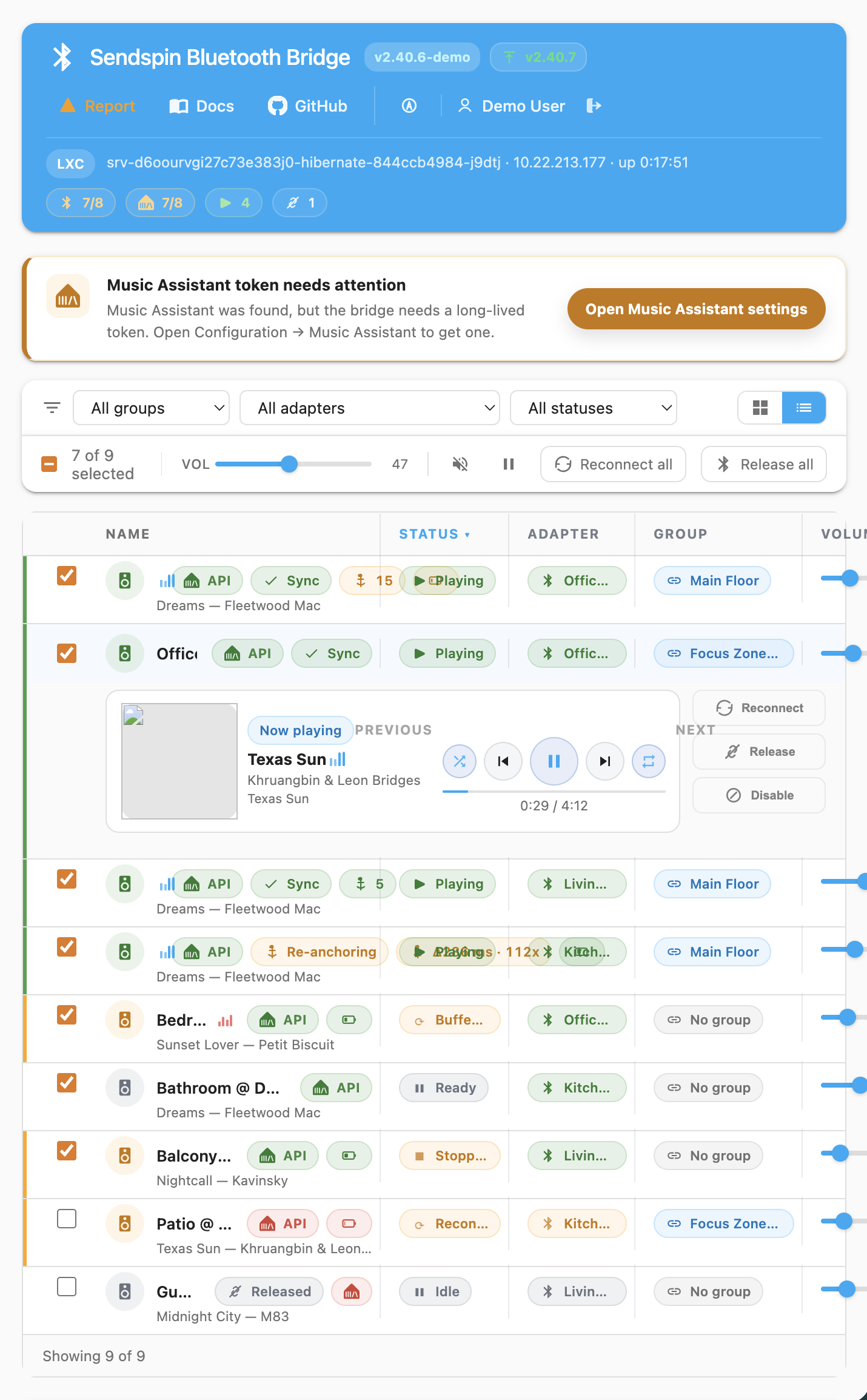
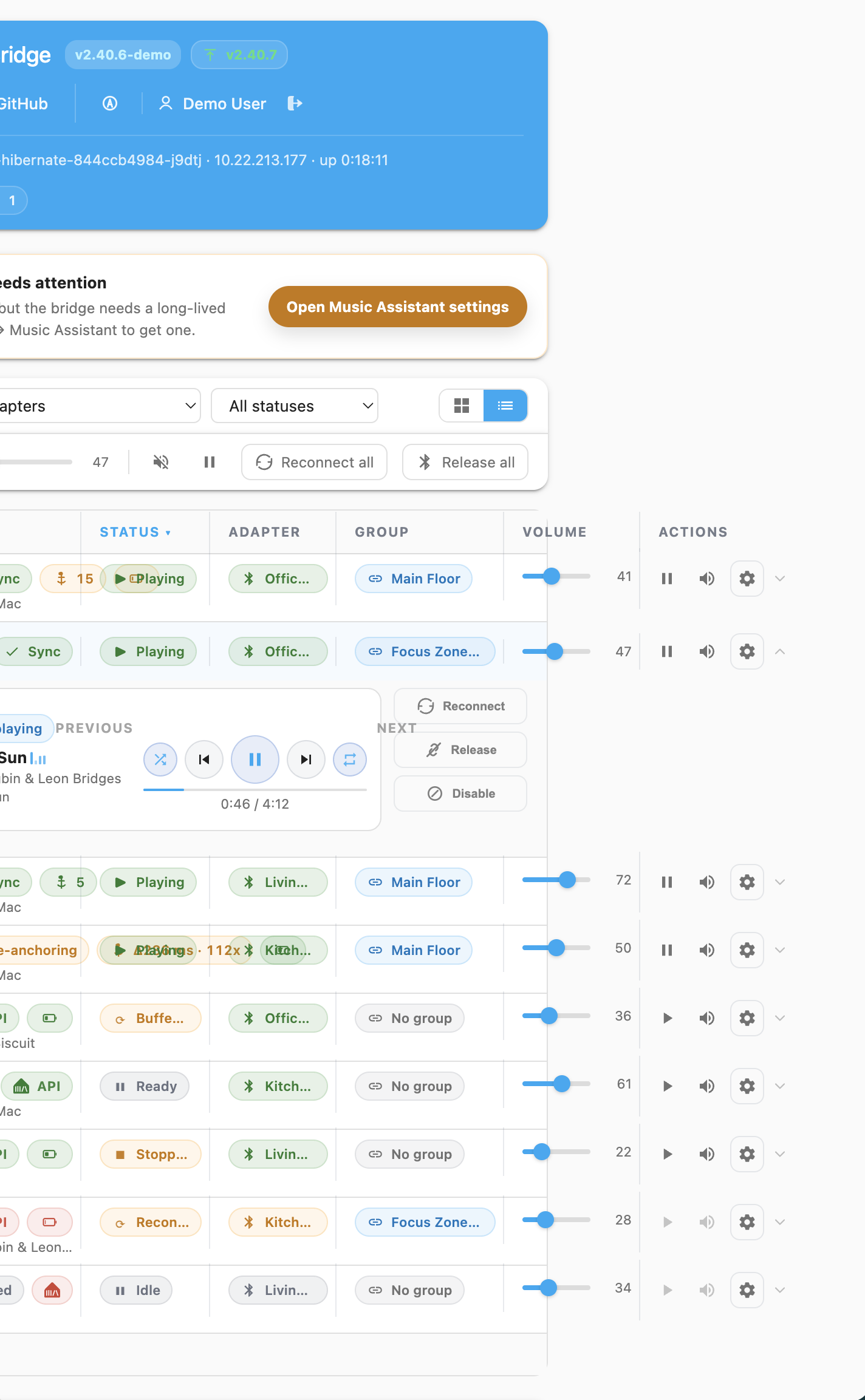
 A much better Music Assistant playback UI — the dashboard got a lot more polished across both card and list views. Playback controls, queue previews, progress display, badges, warnings, and live
 Better now-playing and artwork handling — album art is more reliable again, playback progress is less jumpy, and the UI does a much better job showing what is actually playing right now.
 Music Assistant controls are much more reliable — a lot of work went into fixing next / previous / shuffle / repeat, especially for solo players and mixed MA versions. In practice, transport
 Faster, calmer UI behavior — queue actions and MA state sync were improved so the interface reacts faster, shows more useful pending/confirmed state, and recovers more gracefully from short
 Far better status, startup, and diagnostics — the bridge now exposes startup progress, richer health/status snapshots, better diagnostics, and clearer onboarding hints. That makes it much easier
 Home Assistant addon experience improved a lot — stable, RC, and beta tracks are now much clearer and safer to use. Parallel addon channels were improved, ingress behavior is cleaner, and the UI
 Updates are safer and clearer — update channels are now first-class, standalone/LXC updates are more predictable, and the release flow is cleaner: stable builds use GitHub Releases, while
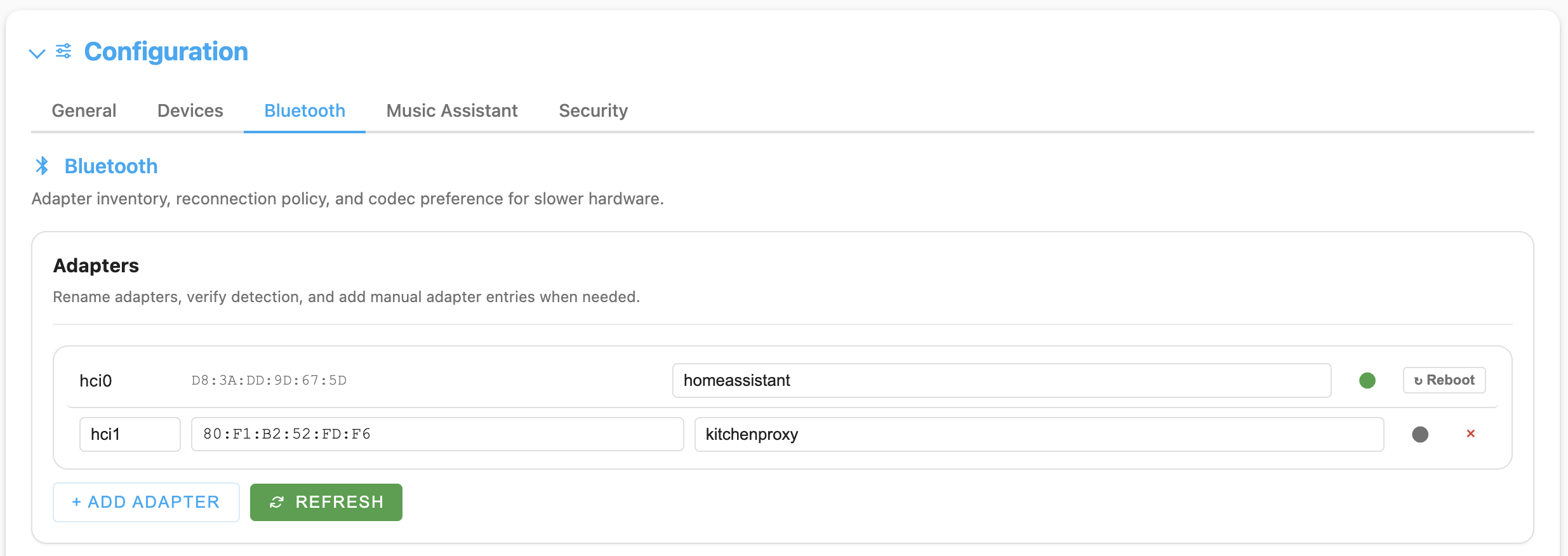
 General UI polish everywhere — lots of smaller improvements landed across warnings, spacing, helper text, header actions, onboarding, and config screens.
 Specially for
 Want to see the UI almost live before updating? Try the demo stand here:


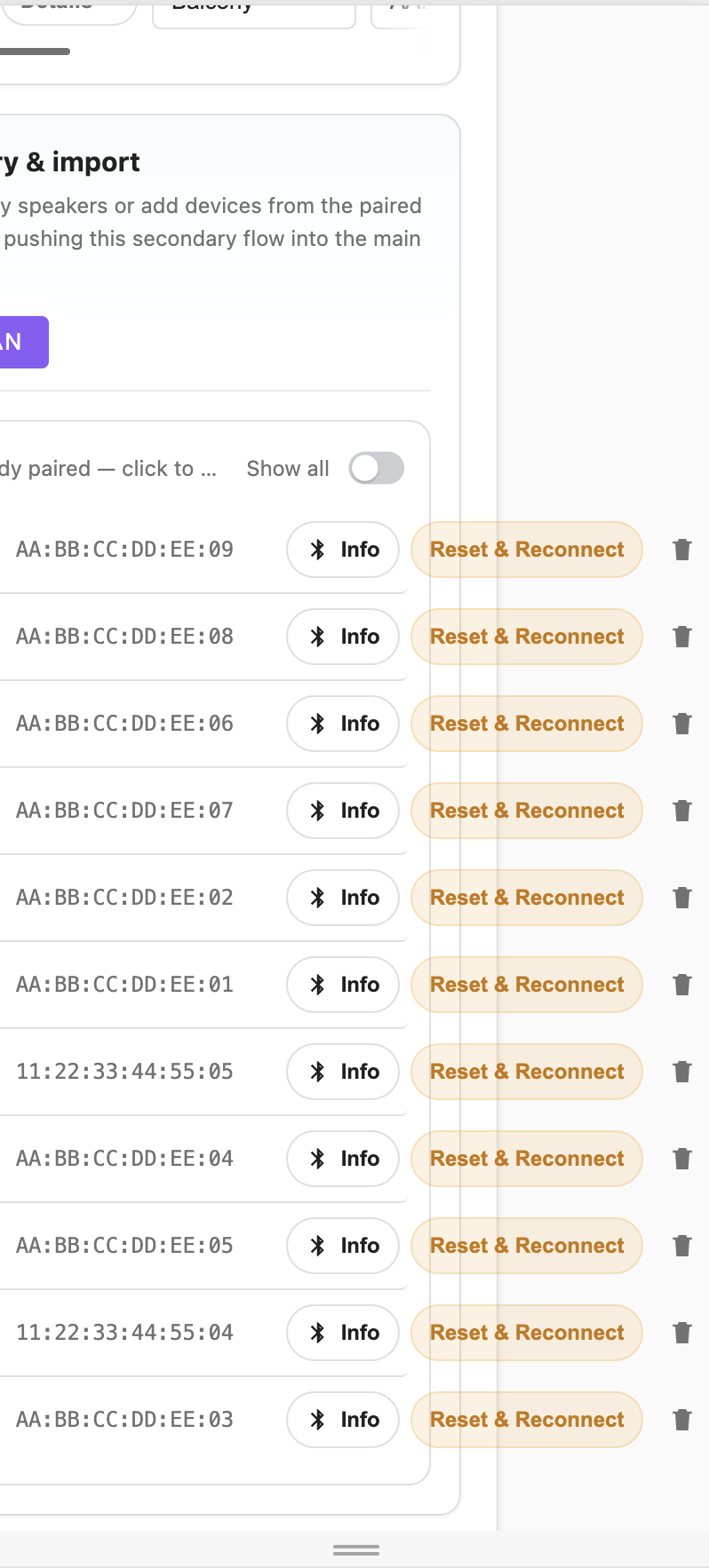
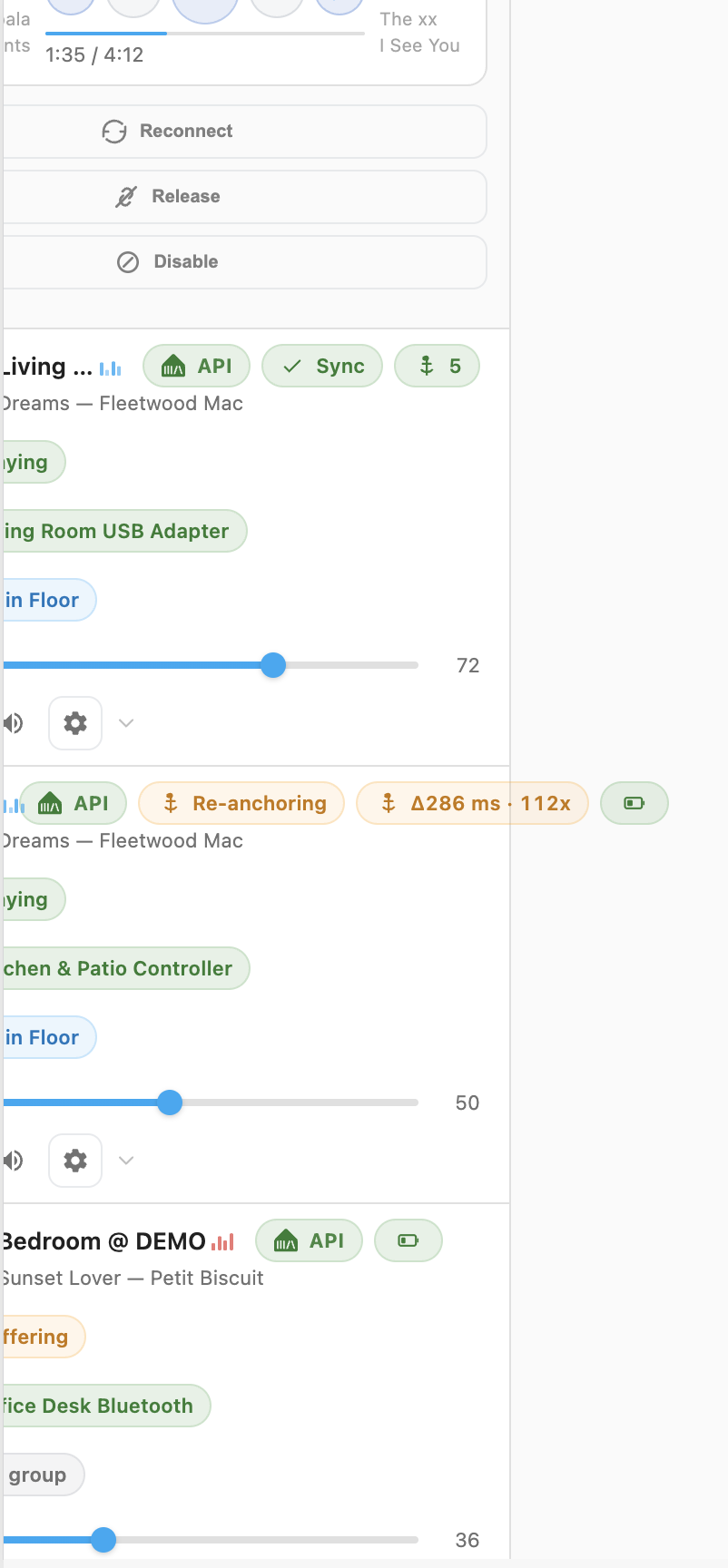
 A much smarter operator guidance system — the bridge now has a real onboarding checklist, recovery assistant, and unified operator guidance model. Instead of just showing raw status, the UI now
 Setup flow is much clearer now — onboarding is no longer just an empty-state hint. It became a structured checklist with progress, completion markers, and direct actions for Bluetooth setup,
 Recovery UX is now much stronger — the new Recovery Center and recovery assistant group active issues more clearly, show recovery traces, and suggest safer next actions like reconnect, re-pair,
 Restart, startup, and update flows feel much more correct — a lot of work went into lockout behavior and startup state handling. The UI now stays aligned with the real backend
 Disabled devices now behave properly — disabling a device is now much more consistent across dashboard state, live refreshes, and Save and restart. Disabled devices keep their proper disabled
 Under the hood this was also a big architecture release — a lot of runtime logic was moved out of the old monolithic state path into dedicated services for bridge runtime state, Music Assistant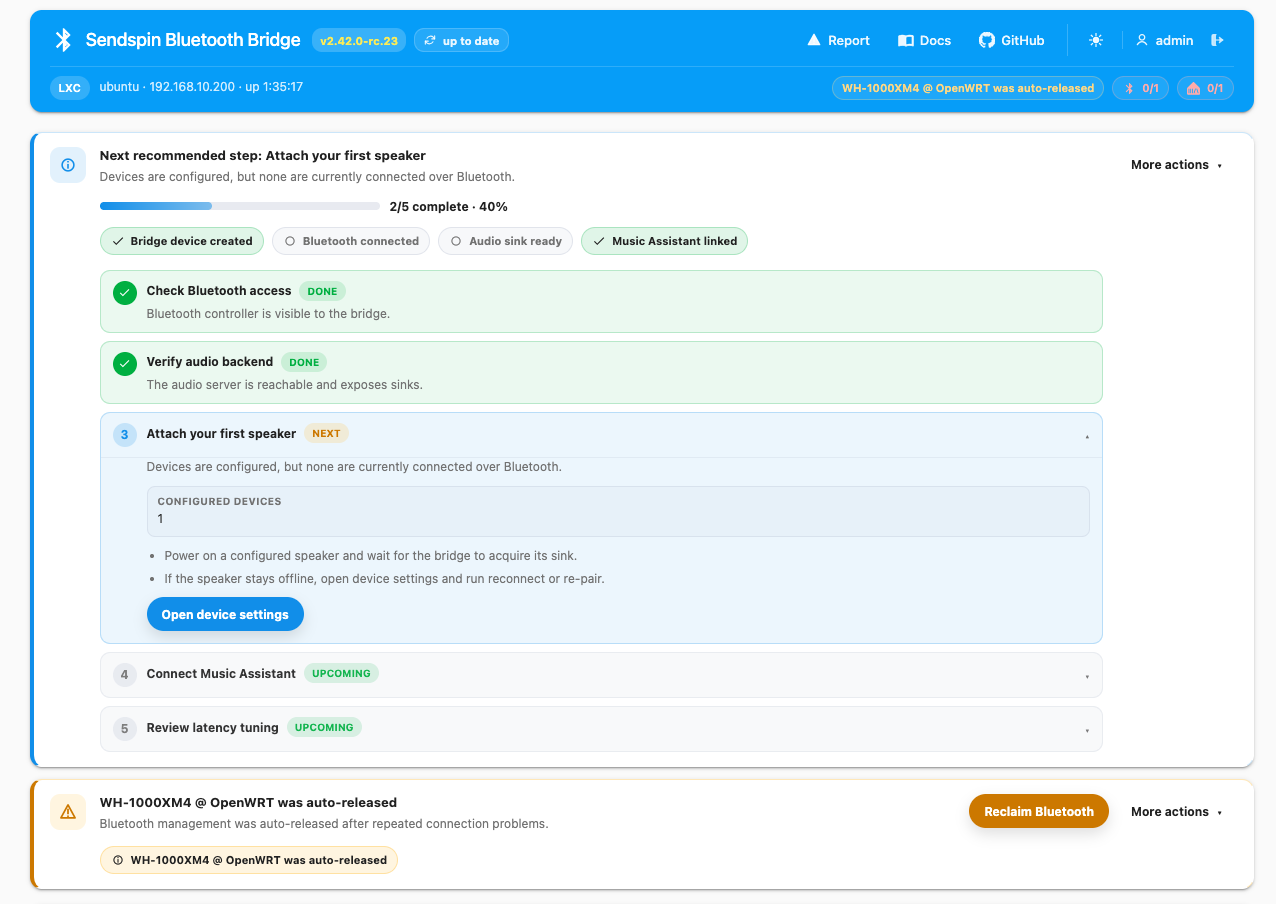
 Bluetooth discovery is much better now — the scan flow is more capable and easier to understand. The scan modal now supports adapter selection, an explicit Audio devices only filter, and a
 The compact UI system is more unified across the whole app — badges, chips, guidance surfaces, action menus, count badges, configuration headers, and notice blocks now share a more explicit
 Operator guidance got smarter in edge cases — onboarding now recognizes when all configured speakers have been manually released and offers direct reclaim actions, so it is easier to get playback
 Status badges and guidance entry points are more consistent — interactive and passive badges now have better hover/cursor behavior and more consistent visual treatment, and guidance cards
 Scan results are more honest and less confusing — results now stay aligned with the selected discovery scope, and non-audio Bluetooth devices are surfaced more clearly when the audio-only filter
 HA login failures are also easier to understand now — when HA OAuth is not configured on the Music Assistant side, the bridge now reports the real MA-side reason and explicitly suggests switching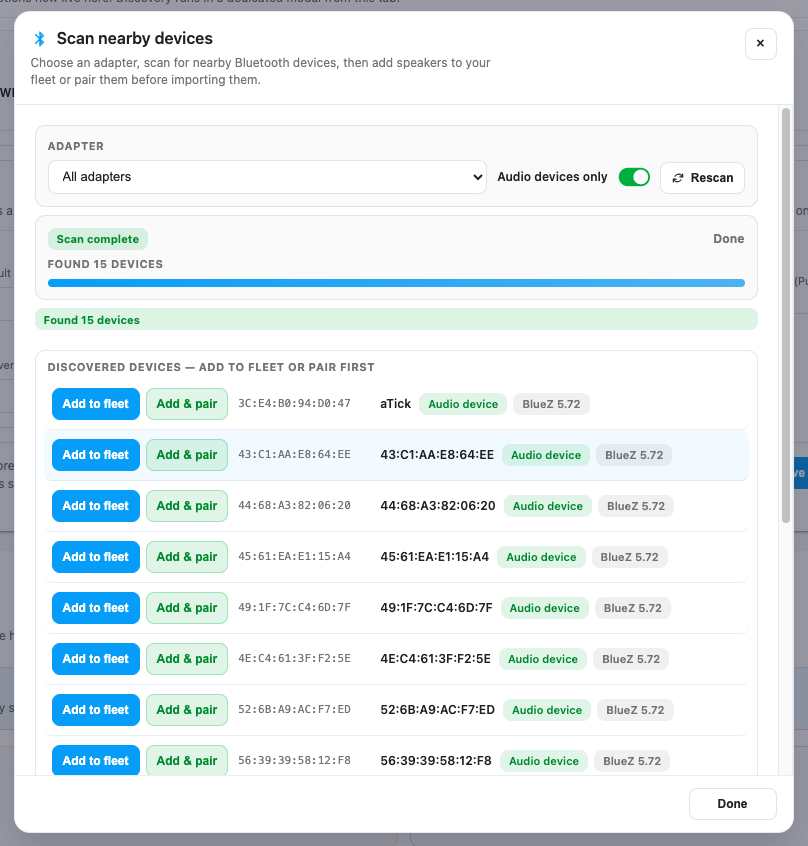
 Blocked actions are now much more touch/mobile friendly — disabled controls no longer depend on hover-only tooltips to explain what is wrong. Cards and rows now show visible compact hints and
 Home Assistant Areas are now integrated into naming flows — the config UI can now pull the HA area registry so Bridge name can offer one-click area suggestions, and Bluetooth adapters can
 The Bluetooth scan and pairing flow is more robust — active scans remain resumable after the modal is closed, scan/pair polling is more hardened, keyboard/focus behavior is better, result rows