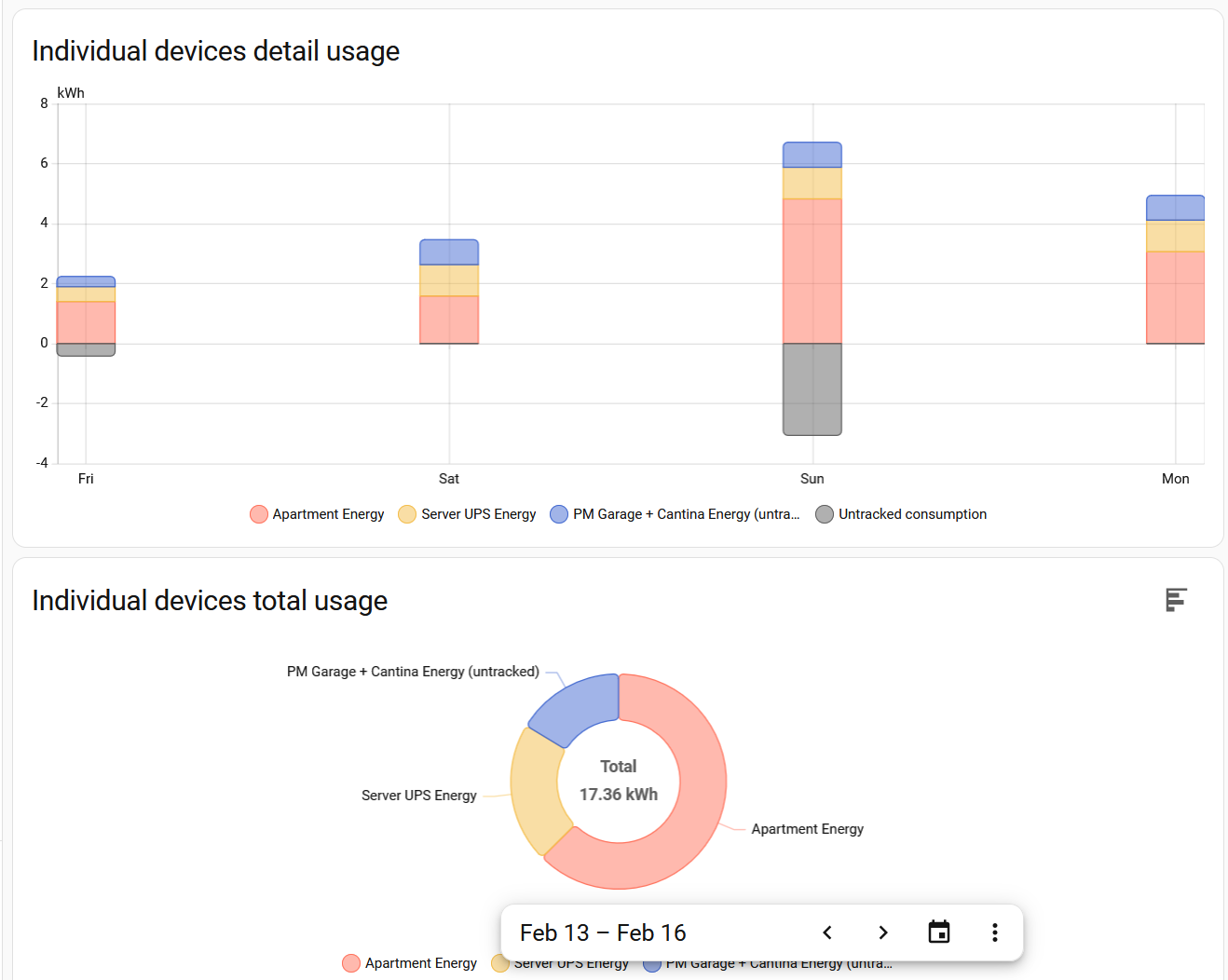
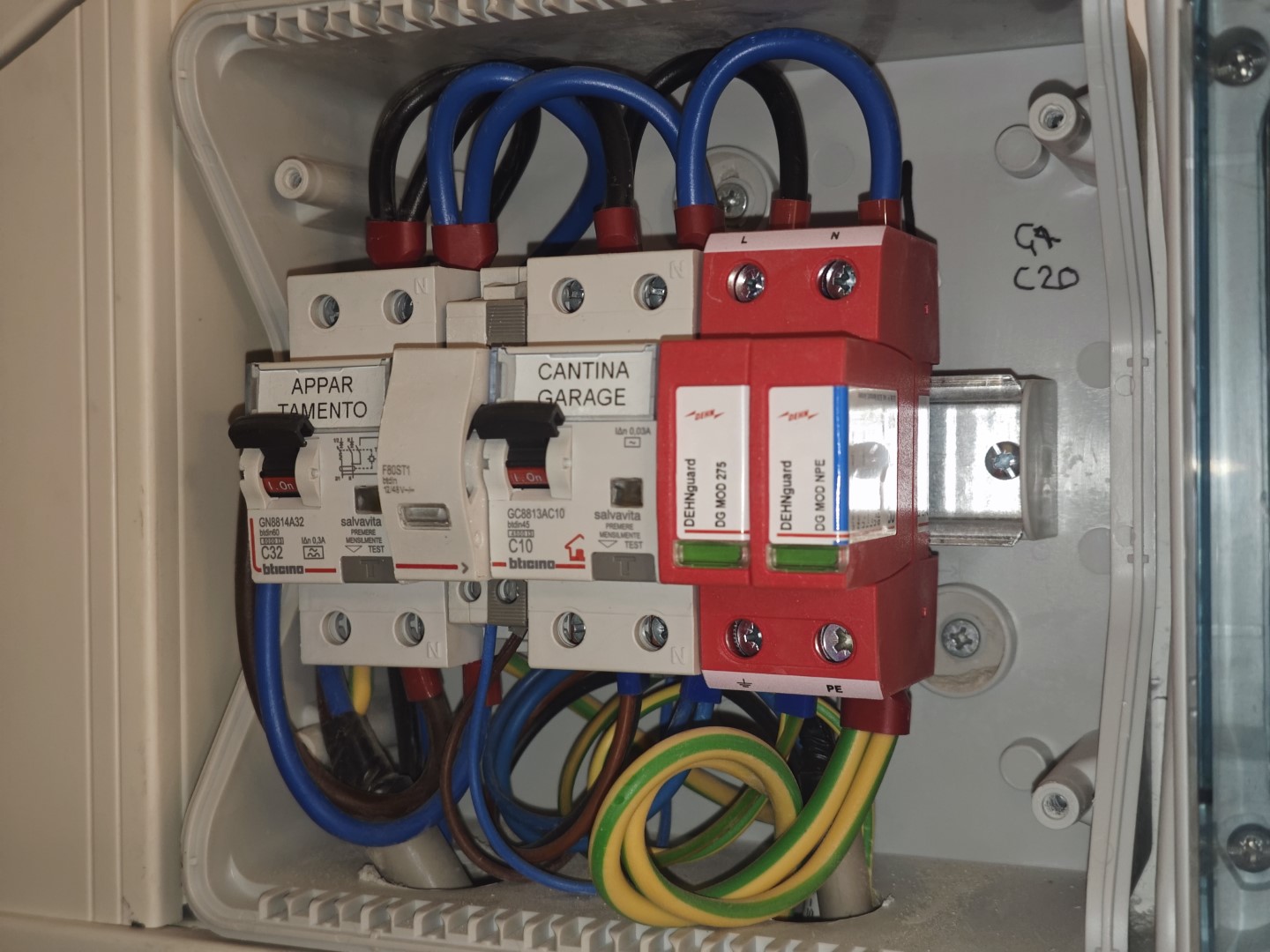
In my basement, immediately after the utility meter, there’s a junction box where the line splits into two branches one feeding the apartment and one feeding the garage.
I’m considering installing a Shelly power meter there (I already have a 50EM available). I’m comfortable with the physical installation; my main doubts are about the logical setup and data handling in Home Assistant.
The Shelly has two current clamps. My first idea was:
- Clamp 1 on the apartment line
- Clamp 2 on the garage line
- In Home Assistant, create a template sensor
total_consumptionas the sum of the two clamps.
An alternative setup would be:
- One clamp on the mains line coming from the utility meter
- One clamp on either the apartment or the garage line
- In Home Assistant, derive the missing value (
garage_consumptionorhouse_consumption) by subtracting the branch measurement from the mains measurement.
I could also install the Shelly in the breaker panel inside the house, but I would lose visibility on the garage branch consumption.
From a purely mathematical perspective the two approaches should be equivalent. However, I’m wondering if there are any practical downsides, quirks, or accuracy issues when deriving sensors via sums or subtractions rather than measuring everything directly.
EDIT
For anyone reading this later I opted for the second configuration due to space constraints in the junction box. Clamping the apartment line directly was impractical and prevented the cover from closing properly.
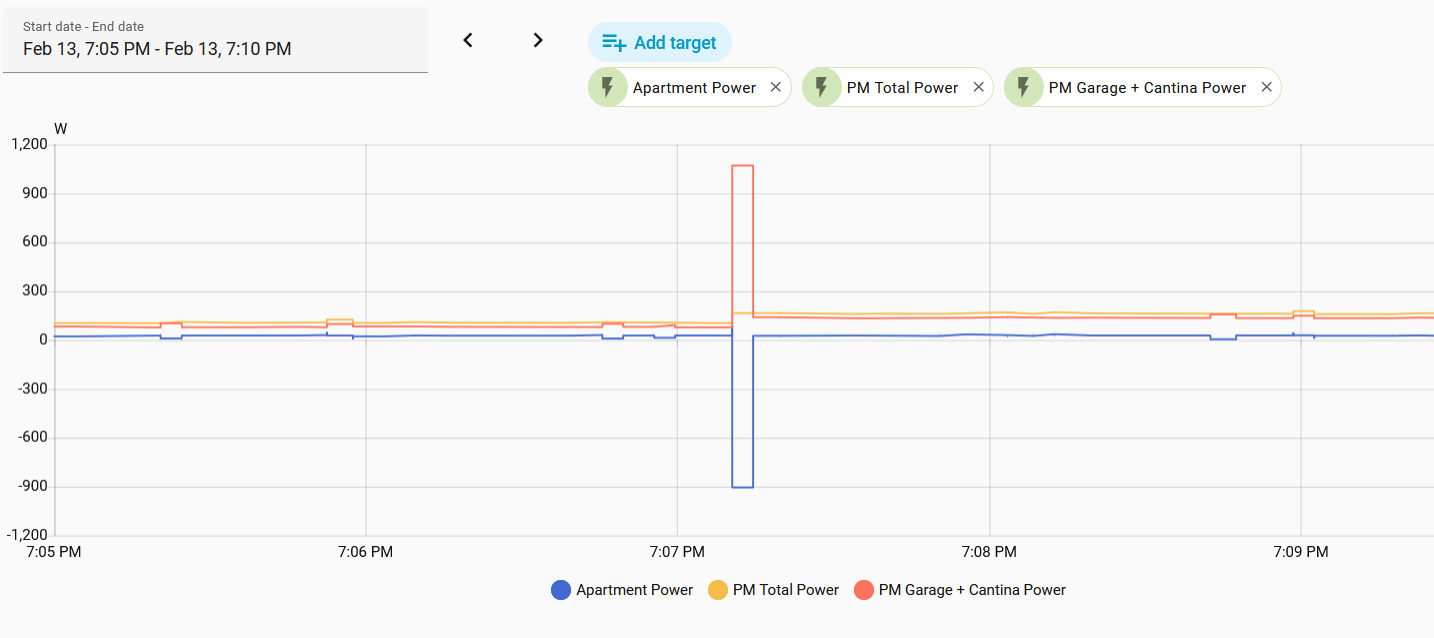
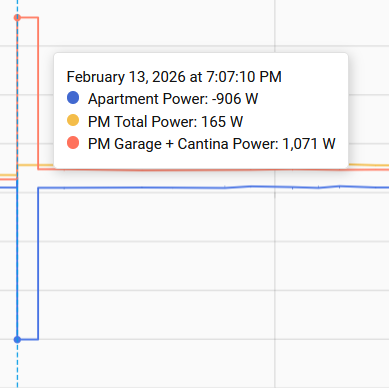
As a workaround, I created a template sensor to derive the apartment values by calculation:
apartment = total - garage
I now need to assess whether this indirect measurement introduces any significant error amplification compared to a direct clamp measurement, if anyone has suggestions on how to evaluate it feedback welcome!