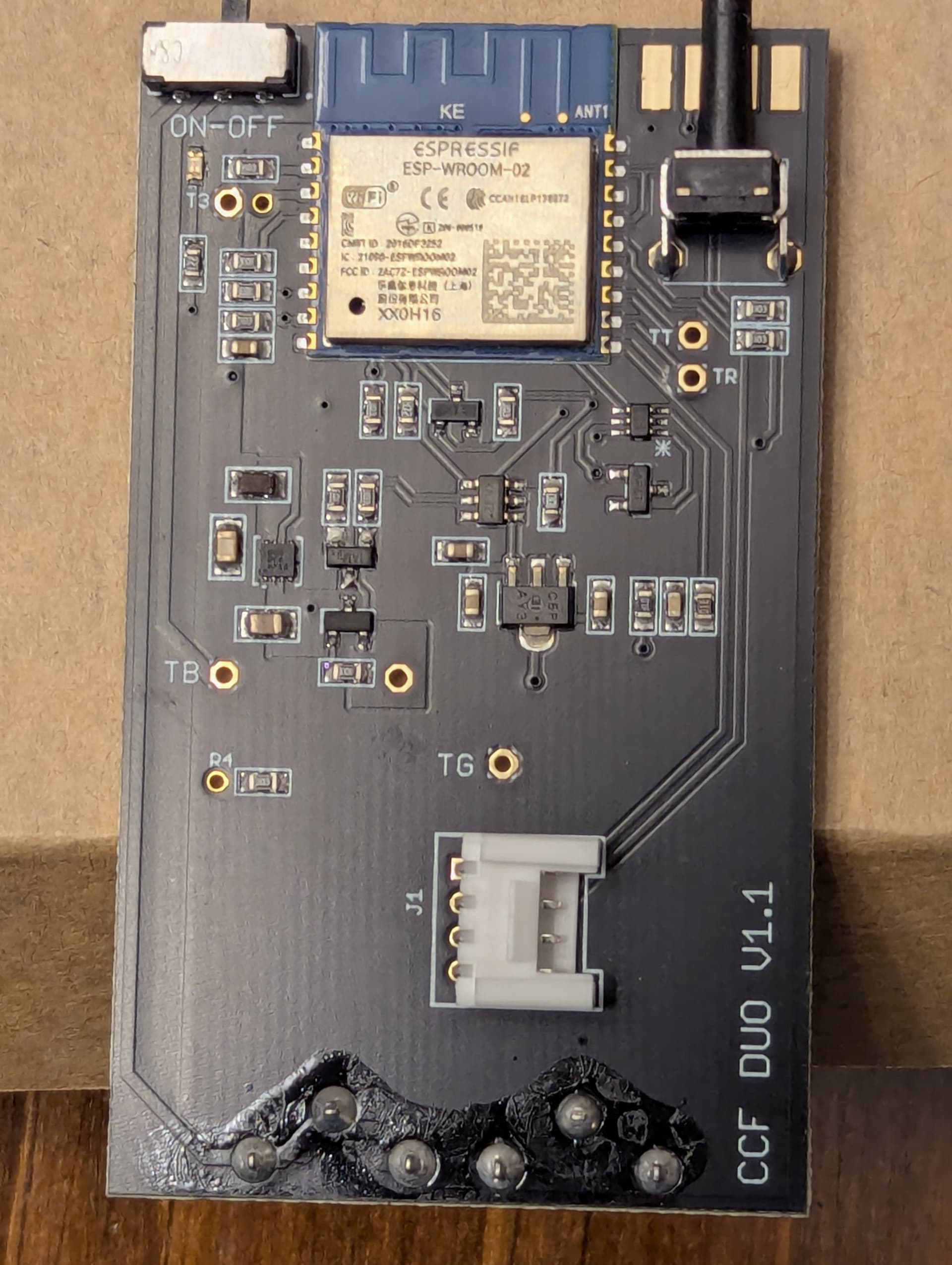
This is my full code as I am currently running it.
substitutions:
  device_name: "hacked-oil"
  friendly_name: "Hacked_Oil"
  Samples_Before_Sleep: '3'
  Auto_Sleep_On_dc: '2.5%'
  Auto_Sleep_Off_dc: '87%'
  ultrasonic_interval: '250ms'
  tank_size: "330" # 275, 330, 500, 550, or 1000
  tank_orientation: '1'  # 1 = Vertical,  2 = Horizontal


esphome:
  name: ${device_name}
  friendly_name: ${friendly_name}
  on_boot:
    - priority: 800
      then:
        - switch.turn_off: ultrasonic_en
        - switch.turn_off: deep_sleep_trig
        - switch.turn_off: VarCheck
        - switch.turn_off: ultrasonic_pwr
        - switch.turn_off: Auto_Sleep_Disable
    - priority: -100
      then:
        - script.execute: set_tank_dimensions
        - output.turn_on: LED_pwm
        - output.set_level:
            id: LED_pwm
            level: ${Auto_Sleep_On_dc}
        - switch.turn_on: TempSens_EN

  on_shutdown:
    #- priority: -100
    #  then:
    #    - switch.turn_off: ultrasonic_en
    #    - output.turn_off: LED_pwm
    - priority: 800
      then:
        #- switch.turn_off: ultrasonic_en
        #- output.turn_off: LED_pwm
        - if:
            condition:
              - switch.is_on: deep_sleep_trig
            then:
              - lambda: 'delay(50);'
              - switch.turn_on: Done

esp8266:
  board: esp_wroom_02

##########################
### PIN Identification ###
##########################
# 1 - 3V3
# 2 - EN, Pulled High
# 3 - GPIO14, Pulled Low, Output, Ultrasonic Sensor PWR EN
# 4 - GPIO12, Pulled High, Input, Control Button
# 5 - GPIO13, Pulled Low, Output, Timer TPL5111 - Done
# 6 - GPIO15, Pulled Low, Output, ADC SPDT Select Switch
# 7 - GPIO2, Pulled High, Output, Board LED
# 8 - GPIO0, Pulled High, Input, Front Surface Pad Second From Antenna
# 9 - GND
##########################
# 10 - GND
# 11 - GPIO16, Pulled High, Connected to RST
# 12 - TOUT, A0, Input, ADC, SPDT Common
# 13 - RST, Pulled High, Connected to GPIO16
# 14 - GPIO5, Pulled High, Input, Ultrasonic Echo
# 15 - GND, Surface Pad near Ant (Both Sides)
# 16 - TXD, Back Surface Pad Closest to Edge
# 17 - RXD, Back Surface Pad Second from Edge
# 18 - GPIO4, Pulled High, Output, Ultrasonic Trigger
##########################
##########################

# SPDT - Select Low -> Pin3 - 10MOhm to Batt and 1MOhm to GND
# SPDT - Select High -> Pin1 - Temperature - smdcode: AFT3 - MCP9700AT-E/TT  https://ww1.microchip.com/downloads/aemDocuments/documents/MSLD/ProductDocuments/DataSheets/MCP970X-Family-Data-Sheet-DS20001942.pdf

# UltraSonic is JSN-SR04T set to behave like HC-SR04   https://components101.com/sites/default/files/component_datasheet/JSN-SR04-Datasheet.pdf

# Timer Chip - smdcode: ZFVX - TPL5111
# Timer will cut 3.3V when Done goes High, will wake after 1hr. Expect to cause ESP8266 reset every hour.
# https://www.ti.com/lit/ds/symlink/tpl5111.pdf?ts=1739630376626&ref_url=https%253A%252F%252Fwww.google.com%252F

# Unstable operation when Battery Voltage is down to around 6.33V


# Enable logging
logger:
  level: DEBUG

# Enable Home Assistant API
api:
  encryption:
    key: !secret api_encryption_key_oil_gauge

ota:
  - platform: esphome
    password: !secret ota_password_oil_gauge

wifi:
  ssid: !secret wifi_ssid
  password: !secret wifi_password
  min_auth_mode: WPA2

  # Enable fallback hotspot (captive portal) in case wifi connection fails
  ap:
    ssid: ${device_name}
    password: !secret fallback_password_oil_gauge

captive_portal:

deep_sleep:
  id: my_deep_sleep
  sleep_duration: 30s

globals:
  - id: Tank_Width
    type: float
    initial_value: '0'

  - id: Tank_Radius
    type: float
    initial_value: '0'

  - id: Tank_Height
    type: float
    initial_value: '0'

  - id: Tank_Length
    type: float
    initial_value: '0'

#  - id: Oil_Height
#    type: double
#    initial_value: '0'

  - id: Rectangle_Height
    type: double
    initial_value: '0'

  - id: Arc_Height
    type: double
    initial_value: '0'

  - id: Rectangle_Area
    type: double
    initial_value: '0'

  - id: Arc_Area
    type: double
    initial_value: '0'

  - id: Total_Area
    type: double
    initial_value: '0'

#  - id: Oil_In_Tank
#    type: double
#    initial_value: '0'

  - id: Max_Fill
    type: double
    initial_value: '0'

  - id: Tank_Orientation
    type: float
    initial_value: ${tank_orientation}

  - id: Tank_Size
    type: float
    initial_value: ${tank_size}

  - id: Measure_Count
    type: int
    initial_value: '0'

  - id: Samples_Before_Sleep
    type: int
    initial_value: ${Samples_Before_Sleep}

switch:
  - platform: restart
    name: Reboot

  - platform: template
    name: "Ultrasonic EN"
    id: ultrasonic_en
    entity_category: "config"
    disabled_by_default: true
    optimistic: true
    on_turn_on:
      then:
        - script.execute: ultrasonic_loop
    on_turn_off:
      then:
        - switch.turn_off: ultrasonic_pwr

  - platform: template
    name: "Deep Sleep Trigger"
    id: deep_sleep_trig
    optimistic: True
    on_turn_on:
      then:
        - script.stop: ultrasonic_loop
        - switch.turn_off: ultrasonic_en
        - output.turn_off: LED_pwm
        #- delay: 5s
        - deep_sleep.enter:
            id: my_deep_sleep

  - platform: template
    name: "Auto Sleep Disable"
    id: Auto_Sleep_Disable
    optimistic: True
    on_turn_on:
      - output.set_level:
          id: LED_pwm
          level: ${Auto_Sleep_Off_dc}
    on_turn_off:
      - output.set_level:
          id: LED_pwm
          level: ${Auto_Sleep_On_dc}

  - platform: template
    name: "Variable Check"
    entity_category: "config"
    id: VarCheck
    optimistic: True

  - platform: gpio
    pin: GPIO15
    id: TempSens_EN
    name: "TempSens EN"
    entity_category: "config"
    disabled_by_default: true

  - platform: gpio
    pin: GPIO14
    id: ultrasonic_pwr
    name: "Ultrasonic Pwr"
    entity_category: "config"
    disabled_by_default: false
    on_turn_on:
      then:
        - delay: 3s
        - switch.turn_on: ultrasonic_en

  - platform: gpio
    pin: GPIO13 # Done Signal to TPL5111
    id: Done # Use Deep_Sleep_EN
    entity_category: "config"
    disabled_by_default: true
    name: "Done"

output:
  - platform: slow_pwm
    id: LED_pwm
    period: 1s
    pin: GPIO2
    inverted: True

binary_sensor:
  - platform: gpio
    pin:
      number: GPIO12
      inverted: true
    id: ctrl_btn
    name: "Control Button"
    on_multi_click:
      - timing:
          - ON for at most 1s
          - OFF for at most 1s
          - ON for at most 1s
          - OFF for at least 0.2s
        then:
          - switch.toggle: Auto_Sleep_Disable
      - timing:
          - ON for at most 1s
          - OFF for at least 0.5s
        then:
          - switch.turn_on: deep_sleep_trig

sensor:
  - platform: template
    name: 'Oil In Tank'
    id: Oil_In_Tank_sens
    device_class: volume_storage
    state_class: measurement
    unit_of_measurement: 'gal'
    accuracy_decimals: 4

  - platform: template
    name: 'Max Fill'
    id: Max_Fill_sens
    device_class: volume
    state_class: total
    unit_of_measurement: 'gal'
    accuracy_decimals: 4

  - platform: adc
    pin: A0
    name: "ADC Input"
    id: ADC_Input
    accuracy_decimals: 3
    update_interval: 5s
    entity_category: "diagnostic"
    filters:
      - lambda: |-

          // Battery Voltage Divider R Values
          int R1 = 10;  // MOhm
          int R2 = 1;   // MOhm

          float offset = -2.2; // Temperature correction offset (degC)

          if (id(TempSens_EN).state){
            return (((x*1000)-500)/10) + offset; // Temperature Sensor (degC)
          } else {
            return (x * (R1+R2))/R2; // Battery Voltage
          }

    on_value:
      then:
        - if:
            condition:
              - switch.is_on: TempSens_EN
            then:
              - sensor.template.publish:
                  id: TempC
                  state: !lambda 'return id(ADC_Input).state;'
              - component.update: VP_Oil
              - switch.turn_off: TempSens_EN
              - delay: 1s
              - switch.turn_on: ultrasonic_pwr
            else:
              - sensor.template.publish:
                  id: Batt_V
                  state: !lambda 'return id(ADC_Input).state;'

  - platform: template
    name: 'Temperature'
    id: TempC
    device_class: temperature
    state_class: measurement
    accuracy_decimals: 3
    unit_of_measurement: '°C'

  - platform: template
    name: 'Battery Voltage'
    id: Batt_V
    device_class: voltage
    state_class: measurement
    accuracy_decimals: 3
    unit_of_measurement: 'V'

  - platform: template
    name: 'Vapor Pressure Oil'
    id: VP_Oil
    update_interval: never
    device_class: pressure
    unit_of_measurement: kPa
    entity_category: "diagnostic"
    accuracy_decimals: 8
    lambda: |-
      return id(TempC).state;
    filters:
      - calibrate_linear:
          method: exact
          datapoints:
            # https://www.eng-tips.com/threads/typical-diesel-info.109718/post-424028
            # Map 0.0 (from sensor) to 1.0 (true value)
            # degC to Oil Vapor Pressure kPa
            - 4.444444444 -> 0.021373756
            - 10.0 -> 0.03102642
            - 15.55555556 -> 0.051021224
            - 21.11111111	-> 0.06205284
            - 26.66666667	-> 0.08273712
            - 32.22222222	-> 0.11031616
            - 37.77777778	-> 0.15168472

  - platform: ultrasonic
    trigger_pin:
        number: GPIO4
        inverted: true

    echo_pin: GPIO5
    name: "Oil_In_Tank"
    id: Oil_In_Tank
    accuracy_decimals: 25
    update_interval: never # 4s
    internal: True
    filters:

      - median:
          window_size: 5
          send_every: 5
          send_first_at: 5

      - sliding_window_moving_average:
          window_size: 16
          send_every: 16
          send_first_at: 16

      - lambda: |-

          // Calc Molecular Weight of Vapor above Oil

          double MW_Oil = 167.31102; // g_Oil/mol_Oil  (C12H23)
          double MW_Air = 28.9639475; // g_Air/mol_Air

          double P_Total = 101.325; // kPa (Could use a measured pressure here)
          double P_Oil = id(VP_Oil).state; // Partial Pressure of Oil kPa
          double P_Air = P_Total - P_Oil; // Partial Pressure Of Air kPa

          double nOil_per_nTotal = P_Oil / P_Total; // mol_Oil/mol_Total
          double nAir_per_nTotal = P_Air / P_Total; // mol_Air/mol_Total

          double g_Oil_per_nTotal = nOil_per_nTotal * MW_Oil; // g_Oil/mol_Total
          double g_Air_per_nTotal = nAir_per_nTotal * MW_Air; // g_Air/mol_Total

          double MW_Total = g_Oil_per_nTotal + g_Air_per_nTotal; // g_Total/mol_Total
          MW_Total = MW_Total / 1000; // kg_Totla/mol_Total


          // Back Calc Time of Flight
          double ESP_speed_sound_m_per_s = 343.0;
          double total_dist = x * 2.0;
          double time_s = total_dist / ESP_speed_sound_m_per_s;


          // Calc Speed of Sound in Vapor above Oil
          // https://en.wikipedia.org/wiki/Speed_of_sound
          double gamma = 1.4; // Oil is small enough fraction that large change in gamma is not expected
          double R = 8.31446261815324;
          double Sc = sqrt(gamma * R * 273.15 / MW_Total);
          double speed_sound_m_per_s = Sc * sqrt(1+(id(TempC).state/273.15)); // ideal diatomic gas

          // Calc Distance to Oil Surface
          total_dist = time_s * speed_sound_m_per_s;
          return id(Tank_Height) - (total_dist/2.0) * 1000 / 25.4;

      - calibrate_linear: # inches to Gallons
          method: exact
          datapoints:
            # https://allamericanenviro.com/determine-residential-heating-oil-tank-size-home-oil-tank-size-chart/
            # Map 0.0 (from sensor) to 1.0 (true value)
            # inches to gallons
            - 0	-> 0
            - 1	-> 3
            - 2	-> 6
            - 3	-> 11
            - 4	-> 17
            - 5	-> 23
            - 6	-> 30
            - 7	-> 37
            - 8	-> 44
            - 9	-> 52
            - 10	-> 60
            - 11	-> 68
            - 12	-> 77
            - 13	-> 85
            - 14	-> 93
            - 15	-> 102
            - 16	-> 110
            - 17	-> 119
            - 18	-> 127
            - 19	-> 136
            - 20	-> 144
            - 21	-> 152
            - 22	-> 161
            - 23	-> 169
            - 24	-> 178
            - 25	-> 186
            - 26	-> 194
            - 27	-> 203
            - 28	-> 211
            - 29	-> 220
            - 30	-> 228
            - 31	-> 237
            - 32	-> 245
            - 33	-> 253
            - 34	-> 262
            - 35	-> 270
            - 36	-> 278
            - 37	-> 285
            - 38	-> 292
            - 39	-> 299
            - 40	-> 306
            - 41	-> 311
            - 42	-> 317
            - 43	-> 320
            - 44	-> 325

    on_value:
      then:
        - script.execute: Calc_Oil

script:

#  - id: Calc_Oil_Height
#    then:
#      - if:
#          condition:
#            - lambda: |-
#                return id(Tank_Orientation) == 1; // Vertical
#          then:
#            - lambda: |-
#                id(Oil_Height) = id(Tank_Height) - (id(Oil_Distance).state * 1000 / 25.4);
#            - script.execute: Check_Oil_Height_V
#      - if:
#          condition:
#            - lambda: |-
#                return id(Tank_Orientation) == 2; // Horizontal
#          then:
#            - lambda: |-
#                id(Oil_Height) = id(Tank_Width) - (id(Oil_Distance).state * 1000 / 25.4);
#            - script.execute: Check_Oil_Height_H


  - id: Calc_Area
    then:
      - lambda: |-
          double d;
          double r;
          double arc;

          d = id(Arc_Height);
          r = id(Tank_Radius);
          arc = 2 * (acos((r-d)/r));
          id(Arc_Area) = ((r*r) * (arc - sin(arc))) / 2;
      - lambda: |-
          if (id(Tank_Orientation) == 1){ // Vertical
            id(Rectangle_Area) = id(Rectangle_Height) * id(Tank_Width);
          } else { // Horizontal
            id(Rectangle_Area) = id(Rectangle_Height) * (id(Tank_Height) - id(Tank_Width));
          }

      - lambda: |-
          id(Total_Area) = id(Rectangle_Area) + id(Arc_Area);
#      - script.execute: Calc_Oil_Volume


  - id: Calc_Oil
    then:
      - sensor.template.publish:
          id: Oil_In_Tank_sens
          state: !lambda 'return id(Oil_In_Tank).state;'
      - sensor.template.publish:
          id: Max_Fill_sens
          state: !lambda 'return id(Max_Fill) - id(Oil_In_Tank).state;'
      - if:
          condition:
            - switch.is_on: Auto_Sleep_Disable
          then:
            - globals.set:
                id: Measure_Count
                value: '0'
          else:
            - globals.set:
                id: Measure_Count
                value: !lambda 'return id(Measure_Count) += 1;'
            - if:
                condition:
                  - lambda: 'return id(Measure_Count) >= id(Samples_Before_Sleep);'
                then:
                  - switch.turn_on: deep_sleep_trig
      - lambda: 'ESP_LOGD("MeasureCount", "%i", id(Measure_Count));'

      - if:
          condition:
            - switch.is_on: VarCheck
          then:
            - script.execute: Log_Values

  - id: Log_Values
    mode: queued
    then:
#      - lambda: |-
#          ESP_LOGD("VarCheck", "Tank_Orientation %.15g", id(Tank_Orientation));
#          ESP_LOGD("VarCheck", "Tank_Size %.15g", id(Tank_Size));
#          ESP_LOGD("VarCheck", "Oil_Distance %.15g", id(Oil_Distance).state);
#          ESP_LOGD("VarCheck", "Tank_Width %.15g", id(Tank_Width));
#          ESP_LOGD("VarCheck", "Tank_Height %.15g", id(Tank_Height));
#          ESP_LOGD("VarCheck", "Tank_Length %.15g", id(Tank_Length));
#          ESP_LOGD("VarCheck", "Tank_Radius %.15g", id(Tank_Radius));
#          ESP_LOGD("VarCheck", "Oil_Height %.15g", id(Oil_Height));
#          ESP_LOGD("VarCheck", "Arc_Height %.15g", id(Arc_Height));
#          ESP_LOGD("VarCheck", "Rectangle_Height %.15g", id(Rectangle_Height));
#          ESP_LOGD("VarCheck", "Arc_Area %.15g", id(Arc_Area));
#          ESP_LOGD("VarCheck", "Rectangle_Area %.15g", id(Rectangle_Area));
#          ESP_LOGD("VarCheck", "Total_Area%.15g", id(Total_Area));
#          ESP_LOGD("VarCheck", "Oil_In_Tank%.15g", id(Oil_In_Tank));

  - id: ultrasonic_loop
    mode: restart
    then:
      - delay: ${ultrasonic_interval}
      - while:
          condition:
            switch.is_on: ultrasonic_en
          then:
            - component.update: Oil_In_Tank
            - delay: ${ultrasonic_interval}

 # Tank Dimensions:
 # https://www.fuelsnap.com/heating_oil_tank_charts.php

  - id: set_tank_dimensions
    then:
      - lambda: |-
          if (id(Tank_Size) == 275){
              id(Max_Fill) = 250;
              id(Tank_Width) = 27.8;
              id(Tank_Height) = 44;
              id(Tank_Length) = 60;
          }
          if (id(Tank_Size) == 330){
              id(Max_Fill) = 300;
              id(Tank_Width) = 27.8;
              id(Tank_Height) = 44;
              id(Tank_Length) = 72;
          }
          if (id(Tank_Size) == 500){
              id(Max_Fill) = 450;
              id(Tank_Width) = 48;
              id(Tank_Height) = 48;
              id(Tank_Length) = 63.8;
          }
          if (id(Tank_Size) == 550){
              id(Max_Fill) = 500;
              id(Tank_Width) = 48;
              id(Tank_Height) = 48;
              id(Tank_Length) = 70.25;
          }
          if (id(Tank_Size) == 1000){
              id(Max_Fill) = 900;
              id(Tank_Width) = 48;
              id(Tank_Height) = 48;
              id(Tank_Length) = 127.6;
          }

          id(Tank_Radius) = id(Tank_Width)/2;
To get the oil burn rate, I have an iotawatt meter on the electric circuit supplying the boiler along with a Shelly PM 1 in the boiler’s zone control that lets me figure out when the boiler’s blower and fuel pump are running. The tank sensor gives me the gallons consumed, the power meters gives me the runtime in hours. I expect a boiler’s gallons per hour burn rate to be fairly constant and not really dependant on the amount of oil in the tank. Using the calibrate linear filter gave me a slightly more constant burn rate calculation than calculating the volume of oil geometricly. When the oil does gets low enough to need a refill, I have seen that either method has given me fairly accurate measurements of how much oil would be needed to refill the tank.