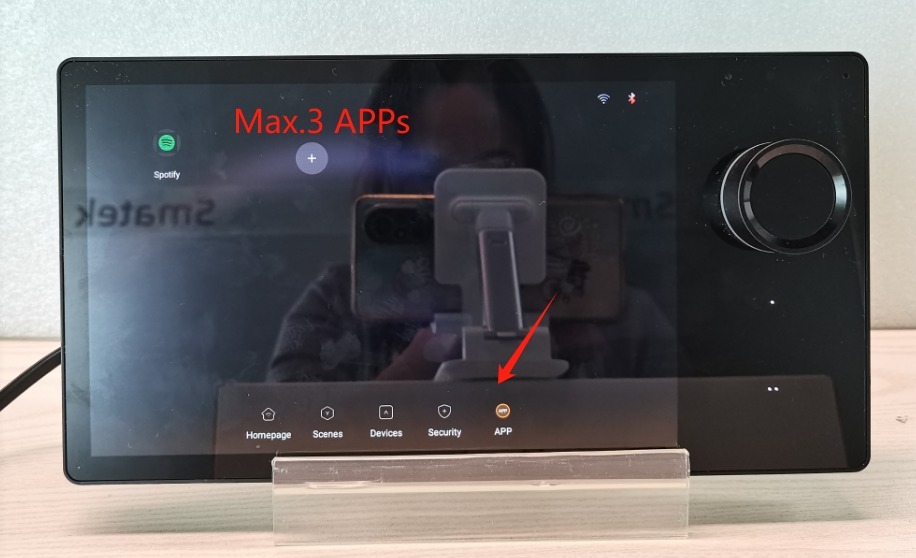
I purchased an S9E hoping to use it with HA. But it has proven more difficult than expected. The main issue is it uses a very outdated version of WebView (83.0.4103.120). So fully Kiosk and the HA app don’t render dashboards correctly. Chrome can be installed and works but it’s not as nice as the app or fully Kiosk browser because the address bar displays. And there is only 2.5MB free on the system partition.
I have tried all sorts of things, Magisk won’t install the riru module or the OpenWebView module.
I can get the hardware buttons working using Automagic. And there is control with the Fully Kiosk integration, just poorly rendered.
But for the life of me I can’t figure out a way to update the webview implementation.
If anyone has some advice or has managed to get it working properly that would be fantastic.
Well…some good news. Just after posting this I thought I would try one more thing. Turns out I had to use an older version of the OpenWebview module (v24.0) for Magisk. And voila it worked. It did have to hack the ‘VolumeSelector’ script in the openwebview installation to substitue the buttons (F1, F2) for the volume keys as the device doesn’y have volume keys.
Now I have working Fully Browser Kiosk and companion app for that matter. The hard buttons can be used via Automagic.
The next step is to try and get the inbulit temp and humidity sensors to work, and the proximity radar.
Thank you for posting the discoveries you made. I too got a Smatek S9E (actually, I got the S9PE-NZ just incase anyone is searching for more specific terms!) and your info was super helpful in getting my webview updated!!
Did you make any progress on the proximity radar? It’s the only other thing I think I really need to make this a perfect device!
@James821 Hi James,
Smatek have released a new firmware version for the S9E that has an update webview. It works with the native HA app and Fully Kiosk without the need for Magisk.
That’s interesting that you have that version of code with the updated webview. I got some files from Smatek earlier; “(S9-NZE) Read sensors values of temperature, humidity, radar and adaptive brightness” and “S9 Hardware Interface Debugging Instructions” and the debugging guide contained link to code dated 20240914. It would be good to find out if there’s any limits to the supported HW versions of that code, or some release notes!
For the proximity sensor, I wrote a really simple script that just detects if the GPIO18 value changes from 0 to 1 and if the screen is off, turns it on, but it’s a little bit clunky.
And from the searching I’ve done so far, it seems like the simple way to make use of the 4 physical buttons, is using something like Automagic to send HTTP requests to Home Assistant (and receive too, for controlling the little LEDs in the buttons!), but it might be nice to make something that uses MQTT instead.
I’ll continue to post my efforts and findings here!
After mminehanNZ posted that link above, I just asked the seller I got my (ever so slightly different) device from on Alibaba for the latest code that a) works with my device and b) will still give me root access and they’ve provided me with exactly the same link. I also asked if there were any release note, but I was told the only update was the webview component.
I’d previously asked them for any programming/API info etc, and they provided me with the two documents I mentioned above, one of which contains a few links.
But I agree, the website is poor and the linked to site that contains the image doesn’t allow any browsing.
Seems there’s a few people on here with there devices and at least a few in the discussions on the NSPanelProTools github too.
Wait so you got the password to unlock developer mode in the ui?! My seller hard refused to support and my emails to smatek didn’t get a response. If so was the password hard coded or unique to the device? Thanks!
After using the SMATek S9E for over six months, I am disappointed with its performance.
The user interface suffers from significant lag, which affects both the Home Assistant (HA) app and accessing HA through a browser. This lag worsens when multiple devices are displayed on the screen.
One major issue with many Chinese Android tablets is that they require a specific ROM image provided solely by the developer. As a result, these tablets often lag behind in necessary updates, particularly for components like WebView that are essential for the HA app. I have spent countless hours trying to update WebView, experimenting with different browsers and using Magisk, yet I always end up with the same lagging results. In comparison, my old Samsung Galaxy Tab S6 performs much more responsively.
I reached out to the developer for firmware updates, but their response was far from proactive. It took months and numerous emails for them to recognise that the WebView on their tablets is no longer supported by most apps. They eventually released a new firmware, but it uses a WebView version that is already two years old.
While the appeal of having proximity and temperature sensors was enticing, the tablet’s performance is severely lacking. And the documentation is almost non-existent. SMATek’s support pages are useless.
In summary, I would advise against purchasing Chinese Android tablets. They are not worth the headaches they cause. Instead, consider investing a bit more in well-known brands and opt for a quality wall mount or a Power over Ethernet (PoE) in-wall power adapter.
Around my house I have 8 wall panels including Sonoff NSPanelPro 86/120 and Tuya T2E/TPA10. There is no doubt that a system webview of at least v130 is critical to performance (especially if you are using webrtc) but in my experience the HA setup is what makes or breaks usability.
People spending money on wall panels likely have an evolved HA (I have over 4k entities) and while dashboards perform well on a daily driver phone or laptop, a wall panel is often based on tech from your mum’s phone era, think iPhone7 or Galaxy S8.
These devices are Wifi4 at best and the UI dashboard subscribes to all state changes. The horrible latency you experience is likely due to the fact that the Javascript front end subscribes to all state changes to maintain a mirror of the HA server and cannot keep up. If you look in the web debugger you will likely see log entries related to dropped WSS (websocket) messages.
For myself I achieved an ideal solution by deploying a secondary HA that subscribes to a fraction of the primary entities. My templated dashboard UIs needs less than 5% of the primary entities for display and control and an Android 8 device can easily handle this, even with multiple live video streams.
While my devices work well I look often on AliExpress for novel products but this device class is stuck in the Android 8/10 era even in 2026. I have considered building a HACS integration to pull all these capabilities together but think this should be a core HA capability even though the focus seems to be low compute servers (think Pi) rather than clients.
I have a local solution that has been solid for 6+ months and I see other people struggling but I am not sure there is the stamina to address this when the core HA team is focussed elsewhere.
Hi,knoop7/Ava on several Smatek panels (T6 / S8e / S9e).
It transforms these devices into powerful HA satellites featuring Zigbee gateway, Bluetooth gateway (BLE Proxy), local voice assistant, floating overlays, intercom, and more.
With the Mod system, I created custom Mods specifically optimized for Smatek hardware. Everything is completely free, no subscription.