Always wondered why do we use esphome instead of making standalone zigbee devices or matter devices?
Direct API use over WLAN or Ethernet is free, and can be easily upgraded as both ends are open-source. Many different types of hardware are freely available.
Certification to the Matter standard costs a lot, as does Z-Wave. Specific chipsets are required (e.g. Matter for crypto and 802.15.4, Z-Wave originally only had ONE hardware manufacturer SiLabs).
Zigbee radios need specific chipsets.
Also remember that ESPhome is a platform, like Tasmota which supports several protocols, again giving more flexibility.
Everything else needs hardware or software in the chain to make it work. esphome api is direct connect. esp devices themselves are able to function independent of the external service as well; example: you can create irrigation controller that just works and needs no external control. if desired you can connect that device to external service (Homeassistant) for remote control. You can create zwave, matter, zigbee devices with this function but you still need some method for flashing the firmware and creating that irrigation functionality. That is where esphome comes in. look at zwa-2 for example. zwave device with functionaility extended(wifi zwave controller) by esp chip and esphome
Protocol - zwave, zigbee, matter
firmware - esphome
EDIT
i asked AI for better description of esphome and while I hate providing Ai answer I have to admit the description fits : firmware framework and configuration system
I mean i sorta get the direct connect part
(im no hardware specialist so some of this is sophisticated gibberish to me lol)
However… the reason i asked this to begin with is i started messing with IR to try to make my "smart minisplit " whose wifi module is now unsupported by any known app therefore cant be added to ha via normal routes. And i just discovered how limiting esp home can be.
As far as the ai response i dont mind lol, ALL of my integrations are 40%-100% ai created lol even my esp-home codes. I dont have the time to do everything i just see my self as a sort of supervisor to various ai who take my concept and starter project and finish it  I think this is the best way to use HA because your not limited to what exist but rather what you can imagine, i literally make several integration a week scrap many private repo a ton
limiting how.
esphome is basically separate platform independent of HA. its about as seperated as and linux PC or a phone. you can connect them but if you dont it will work just the same.
depending on the connection you could bypass existing wifi module and control with esp directly or just use this
Before you keep going down that rabbit hole, I suggest you post the make & model of your AC. Unless you’ve got an extremely unknown brand, most ACs can be controlled directly via Esp (or Esp adjacent) methods.
IR for ACs is extremely hard to accomplish since each change in temperature requires sending all other settings. The esp projects I mentioned bypass all that by directly replacing the WiFi module.
That or dongle things seems interesting
Example concise response for a Home Assistant Community discussion:
ESPhome is great for quickly integrating devices with Home Assistant, but it can be limiting compared to using the Arduino framework directly when you need full control of hardware behavior.
For example, in a project where I used an IR receiver, I wanted to capture raw IR timings, process them with custom logic, and implement my own decoding and timing handling. In Arduino this is straightforward because I can directly access interrupts, manage buffers, and manipulate timing at the microsecond level.
Example in Arduino:
#include <IRremote.hpp>
void setup() {
Serial.begin(115200);
IrReceiver.begin(2, ENABLE_LED_FEEDBACK);
}
void loop() {
if (IrReceiver.decode()) {
Serial.println(IrReceiver.decodedIRData.command);
IrReceiver.resume();
}
}
With Arduino I can modify the library, adjust timing thresholds, or build my own decoding logic if needed.
In ESPHome, the IR receiver component mainly exposes decoded values and events to Home Assistant. While it works well for standard use cases, accessing raw timing data, customizing decoding algorithms, or deeply modifying the IR processing pipeline is much harder or sometimes not possible without writing custom components.
So ESPHome is excellent for fast integration and automation, but Arduino gives more flexibility when you need low level control or custom hardware behavior.
Innovair 9000 btu quantum heat minisplit
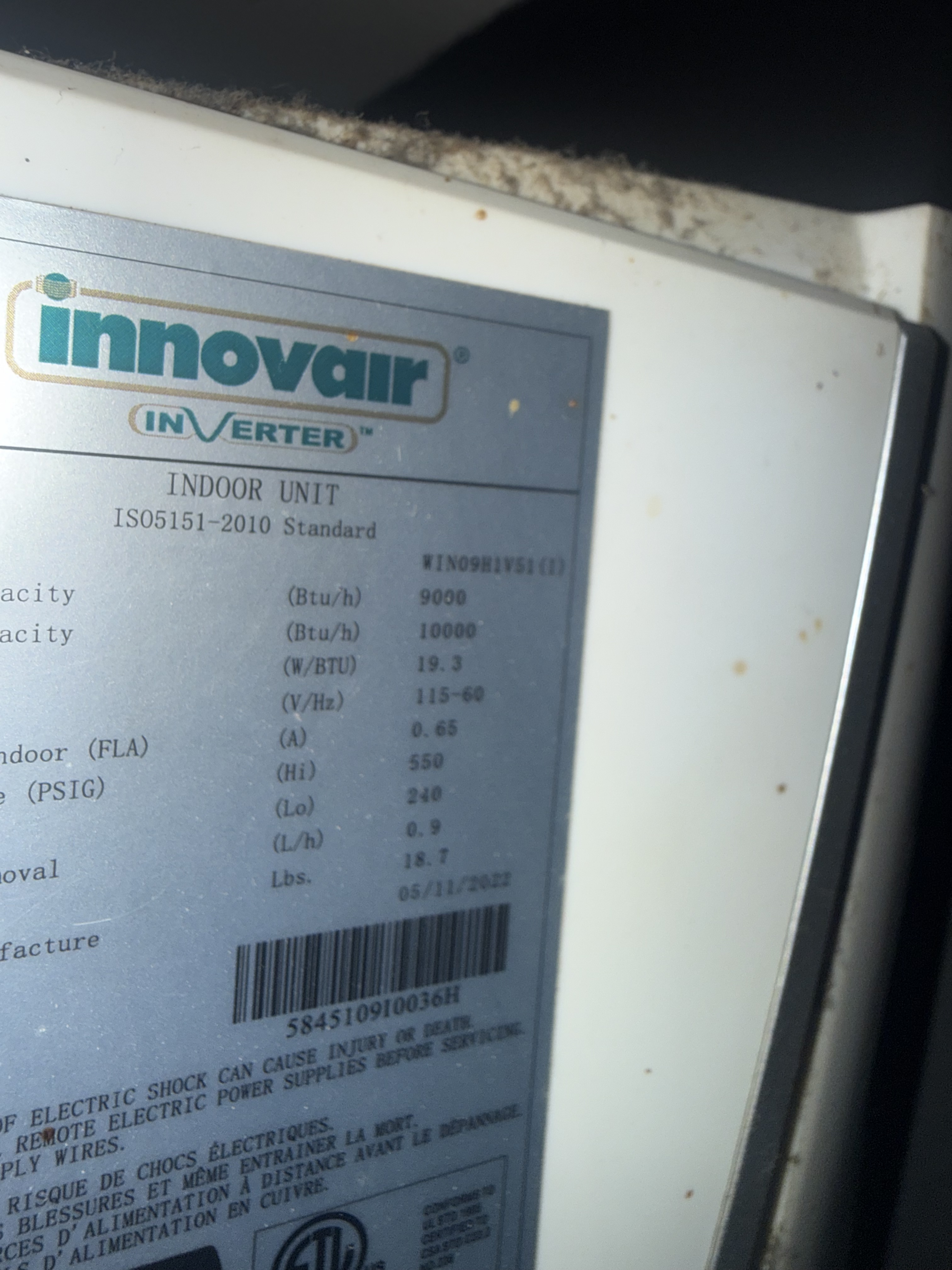
What happened is my dad bought bunch of these with aeh-w4e1 and it’s. No longer supported by any app so you can’t pair it. Innovair recently opened an office in the u.s called their support and they told me the correct app is the Home Ai app, complete bullshit non existent app don’t recommend any but from them.
Show me a ZigBee or Matter device which combines multiple sensors all in one to the same extent that is possible with ESPhome…
The most I have is a Z-Wave multisensor, which is great, but for a lower price I could make an ESPhome one with even more sensors.
Got it. But can you not use lambda to get lower level access?
Saying a flying car is holding you back because you can’t get to the moon may be a bit out of scope. Esphome goal is not do everything I don’t believe. It is to make creating devices easily doable by masses.
I use esphome because it provides a LOT of basic framework functions that are well thought out, which means I can focus on the specific things that are not already solved. In particular I like that it has built in support for wireless update, logging, web server, mqtt, framework for sensors, etc.
What I don’t like is that it requires a lot of knowledge if you want to create external components and the documentation is really sparse for doing that well.
Seems to be the same module used by Hisense ACs.
Found a couple of hits for it in the forums. Hopefully one of these will help you out
I do appreciate the help, i did come across this didnt go to in depth just read the prerequisites and knew it would not work as currently to date the AEH-W4E1 does not work with any app becauase:

Which cant be done anymore for the aeh-w4e1.
esphome:
  name: ir-bridge
  friendly_name: IR Bridge

esp32:
  board: esp32-c6-devkitc-1
  variant: esp32c6
  framework:
    type: esp-idf

logger:
  level: DEBUG

api:
  encryption:
    key: "6QX2GeQsLEKNv5fCt5LsxWgaxTJ/Dzf2DtkJGQLCyJM="

ota:
  - platform: esphome
    password: "12f155b3f05b28b8fe83266741f1f18d"

wifi:
  ssid: !secret wifi_ssid
  password: !secret wifi_password
  ap:
    ssid: "Ir-Bridge Fallback Hotspot"
    password: "vG6ubIAnLlqJ"

captive_portal:

remote_transmitter:
  id: ir_tx
  pin: GPIO2
  carrier_duty_percent: 50%
  non_blocking: true

climate:
  - platform: whirlpool
    name: "Mini Split"
    model: DG11J1-91
    transmitter_id: ir_tx

    visual:
      min_temperature: 16
      max_temperature: 30
      temperature_step:
        target_temperature: 1
        current_temperature: 1
able to control it and pair it with homekit using the above code using DG11J1-91 remote ir commands however it sends it in Celsius for some reason so i have to do some manual work tweak some minor things so it using DG11J1-72 i actually have.
Just using ir bulb 100 ohm + 200 ohm resistor and 2n2222a331 transistor works fine. Dont recommend buying off the shelf crap, super easy to make
Why my irrigation system is not standalone.
My irrigation system is gravity fed. Each of the 9 terraces, because of water pressure differences, is a zone. I have 4 micro-climates which further complicates watering. I ended up with 19 zones. An off-the-shelf controller, (standalone) for that many zones is upwards of USD$700.
Initially I wrote some C++ code, but the UI for setting up watering times got too complicated. Fortunately, I found a UI that is way better than any commercial UI (SIP, Sustainable Irrigation Platform), but the output was JSON sent to a specific topic of an MQTT broker. With HA, I could read, decode and send, via MySensors, to an RPi 3B+ (later RPi zero 2w), All in, for the controller, was USD$70.
This is not standalone. I am relying on the work of many (Thank You!).
With a stand alone system you are held hostage to a the whims of the seller (See enshitification) (Not to say we’re not beholden to the gatekeepers at HA  The process is just slower.)
95% of population uses Celsius, so the reason is not so mysterious…
Yeah  ill just start mapping my remote from where they left off just need minor changes and turbo button support
For anyone with Innovair or Hisense units using the AEH-W4E1 module — there's a HACS-based Home Assistant integration as an alternative to the ESPHome route. I made a fork of deiger/AirCon (with a lot of help from AI) that works natively in HA with no Docker, no MQTT, and no hardware modifications needed.
In case it's a useful option: GitHub - cvladan/hassio-hacs-hisense-aircon: HACS script for controlling Air Conditioners, e.g. with HiSense modules AEH-W4E1 and AEH-W4B1 · GitHub