There are “smart implant” devices with a few GPIO, but I’ve only seen Z-Wave versions, or made my own with an ESP + Tasmota / ESPhome.
For Zigbee, I’ve instead used a simple magnetic door sensor and added connections across the magnetic reed switch - simple, cheap, and gives “dry contact” input. I’ve not seen a device with a more modern Hall-Effect sensor that would be more difficult to adapt.
For some applications, I’ve even managed to get a device relay coil to directly trigger a magnetic reed switch by careful positioning.
Thanks both.
Odd that there isn’t a ready to go zigbee offering.
Setting up a second HA instance at a remote location and going to use a bunch of my old zigbee devices so was hoping to avoid setting up zwave for a single device.
The wiring schematic for the sonoff zbmini seems to suggest that the Switch contacts are dry inputs (you short S1 & S2 to trigger the switch).
However, bear in mind that these could be referenced to mains voltage, so treat them as such unless you get your hands on proper schematics or confirmation from an owner with a multimeter.
For safety and convenience, I’d go with the Aqara door sensor mentioned above, or, better yet, their flood sensor. That one has the contacts exposed so you could easily attach wires without having to open the device.
If it wasn’t Aqara I’d be inclined to go that route. I have never had good luck with their stuff and with it being at a remote location, going to avoid them
That’s essentially the same thing as the door sensor suggested above. Only difference is that the contacts are already exposed.
If you didn’t want to open up a door sensor, any flood sensor with exposed contacts would have given you the same functionality.
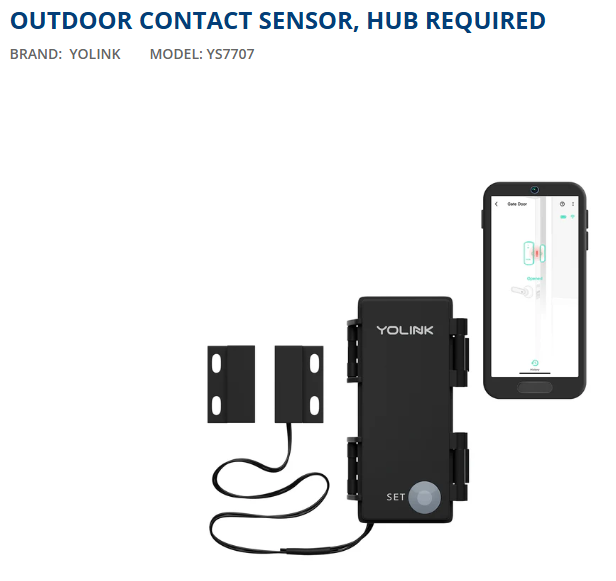
Yolink has the closet thing to a ‘dry contact input’ sensor I’ve found.
You have to cut the reed switch off but these are very reliable and batteries last 2 yrs+.
Hub is required but YoLink integrates with HA.
I forgot what I was even wanting this for but I have been very impressed with yolink for long range stuff (using the device you referenced on my mailbox)
I am still using their cloud hub but no complaints.
Appreciate the suggestion and if I remember what my plan was, it might be a good solution.
I’ve been looking for a Zigbee sensor with dry inputs for some time. I’ve been using a Zigbee water sensor with a magnetic door switch. But after a few months the batteries died. I’ve just replaced it with an ESP32-C6 which has Zigbee & is USB powered. Working flawlessly.
Seeed Studio XIAO ESP32C6
Flash using Arduino IDE. Just follow the instructions. Got it working in Home Assistant with Zigbee2MQTT in just a few minutes. Not tested with ZHA.
It’s not off-the-shelf, but if you are OK with configuring Home Assistant then following instructions for Arduino IDE shouldn’t be a great leap.
And the bonus is, you own the hardware & can mod it to do anything you want.
If anybody has any questions or needs any help just ask.
 this post!