SwitchRoo: Australia's first certified smart switch for Home Assistant with Matter/Thread support

G'day HA community,
:waving_hand: :australia: :kangaroo:
I'm Sam, a Melbourne-based developer. A couple of years back I posted this thread about hacking Deta switches with a hot air gun and bodge wires. That project has turned into something bigger, and I wanted to share where it's at now.
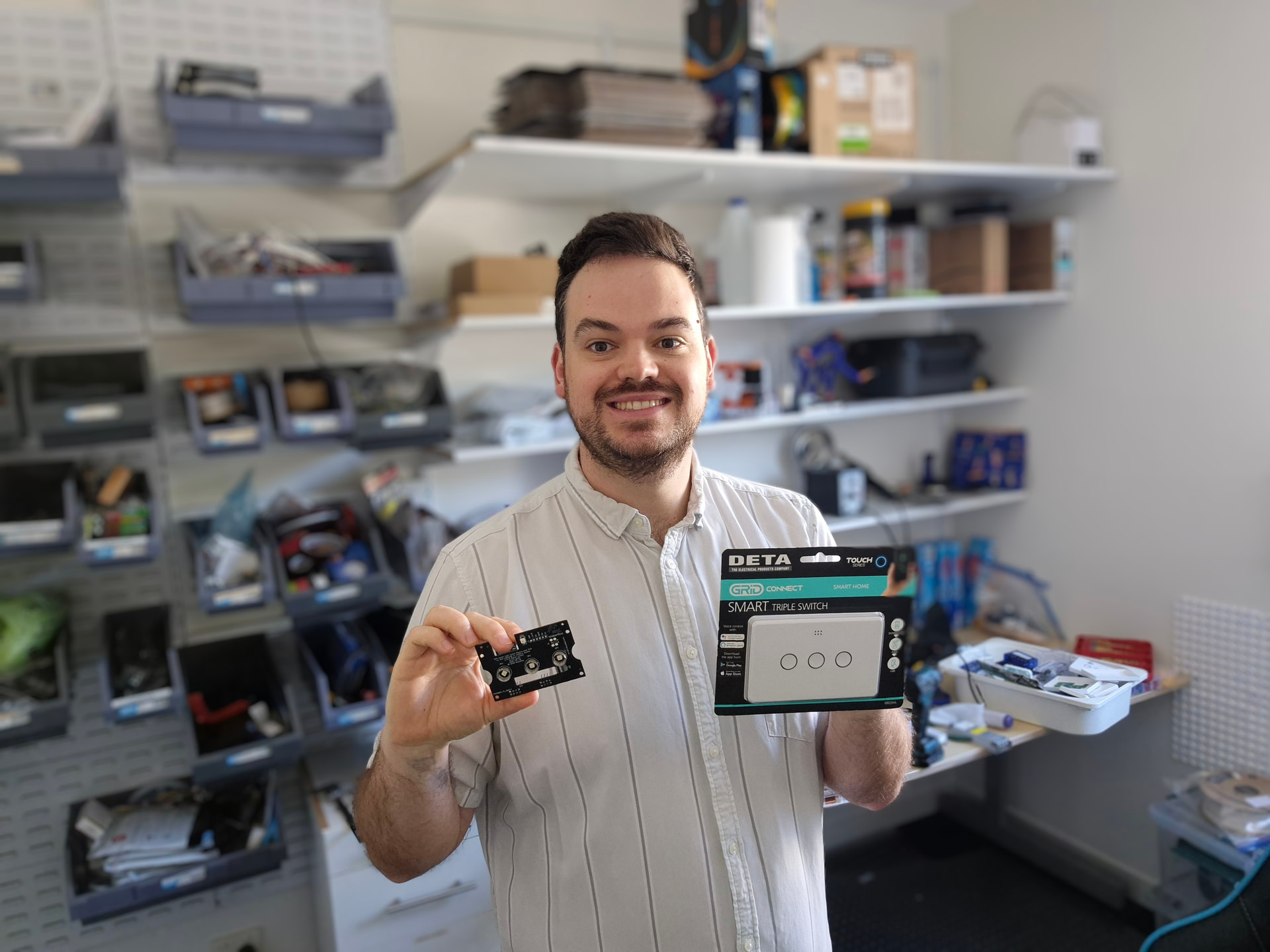
The Problem

I outfitted my place with Deta smart switches from Bunnings. Almost immediately, I hit the classic smart home wall: cloud dependencies and lag.

The physical button on the wall worked locally, but turning the light on via the app meant the command had to bounce to a server in another hemisphere just for permission to turn on. If the internet or my hub went down, my automations broke.

I wanted smart lights that were actually smart, and I wanted a built-in motion sensor so the light would auto-timeout.

The Hack

So I voided the warranties. Since flashing the original Tuya chips over-the-air had been patched out by the manufacturer, I took a hot air gun to the board, ripped out the stock chips, and swapped in a single ESP microcontroller.

To fit the motion sensor, I had to get creative. I used the space on the board meant for the antenna keepout and created a tiny custom PCB to hold a Panasonic PIR sensor, gluing it directly into place. Because that keepout space was gone, I had to use an ESP module with an external antenna hanging out the back of the switch.
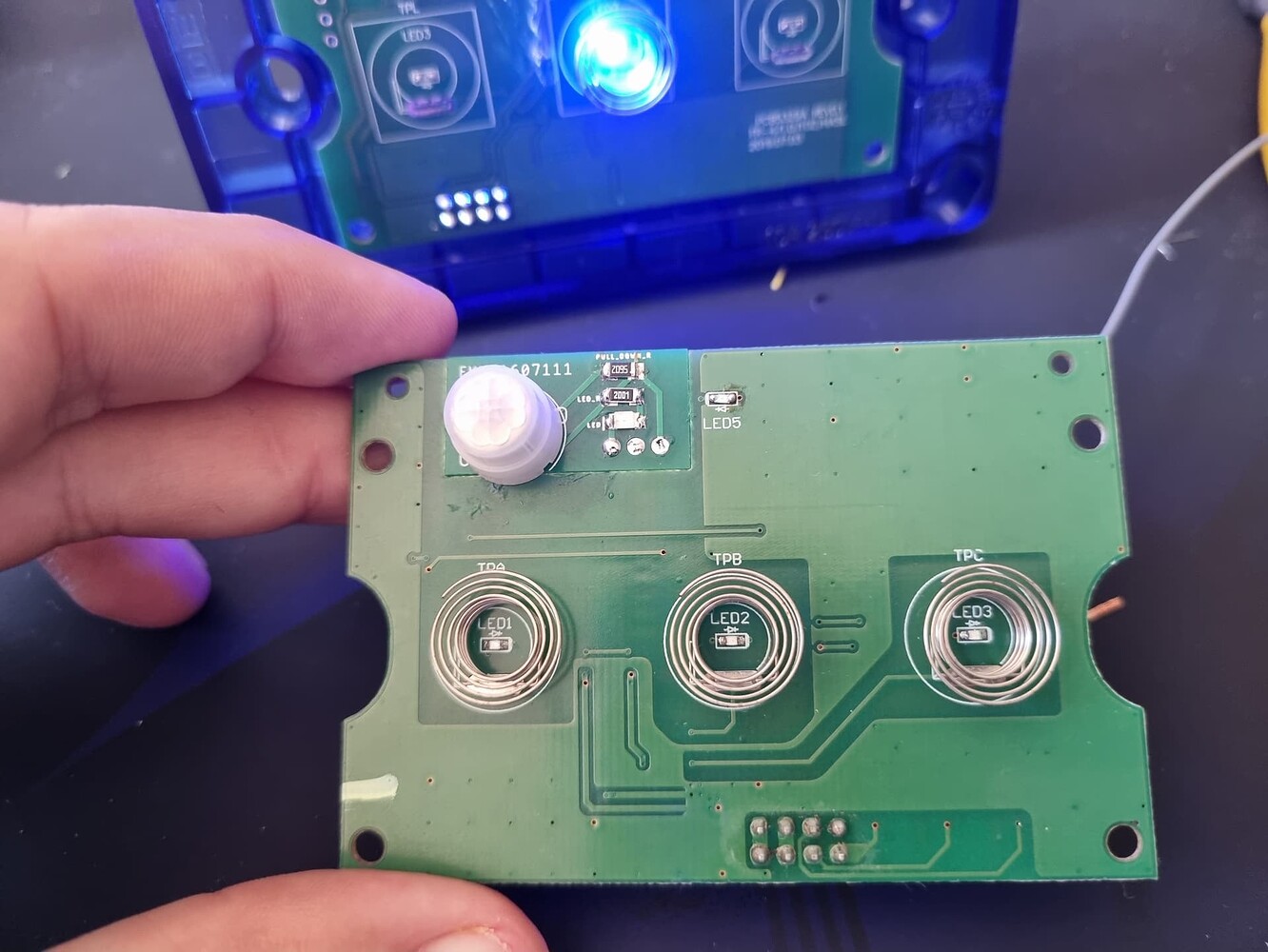
I didn't just want basic on/off control. I wanted a proper state machine. I de-soldered the button indicator LED resistors and used tiny wires to hook them up to separate ESP outputs. This decoupled the button LED from the actual light load logic, opening up the ability to flash the LEDs to indicate state changes without the actual room lights flashing like a rave.

I flashed it with ESPHome, built the custom state machine to handle the logic completely locally, and shared it in that original thread.

From Bodge Wires to a Clean PCB

Looking at all the tiny bodge wires and glue inside my prototype, I started sketching the outline of the original logic board. I realized I could just design my own custom PCB to replace it entirely, avoid the messy hacks, and do it clean.

Since I was spinning my own board, I wanted to future-proof it. I chose an up-to-date ESP chip with the hardware required to support Zigbee and Matter/Thread (we're still waiting for official ESPHome support for these, but it's actively being worked on). I also took the opportunity to upgrade the buttons and indicator to RGB LEDs.
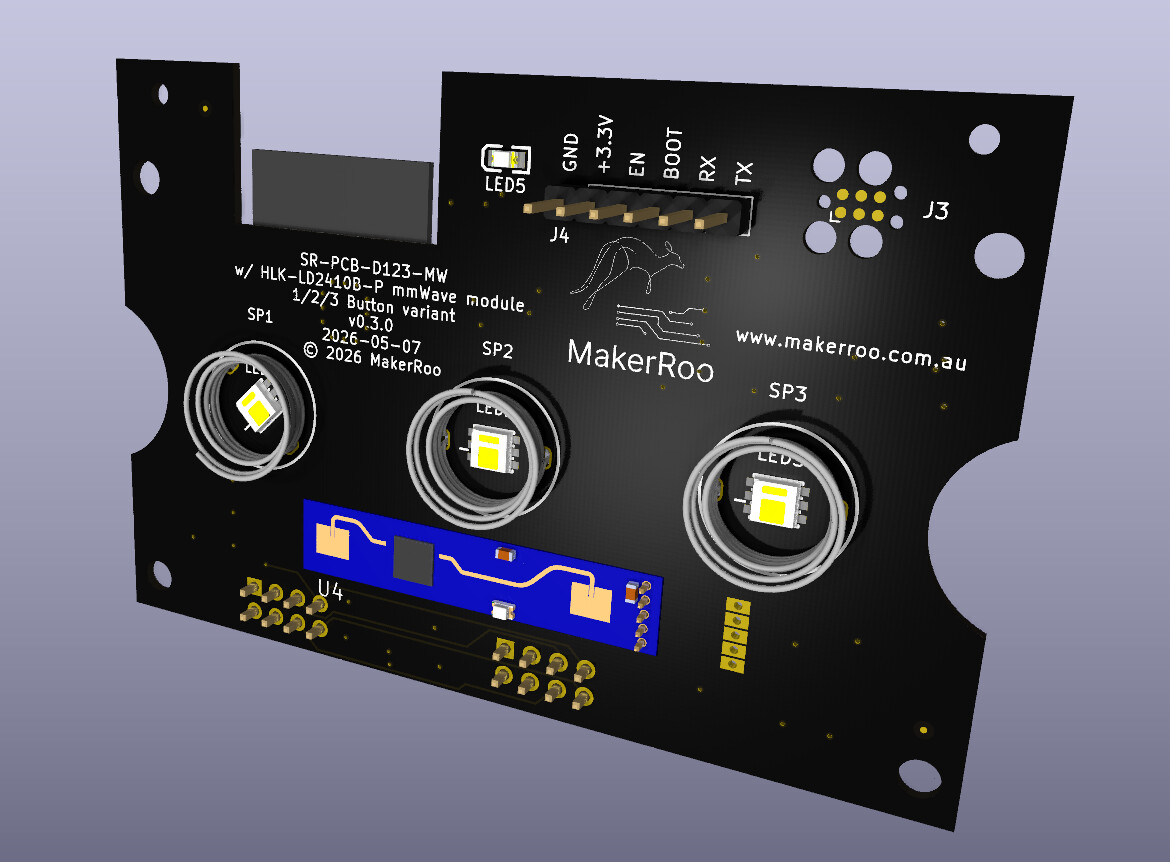
Initially, I wanted to keep the PIR sensor like my hack-job, but PIR requires a clear line of sight. That meant drilling a hole in the front faceplate. I 3D printed a few test plates with the hole in the correct spot, but honestly, it ruined the aesthetics. I much preferred the clean, factory injection-molded look.

That led me to research mmWave sensors, which can "see" right through the plastic faceplate. I found a well-supported module in ESPHome that fit my design perfectly.

What is SwitchRoo?

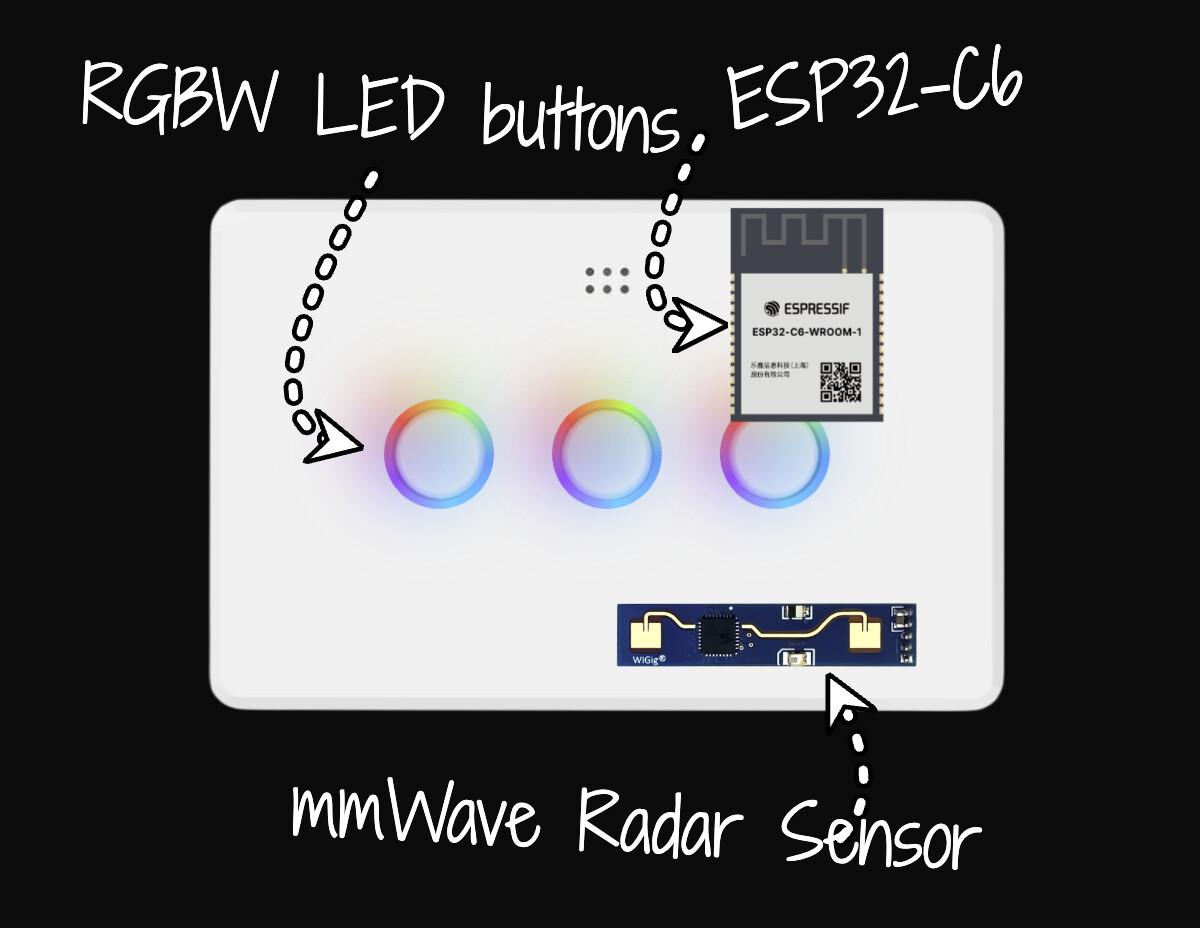
That's what became SwitchRoo: a drop-in replacement PCB for Deta smart switches that brings ESP32-C6 chips (hardware ready for Zigbee/Thread), optional mmWave radar presence detection, RGB LEDs on each button, and full local control via ESPHome.

No more always-on blue LEDs. No cloud dependency. Full Home Assistant integration with the customization the HA community actually wants. Want your button LEDs to show a state machine or indicate which rooms have lights on? You can do that.
Doing It Properly

Transitioning from a bench-top mod to a real product has been a massive journey. I'm deep in the weeds of electronics manufacturing: evaluating pick-and-place machines, managing reflow ovens to handle runs of hundreds of boards, and navigating the strict EESS and ACMA regulatory standards.

It takes a lot of effort to jump through the compliance hoops, but it means the final product will be fully certified and ready to be legally installed by any licensed electrician in Australia or NZ.

Right now, I'm finalizing a 4-layer board revision for better EMI performance, building an automated test jig for production QA, and waiting on ACMA compliance quotes from labs. Prototype 2 is done and tested. Launch lineup is SR-D1 through SR-D4 (1-gang to 4-gang), with standard and mmWave variants for each.

Why This Matters

There's nothing else on the Australian market that combines local-first control, native HA integration, Matter/Thread hardware readiness, and proper ACMA certification. Most smart switches force you to pick two of those at best.

The original Deta switches are cloud-dependent. Imported alternatives either aren't ACMA certified (which matters if you're going through council approval or selling a house) or they're locked into proprietary ecosystems. Flashing aftermarket firmware got patched out by manufacturers years ago.

SwitchRoo is purpose-built to solve this.

Bigger Picture

Here's what I'm excited about longer term: these off-the-shelf switch housings are everywhere. Electricians know how to install them. They fit standard wall boxes. They're cheap.

Once you've got a low-voltage PCB platform that drops into that form factor, it's not just a light switch anymore. It's a standardized mounting point for any human interface you want around your home. Touchscreens. E-ink displays. Sensor panels. Room controllers. Whatever you can fit on a PCB.

Want to add a small control panel next to your existing light switches? Use the same housing, same installation process, different board. That's the direction this could go.

Join the Community

I've set up a Discord server for anyone who wants to follow along more closely, ask questions, share ideas, or help out. There's also a blog with regular updates and a waitlist for launch.

Whether you've got compliance advice, ESPHome expertise, or just want to chat about the project, come say hi.

Cheers,
Sam

35 Likes

I've been holding off rolling out more switches across the house because I've found the Clipsal momentary buttons suck, and haven't found other suitable certified ones.
I've got various tables and things mounted around the place, but I've held off rolling out more of the Shelly relays because of the damn buttons. Mainly, because I lost the confidence of the HAF.
And I don't care for the Ikuu stuff either.

But mate (yes, fellow Aussie here), you had me at ESP32.
As I kept reading this post, I was borderlining on experiencing something from a specific Lonely Island song (yes, i'm that excited about this).

Here I was thinking last night that it's been ages since my sparky has been out to install anything for me, and now we might have something soon!
Plus, I've got a mate who was just abou tto start getting Shelly's and other bits as he starts his HA journey.

I've signed up for updates on your site, and if you need some early beta testers (yes, I'm happy to pay for the kit), let me know.

6 Likes

So are the final product dependent on needing a donor deta plates?
I currently am swapping my switches across to the zemismart ones but they run zigbee. It does everything you mentioned (local control, rcm certified, radar light up) plus ability to label each switch. Only downside are the relays are a bit loud.

Keep us posted!

1 Like

Yes it requires a Deta base (the AC side), since that half is perfectly functional and then i didn't have to go through EESS certification for mains products.

Switchroo is ESP-32-C6 based so is infinitely customisable with espHome. Personally i run state machines with the rgbw button leds for auto light timeout etc.

And since its espHome can do whatever else such as set it up as a Bluetooth LE proxy in each room!

1 Like

Onya mate!

Good idea to piggyback off Deta safety certification while you roll your own low voltage side of things.

The Bunnings prices on the Deta devices seems a little high for the actual electronics, and suspiciously like they are Tuya sourced anyway.

As sales volume increases, you may decide to branch into developing your own fully certified devices, bearing the cost of certification yourself.

Don't forget to add it to the Tasmota device list that @blakadder maintains at Wall Switches and Dimmers , and add Tasmota support. This should encourage people that have turned away from cheap Tuya devices that have strayed from the Espressif fold in the last few years.

Any mention in the OpenBeken forums that may also add to your audience?

Funding: You probably could get some government startup support for local manufacturing. State as well as Federal. Mention carbon credits, and the upcoming elections... Wesfarmers may want to add it to their Bunnings range but beware the onerous conditions to jump on that bandwagon. Worth exploring though as you plough through fixed overheads on what will be a small market.

Take courage from startups like Shelly, from Bulgaria.

1 Like

Created an account just to say I LOVE this. Happy bonus that we can use them as Bluetooth proxies.
The part I dislike is using the already overpriced DETA hardware as a base. If you can reduce the need for those I'll redo my whole house.

2 Likes

Amazing thanks!

Yea that's the state of EESS certification in Australia unfortunately. The way I am doing it shortcuts that.

Although luckily SwitchRoo is compatible with the cheaper 'non smart' touch switches from Deta as the AC mains base is the same.

4 Likes

Don't forget folks the DETA base often has a dodgy capacitor that likes to die and bork the 5v rail.

Outch. Wow this Deta equipment really is expensive vs. the apparently crap quality.
Thanks for bringing this to my attention, ill be sure to keep this failure mode in mind.

Adds another reason to make my own base AC mains side and have a full product with no reliance on Deta.

1 Like

Perhaps dependent on specific manufacture date range? I've got some of the first released units, and with over 2 dozen of them, I've had no issues. Switches are now 6 years old. Planning ahead for failures I bought spares at the time :smiley:

Project looks great, having built in mmwave is a great idea.

1 Like

Obviously for a dimmer switch you'd need dimmer hardware - but is a dimmer version on the way? I use dimmers everywhere - motion activated lighting in my study where I have open top aquariums - home theatre - bedroom - mood lighting in the loungeroom... The list goes on.

Would also be cool to have the switch allow you to touch+hold to adjust colour or temperature eh? Likely a build extension in esphome or the state machine, but having the light switch RGB mimic the room lighting seems like such a logical UX connection.

Mate, I'll be all over this like white on rice - I'm keen as mustard - I can't believe a Mexican came up with this! (Yes international readers - I too am an Aussie, and Sam knows what I mean :wink:)

Well done mate, signing up momentarily! (See what I did there?)

2 Likes

I've had one base fail with a capacitor issue, initially I though it was because it copped afternoon sun during spring/autumn or maybe that contributed to it. WiFi on them isn't great either, I've been flashing ESP Home using the wired method. If you ever do develop a product to replace the base whilst maintaining compatability that would be a bonus, there's nothing really on the market that offers proper local control like one of these Deta boards, unless you go the Shelley route with a bog standard switch but that does get expensive and messy once you do a 3 or 4 gang.

The only other big issue these have is the giant bloody back of them.

dimming hardware would need to be on the 240v side which he is keeping from the deta's to avoid recertification, so unless the deta's have a dimming model, then it won't be possible with this approach

They do have a dimming version, likely only change with SwitchRoo would be in firmware (pwm output vs relay output).
Ill investigate and update you.
I have a dimmer base to play with.

1 Like

As someone with 22+ of these switches, this will be awesome!

2 Likes

Hi Sam,

I like many others have been waiting for something like this. Fellow Aussie here. I havent even researched Deta switches, but do these require a neutral?

Im at the point now where as my place doesnt have neutral wires behind the switch, I was going to engage an electrician to install neutrals at the switch - does this product fix this problem? Do i still need neutral behind the switch?

Yes requires naturals, any smart switch that does anything 'smart' would require it, especially wi-fi devices as they are still 'on' when the load is switched off.

However there are some zigbee only switches that work with no neutral since the sleep mode only needs a tiny amount of power to stay alive, in sleep mode. Zigbee is much less power hungry than wi-fi.
However these devices won't have led buttons, motion sensor etc as not enough current to support these.

Thank you for your prompt response. Ill still support this project. Just have to find a good electrician in Melb. South East to neutral all my switches. :rofl::man_shrugging:

1 Like

Congratulations on the results so far; hard work and some ingenuity paying off :).

I'm a new member as far as posting goes. By background a military engineer specialising in radiated and conducted emissions. If you are working to improve the EMI/EEE aspects of performance you are welcome to reach out. I'm in Brisbane, and medically retired due to injuries which makes me open to meeting good people and getting into anything I can use my hands, brain and learn from :).

1 Like